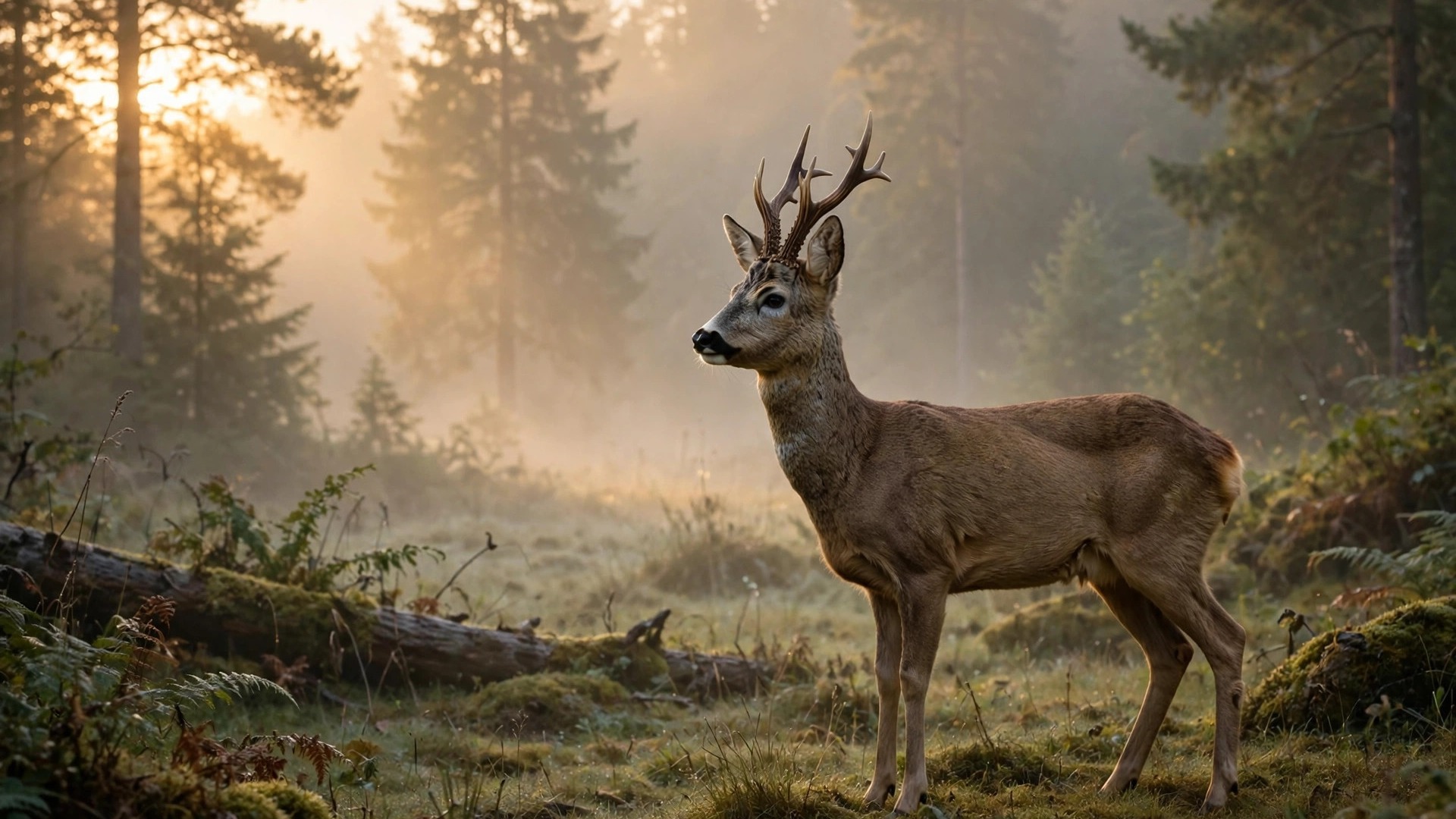
What animal came to you last night? Before reaching for a meaning, stay with that first picture for a moment — a deer at the edge of a forest, a bird settling on a windowsill, or something wilder whose name you cannot quite recall. Animals enter dreams with a directness that human figures rarely match, and the one that chose you is worth a closer look.
Across cultures, animals in dreams are read as the language of instinct, emotion, and the untamed parts of being alive. Each species carries its own symbolism, but the mere appearance of an animal delivers a shared message: something in you is asking to be felt, honored, or set free.
First, Look at the Animal Itself
The species matters enormously. A dove and a shark do not deliver the same message, even though both speak the language of instinct. Start by naming what you saw, then ask what that creature is known for — its habits, its temperament, its reputation in story and myth. A bear suggests introspection and withdrawal; an eagle suggests vision and height; a wolf suggests loyalty and the pack. Your mind chose this animal because its qualities match something stirring in you.
Behavior matters just as much as species. A calm animal brings peace, an aggressive one brings warning, a wounded one brings a call to healing. Many traditions hold that the spirit world speaks most clearly through how the messenger acts, so notice what your visitor did — did it watch you, approach you, flee, or speak? That action is the envelope the message arrived in.
Three Ways to Read the Visit
As a messenger or guide. Native American, shamanic, and Celtic traditions alike regard dream animals as messengers bearing specific medicine — a teaching tailored to your life right now. The animal may carry a quality you need more of: freedom, fierceness, gentleness, play.
As a feeling given form. Modern dream research finds animal dreams spike during emotional intensity — grief, love, fear, transformation. The animal gives a feeling a shape the mind can work with, making the abstract suddenly vivid. If you have been overwhelmed, ask which emotion wore fur or feathers last night.
As the instinctual self. Freud read animals as embodiments of repressed drives — sexuality, aggression, hunger — the id in animal form. Jung saw them as the instinctual, pre-rational layer of the psyche, a wild counterpart the civilized self needs as an ally rather than an enemy. Befriending the dream animal, in Jung’s view, is part of becoming whole.
The Feeling Is Part of the Message
Two people can dream of the same animal and receive different messages, because the feeling tone changes everything. Being watched calmly by a wild animal often means an instinct or truth is waiting to be acknowledged — intuition itself, asking for a seat at the table. Being chased is the psyche’s favorite drama: you may be running from a feeling, a truth, or a part of yourself, and dream researchers note that turning to face the pursuer often transforms the terror into something surprisingly benign.
A wounded or sick animal usually mirrors a wounded instinct — intuition ignored until it limps, or vitality depleted by overwork. It is a compassionate alarm, not a punishment. And talking with or befriending an animal is a profoundly hopeful sign: the dialogue between your conscious and instinctual selves is opening, and the animal’s words are worth recording.
A Small Practice for Today
Identify your animal and look up its traditional symbolism, then notice which traits resonate with your current life. Then try a short written dialogue: ask the animal what it came to tell you, and write the answer without censoring. Finally, spend a little time in nature or with real animals, and pay attention to your body’s signals for a day — hunger, tiredness, gut feelings — honoring them the way the animal honors its instincts.
Three Questions People Ask
What if I dreamed of an animal I have never seen before?
Unfamiliar animals often represent unfamiliar feelings or undiscovered parts of yourself. Research the animal’s traits — your mind chose it precisely because its qualities match something emerging in you.
What if the animal was a pet that has died?
Deceased pets in dreams function much like deceased loved ones — visits of comfort, continuing bonds, and sometimes messages of reassurance. These are among the most tender and healing dreams people report.
Can an animal dream warn me about a person?
Sometimes. If the animal behaved like someone you know — predatory, loyal, skittish — your intuition may be characterizing that relationship. Treat it as a prompt for discernment, not accusation.
Whatever creature crossed your dreamscape, it came as an emissary from the wilder, wiser part of you. You do not need to tame it or fear it — just listen. To place your dream in a wider context, the Wikipedia article on animals offers useful background on how these creatures live and behave in the waking world.










