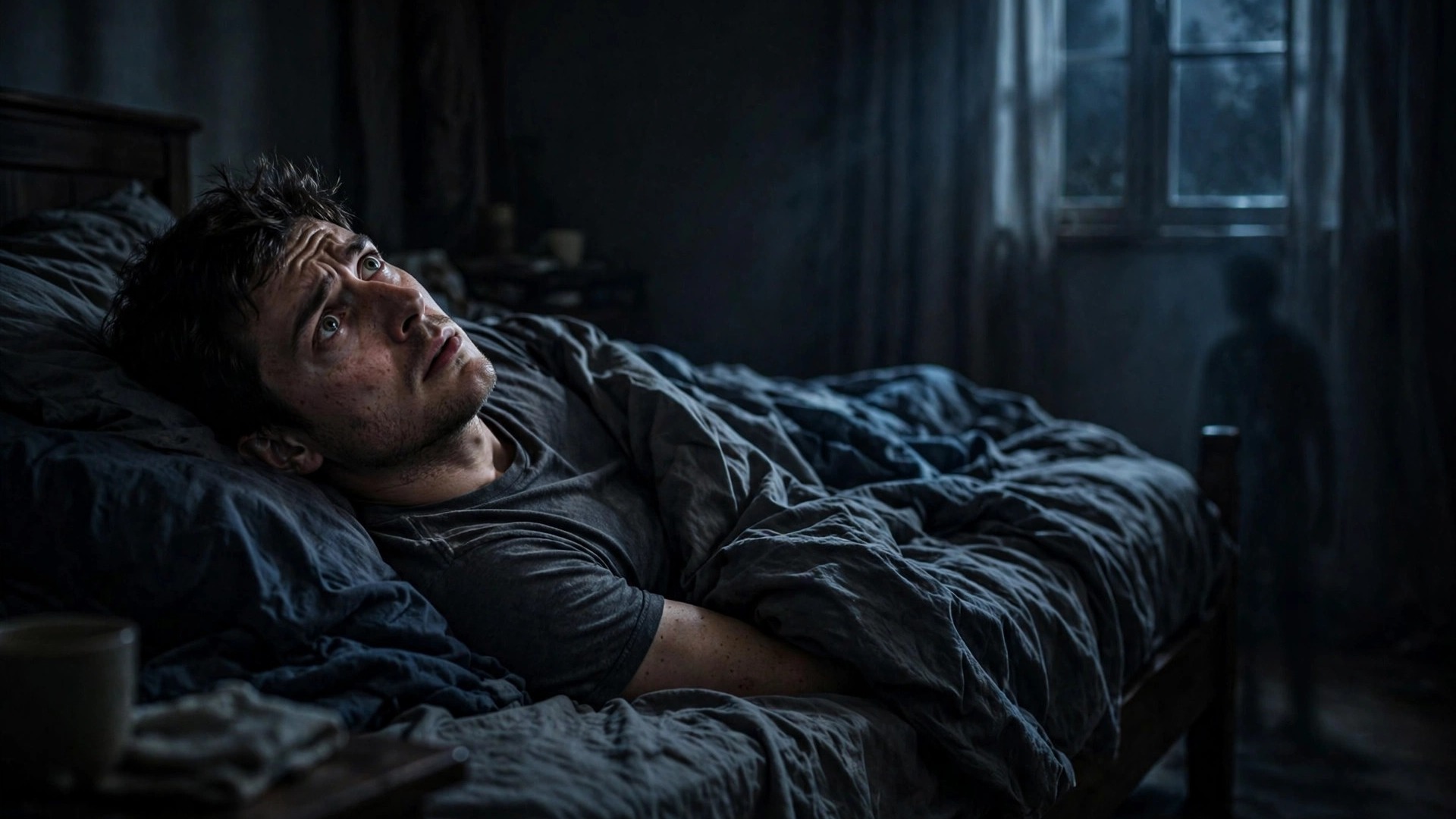
Your eyes are open. The room is familiar. And you cannot move. There may be a weight on your chest, a presence in the corner, a sound that is not quite a sound. You try to scream and nothing comes out. Then, seconds later, it releases you, and you are left shaking in the dark. If this has happened to you, you are far from alone. Sleep paralysis affects a significant portion of people at least once in their lives. It is terrifying in the moment, but it is a well-understood sleep phenomenon — not a supernatural attack, not a sign of illness, and absolutely survivable. Understanding it is the first step to fearing it less.
What Is Actually Happening in Your Body
Sleep science explains the mechanism clearly. During REM sleep, your brain paralyzes your muscles — a safety feature called REM atonia — so you do not act out your dreams. In sleep paralysis, you wake up while the paralysis is still switched on. Mind awake, body asleep: that mismatch is the whole terror. The hallucinations — the presence, the pressure, the sounds — are dream imagery leaking into waking consciousness. The brain, caught between states, does what brains do: it invents a story to explain the sensation. A weight on the chest becomes a demon sitting on you. It feels real because, neurologically, you are partially still dreaming.
The main triggers are sleep deprivation, irregular sleep schedules, stress, and sleeping on your back. It occurs when you wake during REM sleep while muscle atonia — the body’s dream-safety paralysis — is still active. Repeated episodes often cluster during stressful periods, sleep deprivation, or irregular schedules. The pattern itself is information: your sleep architecture is asking for better care. Despite how terrifying it feels, sleep paralysis is not physically dangerous. It is a temporary mismatch between waking consciousness and REM muscle paralysis, and episodes always resolve on their own.
Why It Feels Like a Presence
Sensing a threatening presence in the room is the most common hallucination. It reflects the brain’s threat-detection system firing in an ambiguous state. A crushing weight on the chest, sometimes with difficulty breathing, gives sleep paralysis its “nightmare” name — it is usually harmless, because your breathing muscles are partly inhibited, but it feels suffocating. Buzzing, footsteps, whispering, or a loud bang at the moment of waking are common too: the auditory cortex misfiring between states — startling, but not dangerous. Some people experience floating, spinning, or leaving their body. These are the same REM mechanisms producing a different story, and many lucid dreamers actually learn to convert these sensations into conscious dream entry.
Freud might add that the content of the hallucination often mirrors repressed fears — which is why the “intruder” so often embodies whatever the dreamer dreads most. The paralysis gives form to feeling powerless in waking life. Reminding yourself “this is my brain filling in blanks” can genuinely reduce the fear.
The Same Terror, in Every Culture
Across cultures, sleep paralysis has been given spiritual names: the “old hag” of Newfoundland folklore, the kanashibari of Japan, the “nightmare” — originally a night-demon — of European legend. These stories all describe the same thing: waking trapped with a sensed presence. Spiritually, many interpreters view the experience as a brush with the threshold between worlds. Because it occurs at the border of sleep and waking, some traditions treat it as evidence of the soul’s mobility — you are, for a moment, conscious in two states at once. Others read it as a call to spiritual protection and inner work: the fear it provokes reveals what haunts you, and facing it calmly becomes a kind of initiation. Whether or not you accept the folklore, the experience often leaves people more attentive to their inner life — which is, in itself, meaningful.
During, After, and Long-Term
During an episode: focus on small movements — wiggle a finger or toe — rather than fighting your whole body. Slow your breathing deliberately; calm breath signals safety to your nervous system and often ends the episode. Episodes can often be shortened by staying calm, focusing on small movements, and regulating your breath.
After an episode: journal the content of any hallucinations — they often mirror waking fears worth addressing gently. Do not judge yourself for being frightened; the fear was neurological, not a failure of courage.
Long-term: keep a regular sleep schedule — deprivation and irregularity are the biggest triggers. Avoid sleeping on your back if episodes cluster there; many people find side-sleeping helps. If episodes are frequent and distressing, speak with a sleep specialist; effective help exists.
Sleep paralysis is one of the mind’s most frightening glitches — and one of its most instructive. It shows you, in the starkest possible way, that fear is often just a story the brain tells in the dark. The next time it comes, you will know its name. And knowing its name is the beginning of it losing its power over you. For the clinical details — prevalence, mechanisms, and what researchers have established — Wikipedia’s article on sleep paralysis lays them out clearly.










