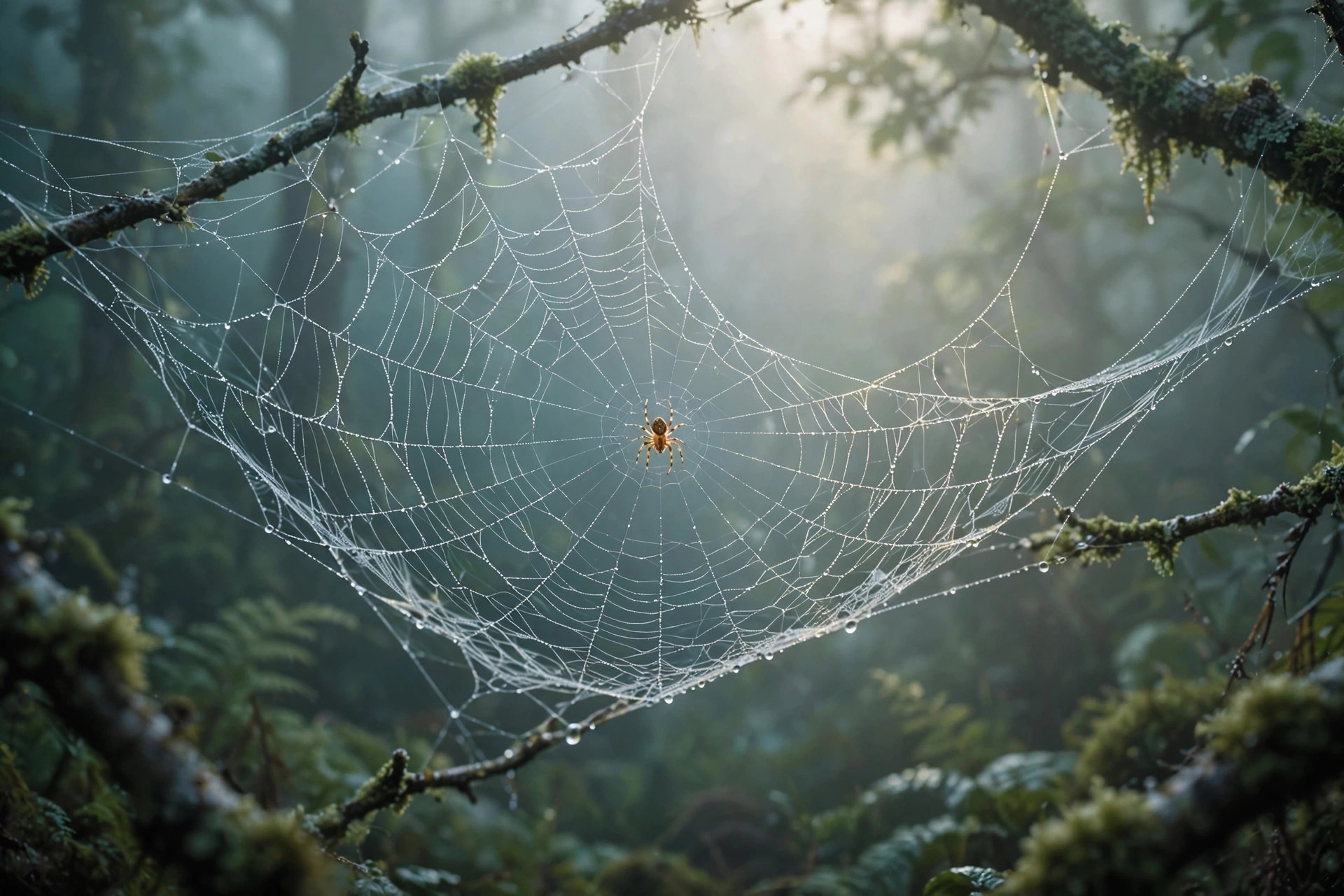
Some dream images cling to you the way the thing itself would — a web strung across a doorway, glinting in the corner, or wrapped around your own hands. Spider webs in dreams are sticky in more ways than one. They tend to linger because they touch on feeling trapped, feeling connected, or feeling caught in something you cannot quite name. A web is one of nature’s perfect symbols: beautiful, intricate, and designed to catch. Whether your dream web was a marvel of engineering or a suffocating tangle, it was showing you something about the patterns, connections, and traps in your waking life. And every web dream asks the same first question: are you the weaver, or the fly?
The Web as Craft: What You Are Weaving
Start with the generous reading, because webs are not only traps. The spider’s web is an ancient emblem of interconnection — the delicate threads binding all things. Many traditions, from Hinduism’s web of Indra to Native American dreamcatchers, treat the web as a map of how lives touch lives. Dreaming of one may be reminding you that nothing you do is isolated; every thread vibrates.
The web is also the spider’s creation — a symbol of creative power and patience. Spiritually, it can affirm that you are weaving something meaningful: a project, a family, a life. The dream may be honoring the slow, deliberate work you rarely get credit for. An admired web — dewdrops glinting, perfect geometry — is usually positive. It reflects appreciation for complexity and craft, perhaps your own. It can also symbolize a network of relationships that supports rather than snares. Psychologically, the same image holds: Jung saw the spider as the great weaver — an image of the psyche constructing meaning. A web can represent the intricate mental patterns we spin: worries, plans, rationalizations, each thread logical, the whole thing either a work of art or a trap, depending on how it holds you.
The Web as Trap: What Is Holding You
But webs also catch, and the caught feeling is the one most people wake up with. Being stuck in a web is the classic anxiety image: you feel trapped by circumstances — a job, a relationship, debt, family expectations. The dream amplifies the feeling so you will finally address it. Notice what the threads are attached to; the anchors often symbolize what is really holding you.
Freud might associate webs with feeling caught in sticky family dynamics — the invisible threads of obligation, guilt, and expectation that bind us to early relationships. Jung saw the spider as a symbol of the shadow and of the devouring aspects of the unconscious, too. Modern dream psychology often reads web dreams through the lens of feeling stuck. The specifics matter: a web you admire suggests pride in complexity; a web you must tear through suggests frustration with entanglements; a web you are caught in suggests helplessness about a waking situation. A web with no spider can feel eerie — a trap with no visible maker. This often points to self-created entanglements: patterns you wove yourself and now suffer under, like overcommitment or anxious overthinking with no external cause.
Breaking Free: The Hopeful Variants
Not all web dreams leave you stuck. Tearing through a web suggests you are ready to dismantle entanglements. It often appears when someone is setting boundaries, leaving a draining situation, or cutting through confusion. The dream is cheering you on. Sweeping cobwebs is a hopeful, cleansing image. It suggests clearing out neglected corners of your life — old grief, stale routines, forgotten dreams. The dream affirms that it is time for a clearing.
A web that traps you can also signal spiritual entanglement — old obligations, guilt, or relationships that hold you fast. The spiritual question is always the one this article opened with: are you the weaver of this web, or the fly? If the dream’s emotional tone was fear, the answer leans toward fly. If it was wonder, you may be looking at your own handiwork with fresh appreciation.
Untangling, Thread by Thread
- Sketch the web. Draw it from memory and label what each anchoring thread might represent in your waking life. The anchors are the diagnosis.
- Ask the weaver-or-fly question. Where are you creating your circumstances, and where are you caught in them? The two need different responses.
- Name one sticky situation. Journal about it, then ask: what would tearing free actually require? A conversation? A no? A deadline?
- Practice one small disentangling. Decline one obligation, close one loop, forgive one old debt. Small cuts teach the hands that the web is not stronger than you.
- Honor the beautiful web. If the web was beautiful, write down something intricate you have built that deserves recognition.
Recurring web dreams suggest a persistent entanglement your subconscious wants resolved. Until the waking situation shifts — a boundary set, a pattern broken — the web will likely keep appearing. A web is never just a web. It is a question, spun in silk: what are you weaving, what is weaving you, and which threads would you choose to keep if you could see them all clearly? The dream gave you the rare gift of seeing the pattern whole. Now, thread by thread, you get to decide what stays. For the natural history behind the symbol — how real spiders spin, and what their webs are made of — Wikipedia’s article on spider webs is as intricate as its subject.










