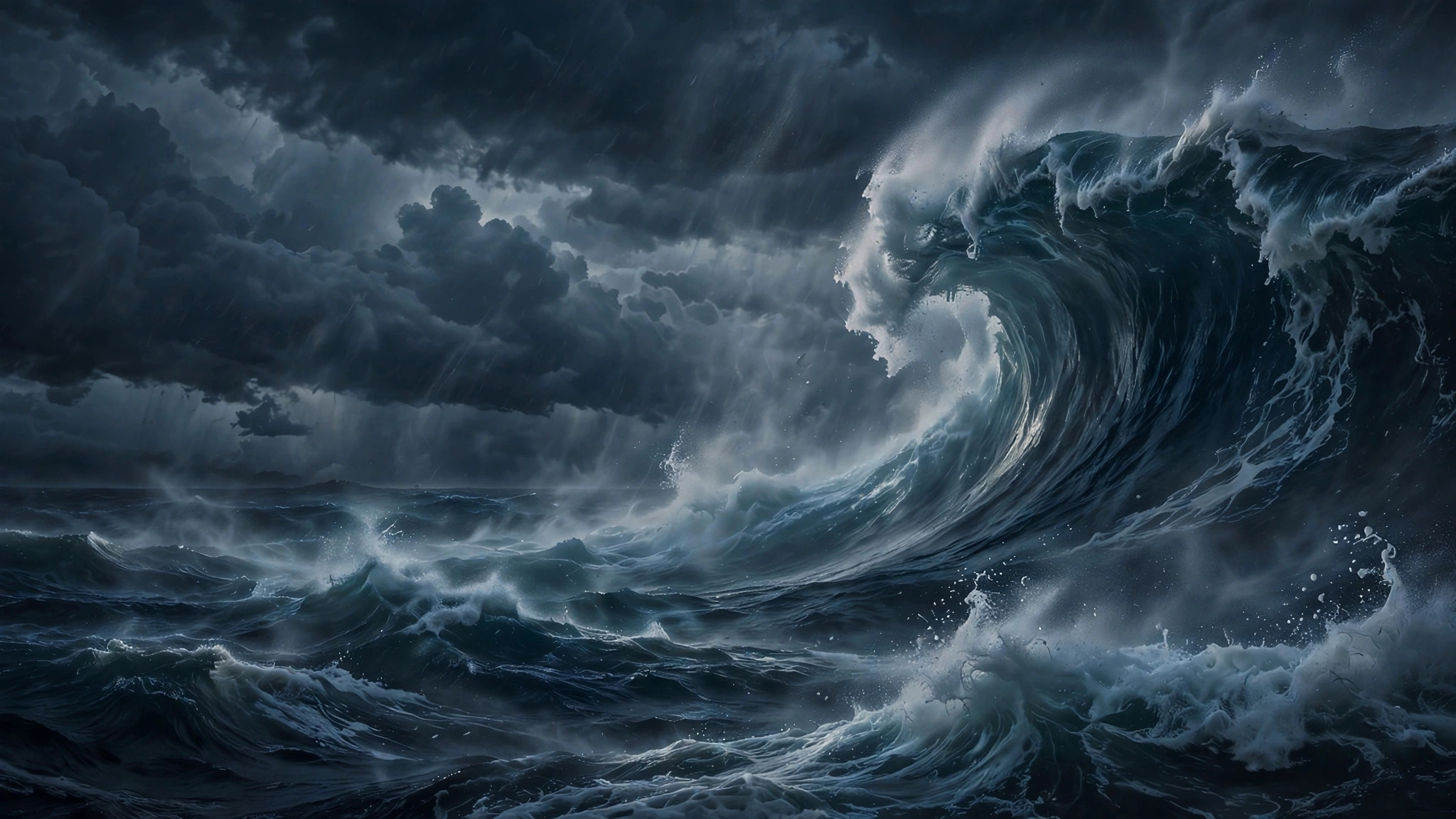
Gasping, sheets twisted, the roar of the wave still echoing in your chest. A wall of water rose out of nowhere and there was nowhere to run. Tsunami dreams are terrifying — and they are also among the most meaningful dreams you can have. Water in dreams represents emotion, and a tsunami represents emotion on an overwhelming scale. This dream usually arrives when feelings you have held back are rising to the surface, demanding to be felt. It is frightening, yes — but it is also your psyche asking for release.
Emotion on an Overwhelming Scale
A tsunami dream typically symbolises overwhelming emotions — grief, anxiety, anger, or major life changes that feel too big to manage. It reflects feelings rising to the surface that need acknowledgment and release. It is not a prediction of disaster. It is an emotional metaphor — your mind’s way of dramatising inner upheaval so you can face it. Many people report feeling relieved once they understand the message.
Stress floods the emotional system, and the dreaming mind translates that literally into a flood. The dream is proportional to your feelings, not to any real-world danger. That is why tsunami dreams are so common during stressful times.
Five Encounters With the Wave
Seeing the tsunami from a distance suggests you sense an emotional storm coming — a difficult conversation, a life change, a grief you have been postponing. The dream gives you time to prepare.
Being carried by the water often means you feel out of control in waking life. But notice: many dreamers survive the wave. The dream may be showing you that you are stronger than the feelings that frighten you.
Survival is the most hopeful variation. It symbolises resilience — proof that you can endure emotional upheaval and emerge changed but intact. Your mind is rehearsing your own strength. Survival symbolises resilience and renewal. Your subconscious is showing you that you can withstand emotional storms — a vote of confidence from your own mind.
Running from the wave mirrors avoidance — fleeing feelings, decisions, or truths you know you must face. The dream gently suggests that turning toward the wave may be less exhausting than running.
If the dream ends in stillness, it promises peace after turmoil. Whatever upheaval you are moving through, the dream’s final image is reassurance: the waters will settle.
What the Theorists Say
Freud might see the tsunami as repressed emotions — particularly around loss, trauma, or desire — surging past the ego’s defences. The sheer scale of the wave mirrors the intensity of what has been held down. Jung viewed water as the ultimate symbol of the unconscious. A tsunami, then, is the unconscious overwhelming the conscious mind — a sign that you are being flooded by feelings or insights you can no longer contain.
Spiritually, a tsunami can symbolise a cleansing force — the divine washing away what no longer serves you. Like a flood in sacred stories, it destroys to make room for renewal. What feels like catastrophe may be purification. Some traditions interpret overwhelming water as the unconscious breaking through. Your soul may be pushing suppressed grief, anger, or longing into awareness so it can finally be healed. The wave is not your enemy; it is your truth arriving all at once. A tsunami dream can also mark a spiritual upheaval — a sudden shift in belief, purpose, or identity. If your inner world has been quietly rearranging itself, the dream dramatises the moment everything changes.
The Wave Is Not the Enemy
It is worth saying plainly: the tsunami in your dream was not trying to punish you. The dreaming mind does not produce images of this scale for cruelty. It produces them because the feeling they represent is genuinely that large, and it has run out of smaller images to hold it. Grief after a major loss, the fear of a life-altering diagnosis, the slow collapse of something you built your life around — these are tsunami-sized feelings. A dream that matches their scale is not exaggerating. It is finally being honest. And honesty, in dreams as in waking life, is the beginning of healing. The wave looks like the problem, but the wave is the psyche’s way of saying: this feeling is big, it is real, and you are allowed to treat it as big and real instead of minimising it.
After the Wave
Grief often arrives in waves, and tsunami dreams are common after loss. The dream gives shape to an emotion that otherwise feels formless and endless. So name the feeling: what emotion feels “too big” right now? Write it down without judgment. Journal the wave: describe its size, colour, and sound — details reveal the emotion’s shape. Breathe through it: slow, deep breathing tells your body that big feelings are survivable. Seek support: tsunami dreams often ease when you share the burden with someone trusted. Practise grounding: walk barefoot, hold something solid — remind yourself you are safe.
The wave in your dream was never trying to drown you — it was trying to reach you. Big feelings, once faced, lose their terror and become simply true. Let the waters rise, let them pass, and trust that on the other side, the shore is still there, waiting for you. For the real-world phenomenon behind the metaphor, Wikipedia’s article on tsunamis explains how these giant waves actually form.










