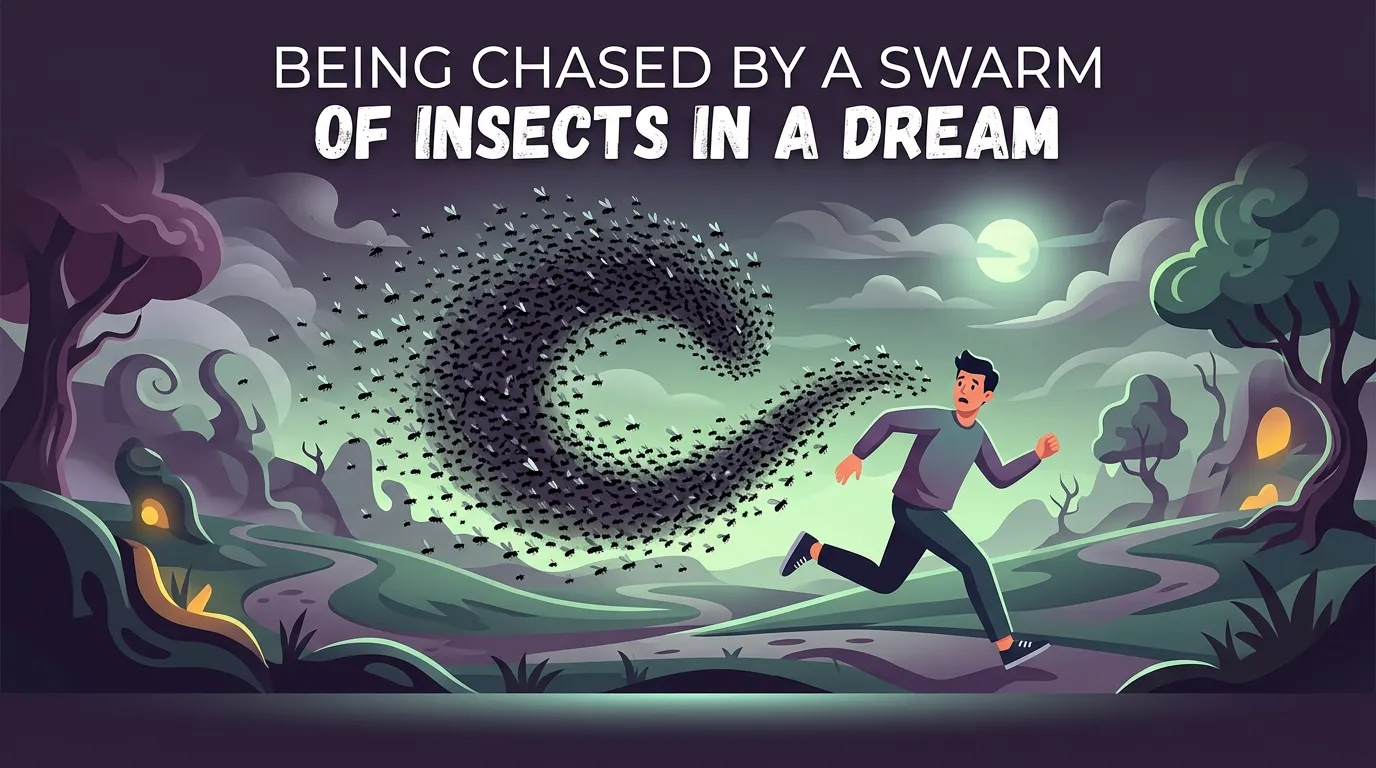
One insect is a nuisance. A hundred are a crisis. That is the strange arithmetic of the swarm dream: nothing in it is large, yet the total feels overwhelming. A dream of being chased by a swarm of insects is almost never about insects. It is about accumulation — the moment when many small things, each manageable alone, add up to something that feels like it is coming for you all at once.
These dreams are among the most physically vivid the mind produces. Dreamers wake with racing hearts, itching skin, a sense of chaos that lingers into the morning. The intensity is the point. The dream is giving a visible shape to a feeling that is hard to describe in waking words: too much, all at once, from every direction.
The swarm as accumulation
The most common reading is also the most practical. A swarm usually represents many small pressures arriving together: unanswered messages, unpaid bills, small conflicts, minor worries, everyday responsibilities — none of them catastrophic, all of them present. Individually, each one is an insect. Together, they are a swarm.
This is why the dream often arrives during busy, overcommitted periods rather than during single large crises. A single large crisis tends to produce a single large pursuer — a lion, a storm, a wave. A swarm belongs to the slow pile-up: the inbox that never empties, the family demands that never pause, the low-grade anxieties that never quite resolve. The dream’s question is not “what is the big problem?” but “how many small ones have you been carrying?”
What kind of insects were they?
The species adds a layer of flavor, though the swarm as a whole matters more than any one insect:
- Bees or wasps often pair with stinging words, social conflict, or the fear of being attacked for speaking up. A bee swarm can also carry a note of productive industry turned hostile — work that has become punishing.
- Ants tend to represent relentless small tasks, routine, or a feeling of being one among many — smallness, repetition, the grind.
- Flies often pair with irritation, decay, or something in life that feels unclean or neglected — a situation that has been left too long.
- Roaches or beetles usually carry disgust or shame: something you would rather not look at, something that thrives in the dark corners of a situation.
- Locusts are the biblical variant — a swarm that consumes everything. A locust dream can represent a fear of total loss, or a situation that feels devouring.
Did they catch you? Did you turn?
The chase itself follows the usual logic of pursuit dreams: what chases you is usually what you are avoiding. But swarm dreams have two turning points worth noticing.
The first is whether the swarm caught you. Being caught and stung or bitten often marks the moment a pile-up of small problems finally broke through — the point where avoidance stopped working. Escaping, by contrast, usually means the pressure is real but still manageable; the dream is a warning, not a verdict.
The second is whether you turned around. Dreamers who stop running and face the swarm sometimes report that the insects dissolve, shrink, or become harmless. This is one of the dream world’s most consistent patterns: the avoided thing is almost always larger in pursuit than it is face to face. A swarm faced directly often turns out to be a list — and lists can be dealt with one item at a time.
The shadow, in pieces
In Jungian terms, a swarm can represent the shadow in fragments: not one big repressed truth, but many small ones — minor resentments, small guilts, little fears, unmet needs that were each too small to acknowledge. The conscious mind dismisses each one (“it’s nothing”), and the unconscious gathers them into a swarm to make the total visible. The dream is not exaggerating. It is adding up.
This reading suggests a practical response: make the list. Write down every small worry, irritation, and unfinished task that comes to mind, without ranking or judging them. The swarm is frightening because it is a cloud; a list is manageable because it is a sequence. Many dreamers find that the anxiety the dream produced drops sharply once the swarm has been broken back into its individual insects.
Then handle one. Just one. The swarm dream’s lesson is that small things are only harmless when they are addressed while they are still small.
A note on sting dreams
One detail deserves a final word: the sting itself. Being stung in a swarm dream often marks the moment a small problem finally drew blood — a minor criticism that landed hard, a small bill that tipped the budget, a tiny slight that reopened an old wound. The sting’s power is disproportionate because it arrives on top of everything else. If your dream included a sting, ask which small thing hurt most recently, and whether it hurt so much because it was the last straw rather than the heaviest one. Naming the last straw is often the first step to setting the whole load down.
Insects themselves are among the most successful creatures on Earth, and the Wikipedia article on insects explains why swarms, hives, and colonies behave the way they do.










