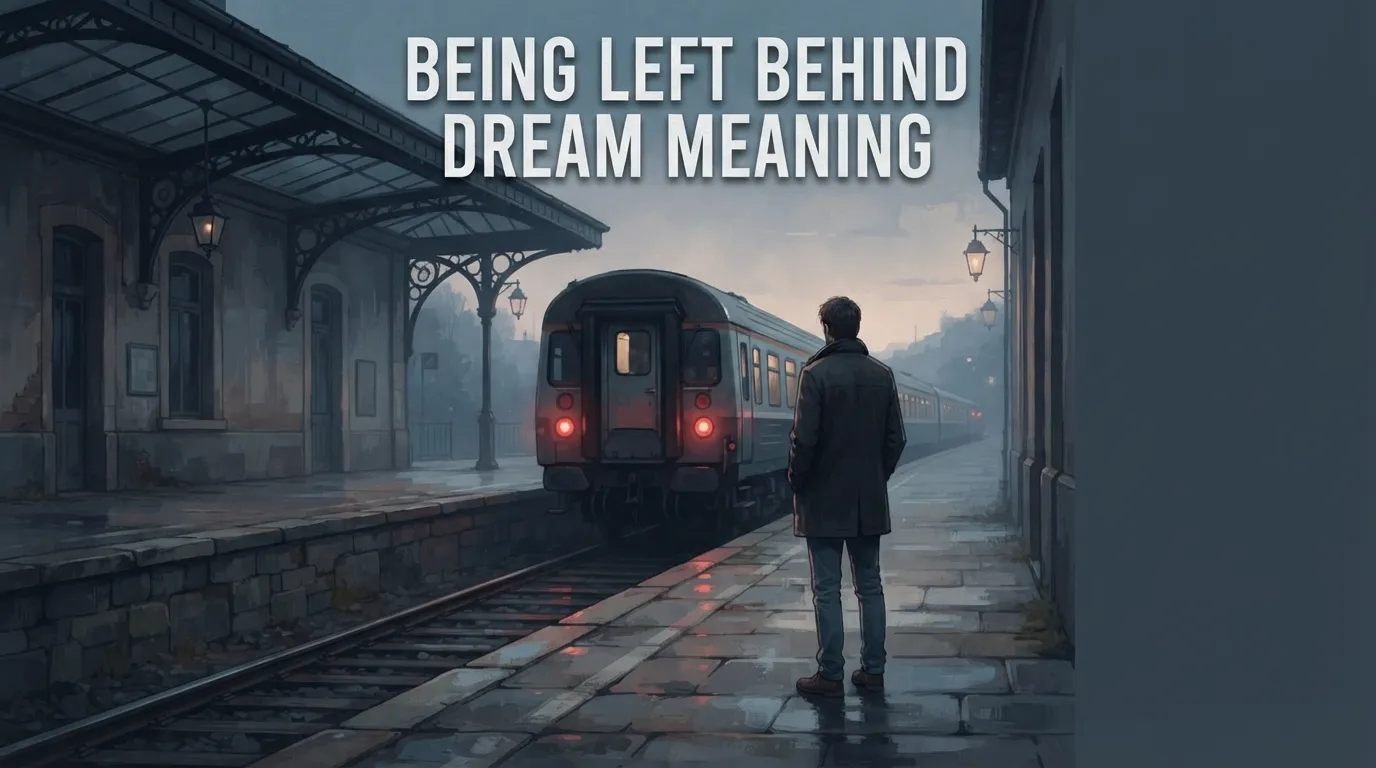
There is a particular ache to dreaming of being left behind. It is not the sharp fear of a chase or a fall. It is quieter and, for many people, worse: the bus pulls away, the group walks on, the door closes — and you are standing there, watching your life continue without you.
This dream is one of the most human dreams there is. Almost everyone has felt, at some point, like the world moved on while they stayed in place. The dream takes that feeling and stages it.
The Platform Is the Feeling
Left-behind dreams tend to share a setting: a station, an airport, a road, a school, a wedding — some place of departure. The setting matters because it names the kind of leaving. A missed flight may point to a missed opportunity. A group walking away may point to social belonging. A family leaving without you may point to a fear of being forgotten by the people closest to you.
Notice who leaves. If it is friends, the dream may be about social anxiety or a friendship that is changing. If it is a partner, it may touch fears of abandonment in the relationship. If it is strangers, the dream may be more existential: a sense that life itself is moving faster than you can follow.
Left Behind by Whom, Left Behind from What
Two questions untangle this dream faster than any symbol dictionary. First: who left? Second: what were they leaving toward?
Sometimes the group is heading toward something joyful — a celebration, a trip, a new chapter — and your exclusion stings precisely because you wanted to be part of it. That version of the dream often reflects comparison: watching peers marry, advance, or move on while you feel stuck. Social media can feed this feeling daily, and the dream may be its nighttime echo.
Other times, the group is fleeing something, and being left behind feels dangerous rather than lonely. That version points to a fear of being unprotected — of facing a threat without the people you count on.
The Deeper Roots
Being-left-behind dreams often connect to attachment — the deep human need to feel securely connected. People who experienced inconsistent care in childhood, or who have lived through abandonment, betrayal, or sudden loss, tend to dream this dream more often. It is not a flaw. It is the mind rehearsing its oldest worry: will the people I need stay?
The dream can also surface during ordinary transitions. A child leaving for college, a friend moving away, a team changing at work — any real departure can stir the dream. The sleeping mind takes a small goodbye and stages it at full scale.
What the Dream Gets Wrong
Here is something worth remembering when you wake from this dream: it shows you being left, but it rarely shows you what happens next. In the dream, the story ends at the platform. In real life, the story continues. The bus leaves, and you catch the next one. The group walks on, and you find your own road. The dream’s cruelty is partly a trick of editing — it cuts the scene before your resilience appears.
That is why one of the most useful responses to this dream is practical. When you wake, name one connection that is steady in your life right now — one person, one routine, one place where you are not left behind. The dream speaks in absolutes; waking life is usually more nuanced.
Turning the Dream Into a Conversation
If this dream repeats, it may be asking for a conversation rather than an interpretation. Is there a relationship where you feel increasingly sidelined? A friendship where you are always the one reaching out? A workplace where decisions happen without you? The dream may be the most honest statement you have made about that situation — made, as dreams are, without words.
It can also be an invitation to self-compassion. People who dream of being left behind are often people who try hard to belong. The dream is not evidence that you are unwanted. It may be evidence of how much belonging matters to you — and how much it hurts when it feels uncertain.
When the Dream Repeats
A single left-behind dream is usually a passing echo of a transition. A repeating one is a louder signal. If you keep dreaming of being left behind, the dream may be tracking a pattern in waking life: a role where you are consistently overlooked, a friendship where you are always the one who initiates, a family where decisions happen in rooms you are not invited into.
Repetition is the dream’s way of underlining. It is worth asking, without self-blame, whether there is a place in your life where you have been waiting to be chosen — and whether it is time to choose yourself instead. Sometimes the answer is to speak up in the relationship. Sometimes it is to find a new group, a new table, a new road. The dream does not prescribe the answer. It insists that the question be asked.
Being left behind in a dream is painful, but it is also information. It tells you where your heart is most tender, and which connections you most want to protect. If you want to understand the psychology behind that tenderness, the Wikipedia article on Loneliness explores how separation and belonging shape the mind.










