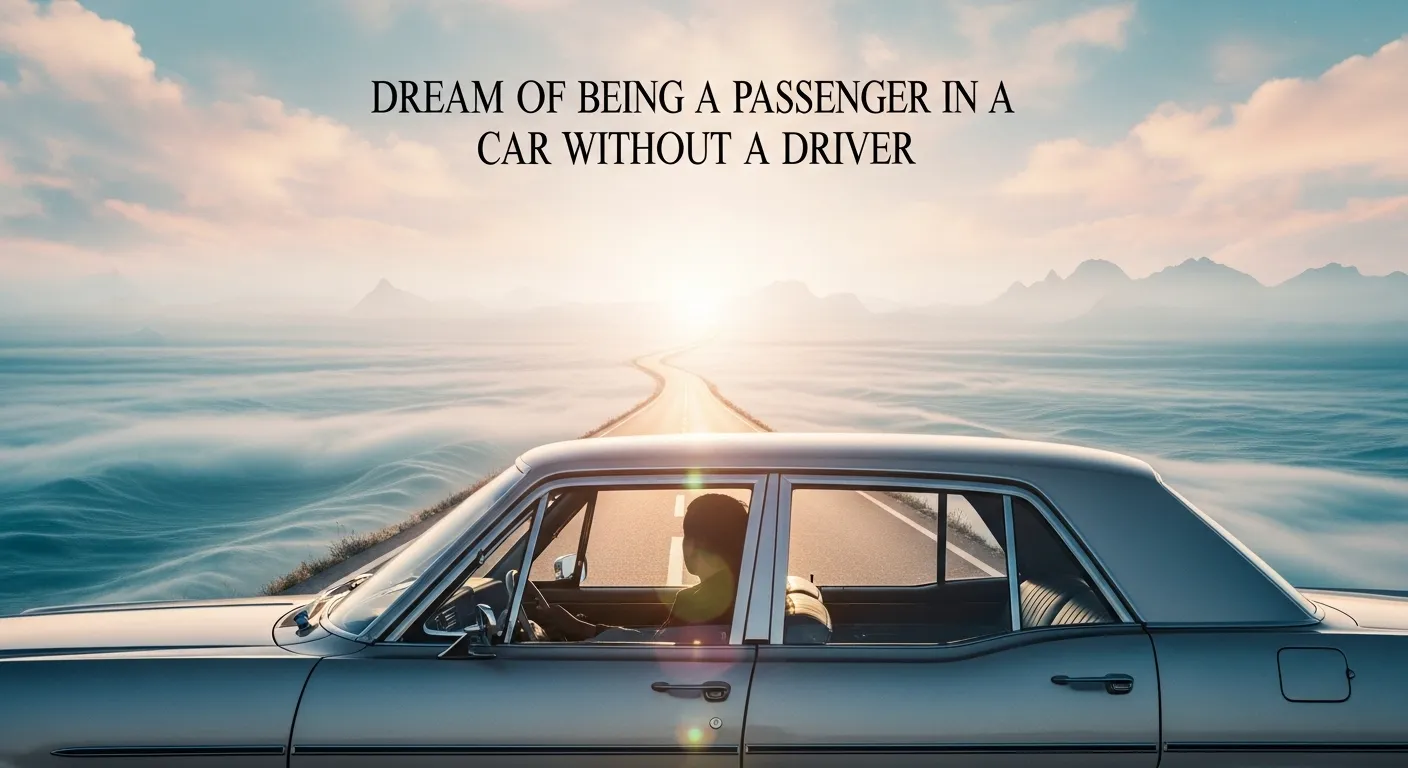
The most disturbing detail of this dream is not the speed, or the road, or even the danger. It is the empty seat. You are belted into the passenger side of a moving car, the world sliding past the windows, and the driver’s seat — the seat where control lives — is vacant. Nobody is steering. And yet the car keeps going.
This is the dream of surrendered control, and its question is the bluntest one the unconscious asks: if you are not steering your life, who — or what — is?
Autopilot, Literalized
Everyone lives portions of life on autopilot. Routines run, obligations cycle, months pass in a blur of competent repetition. Most of the time this is fine — autopilot is how humans survive busy lives. This dream appears when autopilot has quietly expanded beyond its mandate: when not just your mornings but your direction is running without you.
The dream’s genius is making the invisible visible. In waking life, surrendered control doesn’t look like an empty driver’s seat; it looks like a routine, a relationship dynamic, a career path that “just happened.” The dream strips away the camouflage and shows you the mechanism plainly: the car of your life is in motion, and your hands are nowhere near the wheel.
Three Questions About the Missing Driver
The dream invites an investigation, and it proceeds best as three questions:
- When did you leave the driver’s seat? There is usually a moment — a decision deferred, a confrontation avoided, a “let’s just see how it goes” that became permanent. The dream rarely appears at the moment of surrender; it appears months or years later, when the accumulated distance from your own agency has become impossible to ignore.
- What is steering instead? The candidates are familiar: other people’s expectations, financial pressure, fear of conflict, inertia, a partner’s stronger will, a parent’s voice internalized decades ago. The dream doesn’t name the substitute driver — that’s your work — but it insists that something occupies the seat, because cars don’t steer themselves by accident.
- Do you actually want to drive? This is the question people skip, and it’s the most important one. Some surrendered control is chosen: the passenger who trusts the driver, the delegation that works, the season of life where steering felt like too much and letting go was wisdom. The dream isn’t automatically an indictment. Sometimes it’s asking whether the arrangement still serves you — or whether the lease on your own agency has expired.
The Road Matters Too
While the empty seat is the headline, the dream usually includes details about the journey, and they refine the reading. A straight, smooth highway suggests the surrender is comfortable — life is fine, things work, but you are not choosing any of it. This is the gilded autopilot: everything functions except your authorship.
A winding or dangerous road raises the stakes: the surrender is no longer comfortable, and some part of you knows the current direction is risky. Scenery you don’t recognize means the life you’re living doesn’t feel like yours — you are traveling through someone else’s landscape. And trying to climb into the driver’s seat mid-dream — the lurching, terrifying attempt to take over a moving car — is the dream staging the difficulty of reclaiming agency once it’s been surrendered: possible, but frightening, and requiring you to act while everything is in motion.
Taking the Wheel Back — or Not
If the dream is a complaint, the remedy is embarrassingly direct: drive something. Not everything — the dream doesn’t demand a total life overhaul. It demands evidence of authorship. One decision made deliberately instead of by default. One “no” where there has been a string of automatic yeses. One choice that is visibly, undeniably yours.
People who act on this dream often report a specific shift: the next version of the dream features a driver. Sometimes it’s them, hands on the wheel, awake and steering. Sometimes it’s someone they trust, and the feeling is peaceful rather than helpless — the dream acknowledging that chosen surrender is not the same as lost control.
But there’s a subtler possibility worth honoring. A few dreamers report that after sitting with the dream, they realized the empty seat wasn’t a problem to fix but a truth to accept: they had been trying to control things that were never theirs to steer, and the dream was showing them what surrender actually looks like when it’s done consciously. Not every empty driver’s seat is a failure. Some are an invitation to stop gripping the wheel of a car you were never meant to drive — and to notice, with relief, that it’s still moving.
The line between autopilot and trust is thinner than we like to admit, and this dream lives exactly on that line. If the image of the driverless car stuck with you, you might find it interesting that engineers are now building the literal version — the real-world story of self-driving cars is, in its own way, humanity’s waking attempt to answer the same question your dream asked in the night: what does it mean to be carried by something no one is steering?










