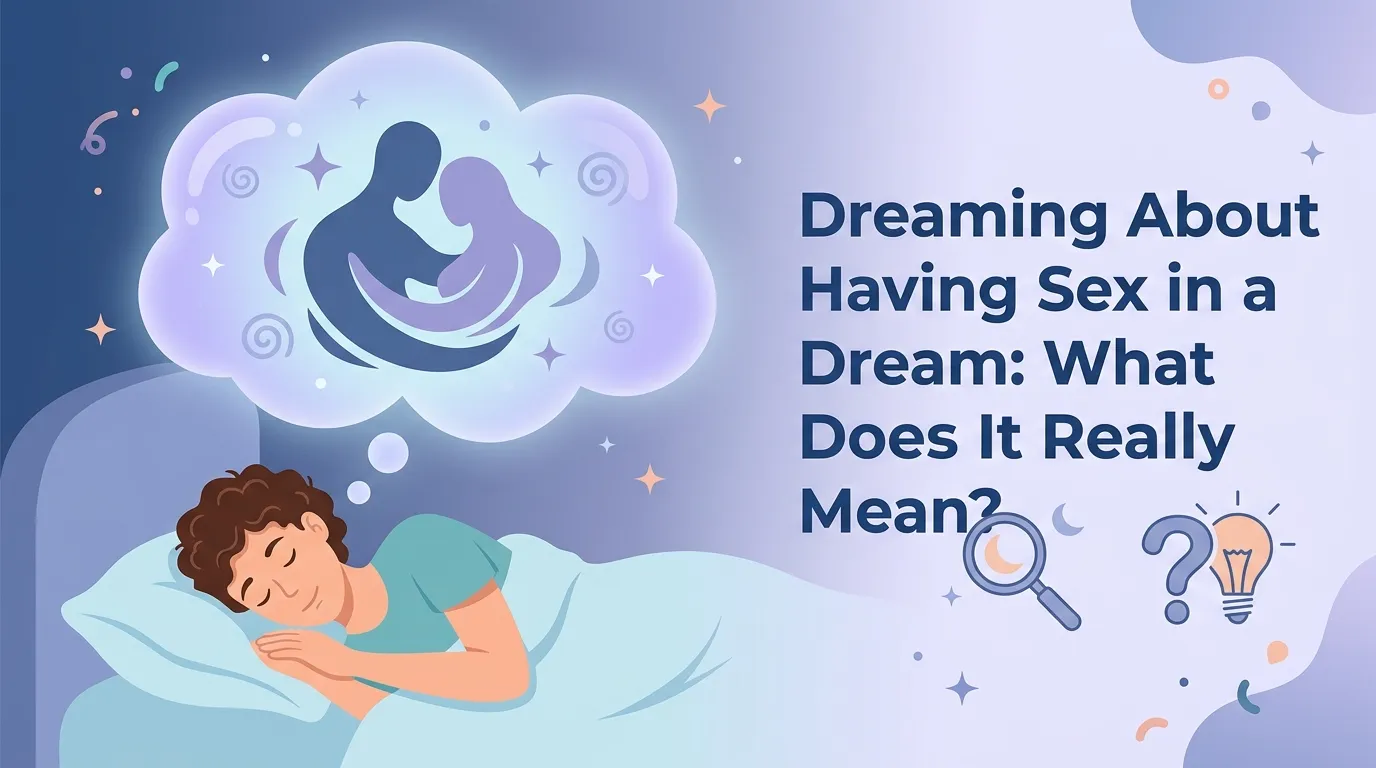
Have you ever woken from a dream about having sex and felt confused, embarrassed, curious, or even emotionally unsettled? You may wonder why your mind created such a personal dream, especially if the person in it was someone you would never expect.
Sometimes, the dream feels romantic. Other times, it feels uncomfortable or strangely intense. You may even find yourself running away, being chased, hiding, or trying to escape from something after the intimate part of the dream.
Dreams like these can feel deeply personal because sexuality is connected to some of our strongest emotions. However, dreaming about having sex does not automatically mean you secretly want to have sex with the person in your dream.
Dreams often speak through symbols.
A sexual dream may represent emotional intimacy, connection, desire, vulnerability, personal power, creativity, inner conflict, or a part of yourself that you have not fully accepted.
When the dream also contains a shadow or a sense of being chased, the meaning can become even deeper. Your unconscious mind may be drawing attention to hidden emotions, unresolved fears, suppressed desires, or a conflict between who you appear to be and who you feel you are inside.
In this article, we will explore what dreaming about having sex in a dream can mean from spiritual, psychological, Jungian, Freudian, energy-based, and neuroscience perspectives.
What Does Dreaming About Having Sex in a Dream Mean?
The simplest interpretation is that a sexual dream often symbolizes connection and integration rather than literal sexual desire.
Sex brings two things together. Symbolically, your mind may use intimacy to represent two parts of your life or personality coming together.
For example, the dream may represent:
- A desire for emotional closeness
- A need to feel loved or understood
- Attraction or curiosity
- A longing for connection
- Self-acceptance
- Suppressed emotions
- Unresolved feelings toward someone
- A desire for personal freedom
- The integration of different parts of your personality
- Creativity and life energy
- A major emotional transition
The person in the dream can also be symbolic.
If you dream about someone you know, the dream may not actually be about that person. Instead, that individual may represent a quality you associate with them.
For example, dreaming about a confident person could symbolize your own desire to become more confident.
Dreaming about someone emotionally distant could represent your own struggle with emotional availability.
Therefore, ask yourself:
“What does this person represent to me?”
That question may reveal more than simply asking whether you are attracted to them.
The Spiritual Meaning of Sexual Dreams
From a spiritual perspective, dreaming about having sex can symbolize union.
Many spiritual traditions view masculine and feminine qualities as symbolic forces within a person. These qualities do not necessarily refer to biological sex. They can represent traits such as action and receptivity, strength and sensitivity, logic and intuition.
A sexual dream may therefore symbolize an attempt to bring opposing parts of yourself together.
You may be learning to balance:
- Logic and emotion
- Strength and vulnerability
- Independence and connection
- Ego and intuition
- Your public identity and private self
- Your past and your future
The dream may appear during a period when you are becoming more aware of yourself.
This is why sexual dreams can sometimes happen during spiritual awakening or emotional transformation.
The dream may be less about physical sexuality and more about becoming whole.
The Shadow Symbolism in a Sexual Dream
One of the most important concepts for understanding unusual dreams is the shadow self.
Psychologist Carl Jung used the term shadow to describe parts of the personality that a person does not fully recognize, accept, or express.
Your shadow may contain:
- Suppressed emotions
- Unacknowledged desires
- Anger
- Fear
- Jealousy
- Insecurity
- Shame
- Hidden confidence
- Unused talents
- Parts of your personality you learned to reject
The shadow is not necessarily evil.
It simply represents aspects of yourself that remain outside your normal awareness.
A sexual dream can bring these hidden aspects closer to consciousness because sexuality is strongly connected with vulnerability, identity, desire, emotional attachment, and personal boundaries.
You may therefore dream about intimacy when your unconscious mind is asking you to acknowledge something you have been avoiding.
The Shadow as Your Hidden Self
Imagine your conscious personality as the part of yourself you show during everyday life.
You go to work. You talk to people. You make decisions. You follow social expectations.
But beneath that surface is a much larger emotional world.
Your dreams can give that hidden world a voice.
A sexual encounter in a dream may symbolize a meeting with a part of yourself that you have ignored.
For instance, someone who always tries to appear strong may dream about intense vulnerability.
Someone who suppresses their emotions may dream about deep intimacy.
Someone who avoids taking risks may dream about a passionate or spontaneous experience.
The dream may be saying:
“There is a part of you that wants to be recognized.”
What Does Being Chased Mean in a Sexual Dream?
If the dream includes being chased, the emotional meaning becomes stronger.
Being chased in dreams commonly represents avoidance.
Something inside you may be demanding attention while another part of you wants to escape.
The thing chasing you could symbolize:
- Fear
- Guilt
- Emotional pain
- An unresolved relationship
- A difficult decision
- Suppressed anger
- A hidden desire
- Anxiety about intimacy
- Fear of vulnerability
- A part of yourself you do not want to face
If sexual intimacy happens before or during the chase, the dream may connect desire and fear.
You may want closeness but fear what closeness requires.
You may want emotional connection but fear being hurt.
You may desire change but fear losing control.
This creates an inner conflict.
The dream turns that conflict into a story.
Why the Chase Intensifies the Dream’s Meaning
A normal sexual dream may simply reflect emotions, memories, attraction, or the brain’s normal dream activity.
But when the dream suddenly becomes threatening, your unconscious mind may be highlighting a conflict.
The emotional sequence can be meaningful:
Attraction → intimacy → vulnerability → fear → escape
This does not necessarily mean you fear sex.
It may mean you fear what intimacy represents.
Perhaps intimacy makes you feel exposed.
Perhaps you are afraid of emotional rejection.
Perhaps you have been avoiding a difficult truth about a relationship.
Or perhaps you are simply going through a stressful period, and your sleeping brain is combining unrelated emotions into one vivid story.
The feeling you experienced in the dream is often more important than the literal storyline.
Freudian Interpretation of Dreaming About Having Sex
Sigmund Freud believed dreams could provide insight into unconscious desires and conflicts.
From a Freudian perspective, sexual dreams may sometimes reflect unconscious wishes, emotional tensions, or desires that are not fully expressed during waking life.
However, Freud’s approach does not mean every sexual dream should be interpreted literally.
The person in the dream could symbolize something else.
For example, dreaming about an old friend may represent a period of your life rather than sexual interest in that individual.
Likewise, dreaming about an unfamiliar person may symbolize an unknown quality within yourself.
Freudian analysis would encourage you to examine your personal associations.
Ask:
- What did I feel during the dream?
- Who was involved?
- What memories does that person bring up?
- Did I feel safe or uncomfortable?
- Was there guilt afterward?
- What has been happening in my emotional life recently?
The emotional associations surrounding the dream may reveal more than the sexual imagery itself.
Jungian Interpretation of a Sexual Dream
Jungian dream interpretation takes a different approach.
Carl Jung believed dreams often communicate through archetypes and symbolic images.
From this perspective, sexual intimacy can symbolize psychological union.
It may represent the meeting of different parts of the psyche.
The dream could be showing you that you are entering a stage of personal integration.
Perhaps you are learning to accept a quality that you previously rejected.
Perhaps your emotional and logical sides are becoming more balanced.
Perhaps you are becoming more comfortable with your identity.
In Jungian psychology, the shadow is especially important.
If the shadow appears in the dream, the message may be:
“Look at the part of yourself you have been avoiding.”
The goal is not to eliminate the shadow.
The goal is to understand it.
Sexual Dreams and the Ego vs. Higher Self
Spiritual interpretations sometimes describe a conflict between the ego and higher self.
The ego wants certainty, control, approval, and safety.
The higher self, in spiritual language, represents deeper awareness, authenticity, intuition, and personal growth.
A sexual dream may reveal tension between these two sides.
For example, your conscious mind may say:
“I should not feel this way.”
Your deeper emotional self may respond:
“But this feeling is trying to teach you something.”
The dream does not necessarily tell you what action to take.
Instead, it may invite you to become more honest about your emotional experience.
Energy-Based Meaning of Sexual Dreams
Some spiritual traditions interpret sexual dreams through the idea of energy.
Sexuality is often associated with life force, creativity, emotional connection, and personal vitality.
From this perspective, dreaming about intimacy may suggest that your emotional energy is changing.
You might be:
- Releasing old emotional patterns
- Becoming more confident
- Seeking deeper connection
- Experiencing emotional awakening
- Processing relationship issues
- Reconnecting with creativity
- Becoming more aware of your personal boundaries
These interpretations are spiritual frameworks rather than scientifically established facts.
Still, they can provide a useful way to reflect on your inner experience.
Chakras and Sexual Dreams
In energy-based traditions, sexual dreams are often connected with the sacral chakra, which is associated with emotions, creativity, pleasure, relationships, and desire.
A dream involving intimacy may therefore symbolically point toward emotional expression.
You might ask:
“Where am I blocking emotional expression in my life?”
Another interpretation involves the heart chakra.
If the dream feels deeply emotional rather than primarily physical, it may represent a longing for love, trust, compassion, or emotional closeness.
The throat chakra may also become relevant if the dream leaves you thinking about something you have been unable to say.
Again, chakra interpretations are spiritual rather than medical explanations. Their value can come from using them as tools for personal reflection.
Sexual Dreams and Spiritual Awakening
Some people notice unusually vivid dreams during periods of major personal change.
A spiritual interpretation may describe this as awakening.
You may become more aware of:
- Old emotional wounds
- Relationship patterns
- Personal boundaries
- Hidden fears
- Unexpressed desires
- Your authentic identity
- Your intuition
- The difference between external expectations and inner needs
During these periods, dreams can feel unusually emotional.
A sexual dream may symbolize the merging of an old version of yourself with a new one.
In that sense, the dream could represent transformation.
Personal Growth Lessons From a Sexual Dream
A dream about sex can offer several useful personal-growth questions.
1. Am I craving emotional connection?
Sometimes the dream reflects a need for closeness rather than physical intimacy.
You may want someone to understand you, support you, or make you feel emotionally safe.
2. Am I suppressing an important emotion?
If you woke feeling anxious, guilty, or confused, ask what emotion you may have been pushing away.
3. Am I afraid of vulnerability?
Intimacy requires openness.
The dream may highlight discomfort with being emotionally seen.
4. Am I accepting myself?
Sexuality can be closely connected with identity and self-image.
The dream may encourage greater self-acceptance rather than judgment.
5. Am I going through a major change?
Dreams often become more vivid during transitions.
A new relationship, career, move, breakup, personal goal, or identity shift can influence dream content.
Common Scenarios When Dreaming About Having Sex
Not every sexual dream has the same meaning. The details and emotions can change the interpretation.
Dreaming About Having Sex With Someone You Know
This does not automatically mean you want a relationship with that person.
They may symbolize a quality you admire, dislike, miss, or associate with a certain period of your life.
Ask yourself:
“What quality does this person represent to me?”
That answer may be more meaningful than the person’s identity.
Dreaming About Having Sex With a Stranger
A stranger may symbolize an unfamiliar part of yourself.
The dream could represent curiosity, personal transformation, independence, or the discovery of something new.
If the stranger feels comforting, the dream may symbolize openness.
If the stranger feels threatening, it may represent uncertainty or fear.
Dreaming About Sex With an Ex
Dreaming about an ex does not necessarily mean you should return to that relationship.
The dream may represent unresolved emotions, memories, lessons, or a previous version of yourself.
Sometimes the person represents the emotional period associated with the relationship.
Dreaming About Running Away After Intimacy
Running away can symbolize avoidance.
You may be trying to escape emotional vulnerability, responsibility, fear, or an uncomfortable truth.
Consider what you were running from rather than focusing only on where you were going.
Dreaming That You Are Being Chased
Being chased may represent an emotion or situation that you are avoiding.
The more intense the chase, the more emotionally significant the issue may feel to your unconscious mind.
However, a chase dream can also simply occur because your brain is processing stress.
Dreaming That You Are Never Caught
If you keep running but are never caught, the dream may symbolize an ongoing avoidance pattern.
You may recognize that something needs attention but continue postponing it.
The dream can invite you to stop running and become curious about what you are avoiding.
Dreaming About Facing the Shadow
If you turn around and face whatever is chasing you, this can symbolize courage and psychological integration.
You are no longer trying to escape.
You are ready to understand.
This can be a powerful symbol of personal growth.
Dreaming That the Shadow Disappears
If the shadow disappears after you face it, the dream may represent acceptance.
Something that once frightened you may become less powerful once you understand it.
This does not mean the dream predicts that a problem will disappear in real life.
Instead, it may reflect a change in your relationship with that problem.
Gradual Realization vs. Sudden Fear in Dreams
The emotional timing of the dream matters.
Gradual Realization
Perhaps the dream begins peacefully.
You experience intimacy, connection, or curiosity.
Then you slowly realize that something feels wrong.
This may symbolize gradual awareness.
You could be slowly recognizing an emotional problem in waking life.
Maybe you have recently noticed that a relationship is changing.
Maybe you are beginning to understand an old emotional wound.
Maybe you are becoming aware of a desire that you previously ignored.
Sudden Fear Reaction
In other dreams, everything changes instantly.
You suddenly feel threatened.
You run.
You hide.
Your heart races.
This may reflect a fight-or-flight response.
Sudden fear can occur when your sleeping brain rapidly activates threat-related systems.
It does not necessarily indicate a hidden spiritual warning.
Sometimes your brain simply creates a dramatic threat scenario while processing emotions.
Why Stress Can Cause Sexual Dreams
Stress can influence dream content.
When you are stressed, your brain continues processing emotional information while you sleep.
This can produce dreams that combine seemingly unrelated themes.
For example, your brain might combine:
relationship memories + anxiety + intimacy + fear + recent experiences
The result may be a strange dream that feels meaningful because the emotions are intense.
Stress-related sexual dreams are therefore not unusual.
Anxiety and Dreaming About Sex
Anxiety can influence both the content and emotional intensity of dreams.
If you have been worried about relationships, rejection, self-image, intimacy, or major life decisions, your dreams may reflect those concerns.
Anxiety can also make dreams feel more vivid.
Instead of asking:
“Why did I dream about sex?”
try asking:
“What emotions were strongest in the dream?”
The answer might be fear, excitement, shame, loneliness, comfort, confusion, or longing.
That emotional response can provide a better starting point for reflection.
Trauma and Sexual Dreams
Past difficult experiences can influence dream content.
For some people, dreams may revisit themes of vulnerability, fear, loss of control, or intimacy.
A sexual dream does not automatically mean that trauma is present.
Likewise, one disturbing dream cannot diagnose a psychological condition.
However, if dreams repeatedly cause severe distress, disrupt sleep, or bring back painful memories, speaking with a qualified mental health professional can be helpful.
Your emotional safety should come before symbolic interpretation.
Life Changes and Sexual Dreams
Major life transitions can make dreams more intense.
You might notice unusual dreams during:
- A breakup
- The beginning of a relationship
- Marriage
- A career change
- Moving to a new place
- Increased independence
- Personal transformation
- Grief
- Major uncertainty
The brain is constantly adapting to new information.
Dreams may be one way that emotional memories and new experiences are processed.
The Science Behind Sexual Dreams
There is a simple scientific explanation for why dreams can contain sexual themes.
During REM sleep, the brain becomes highly active while most voluntary muscles remain temporarily inhibited.
REM sleep is strongly associated with vivid dreaming.
During sleep, the brain processes memories, emotions, and other information from waking life.
Sexual dreams can therefore emerge naturally from the combination of:
- Memories
- Emotions
- Hormonal activity
- Recent experiences
- Imagination
- Relationship concerns
- Random neural activity
A dream does not have to contain a hidden message for it to occur.
Sometimes the brain simply creates a story from pieces of information.
REM Sleep and Emotional Processing
REM sleep is often associated with emotional memory processing.
This helps explain why dreams can feel emotionally powerful even when the storyline makes little sense.
Your dream might combine a person from years ago with a recent conversation and an imaginary location.
The brain is not necessarily telling a literal story.
It is constructing an experience from different pieces of information.
That is why dream symbolism should be approached thoughtfully rather than treated as a fixed dictionary.
The Threat Simulation Theory
One scientific theory suggests that some dreams simulate threatening situations.
This may explain common dreams involving:
- Being chased
- Falling
- Hiding
- Fighting
- Losing control
- Being trapped
If your sexual dream suddenly turns into a chase, your brain may be combining intimacy with a threat simulation.
The chase does not necessarily mean something supernatural is pursuing you.
It may simply represent the brain’s tendency to create emotionally charged scenarios during sleep.
How to Reflect on a Sexual Dream
You do not need to panic or judge yourself after a strange dream.
Instead, become curious.
Ask yourself:
- What emotion did I feel most strongly?
- Who appeared in the dream, and what do they represent to me?
- Did I feel safe, vulnerable, excited, ashamed, or afraid?
- Was I running from something?
- What has been happening in my life recently?
- Am I avoiding an emotional issue?
- Do I feel disconnected from someone or from myself?
- What part of myself might need more acceptance?
These questions can help turn a confusing dream into an opportunity for self-understanding.
Journaling After a Sexual Dream
Keep a notebook beside your bed.
When you wake up, write down the dream before the details disappear.
Record:
- People
- Locations
- Emotions
- Colors
- Actions
- Words
- Threats
- Your reactions
- How the dream ended
Then write one sentence:
“If this dream represents an emotion in my life, that emotion might be…”
Do not force an interpretation.
Let the meaning develop naturally.
Mindfulness and Dream Reflection
Mindfulness can help you observe your thoughts without immediately judging them.
If you wake from an intense dream, take several slow breaths.
Notice your body.
Ask yourself what you are feeling.
You do not have to decide whether the dream was spiritual, psychological, symbolic, or random.
You can simply acknowledge:
“I had a powerful dream, and I am curious about what it brought up in me.”
That attitude can reduce shame and anxiety.
Shadow Work for Sexual Dreams
Shadow work involves exploring parts of yourself that you may have ignored or rejected.
After a sexual dream, consider completing these sentences:
“A part of me wants…”
“A part of me fears…”
“I usually hide…”
“I feel uncomfortable admitting…”
“I wish people understood that…”
“The person in my dream reminds me of…”
These questions can help you explore the unconscious themes behind the dream.
Shadow work should not be about blaming yourself.
It should be about understanding yourself with compassion.
Is Dreaming About Sex a Sign You Want Sex?
Not necessarily.
Sometimes it reflects sexual desire.
But it can also symbolize love, intimacy, connection, confidence, creativity, vulnerability, or emotional integration.
Dreams are not reliable tests of what you consciously want.
A dream can contain something you would never choose in waking life.
The most useful approach is to look at the emotional context.
Is a Sexual Dream a Spiritual Message?
Some people interpret vivid sexual dreams as spiritual messages about connection, awakening, energy, or personal transformation.
Others understand them primarily through psychology and neuroscience.
There is no scientifically established method for proving that a particular sexual dream has a supernatural meaning.
You can still use spiritual reflection if it helps you understand your emotions and values.
The key is to avoid treating one dream as a guaranteed prediction of the future.
Frequently Asked Questions
1. What does dreaming about having sex in a dream mean?
It can symbolize intimacy, emotional connection, desire, vulnerability, self-acceptance, creativity, or psychological integration. Sometimes it reflects sexual desire, but it does not always have a literal meaning.
2. Does dreaming about sex mean I want that person?
No. The person may represent a quality, memory, relationship dynamic, or period of your life. Consider what that person symbolizes to you rather than assuming the dream represents literal attraction.
3. What does being chased after a sexual dream mean?
Being chased may symbolize avoidance, fear, emotional conflict, or vulnerability. It can also result from ordinary stress and the brain’s threat simulation processes during dreaming.
4. What does the shadow mean in a sexual dream?
The shadow can represent hidden emotions, suppressed desires, rejected personality traits, insecurity, anger, fear, or parts of yourself that you have not fully accepted.
5. Is dreaming about sex a sign of spiritual awakening?
It can be interpreted spiritually as a symbol of union, emotional integration, personal transformation, or increased self-awareness. However, there is no scientific proof that sexual dreams automatically indicate spiritual awakening.
6. Why do sexual dreams feel so real?
Dreams during REM sleep can be extremely vivid because the brain is highly active. Emotional and sensory systems can create experiences that feel remarkably realistic even though you are asleep.
7. Should I worry about a disturbing sexual dream?
Usually, an unusual dream is not a reason to worry. Dreams can contain strange, emotional, or uncomfortable material. If recurring dreams cause significant distress or interfere with your sleep and daily life, consider talking with a qualified professional.
8. How can I understand my sexual dream better?
Write the dream down immediately after waking and focus on the emotions, symbols, people, and current life circumstances connected to it. Journaling, mindfulness, and gentle shadow work can help you explore possible meanings.
Final Thoughts on Dreaming About Having Sex in a Dream
Dreaming about having sex in a dream does not have one universal meaning.
For one person, it may reflect attraction.
For another, it may represent loneliness or a desire for emotional closeness.
For someone else, it may symbolize personal transformation, vulnerability, creativity, or the integration of different parts of the self.
When a shadow appears or you are being chased, the dream may point toward something you are emotionally avoiding. From a Jungian perspective, it may invite you to meet your hidden self. From a Freudian perspective, it may reveal unconscious tension or desire. From a spiritual perspective, it may symbolize union and inner transformation. From a neuroscience perspective, it may simply reflect the brain’s emotional processing during REM sleep.
These perspectives do not have to compete.
The most helpful question may not be:
“What does this dream predict?”
Instead, ask:
“What is this dream helping me notice about myself?”
Perhaps it is showing you a need for connection.
Perhaps it is revealing fear beneath desire.
Perhaps it is reminding you to accept a part of yourself.
Or perhaps it is simply your sleeping brain creating a vivid story from emotions, memories, and imagination.
Whatever the explanation, you do not need to judge yourself for what happens in a dream.
Sometimes the strangest dreams can become quiet invitations to understand ourselves more deeply.