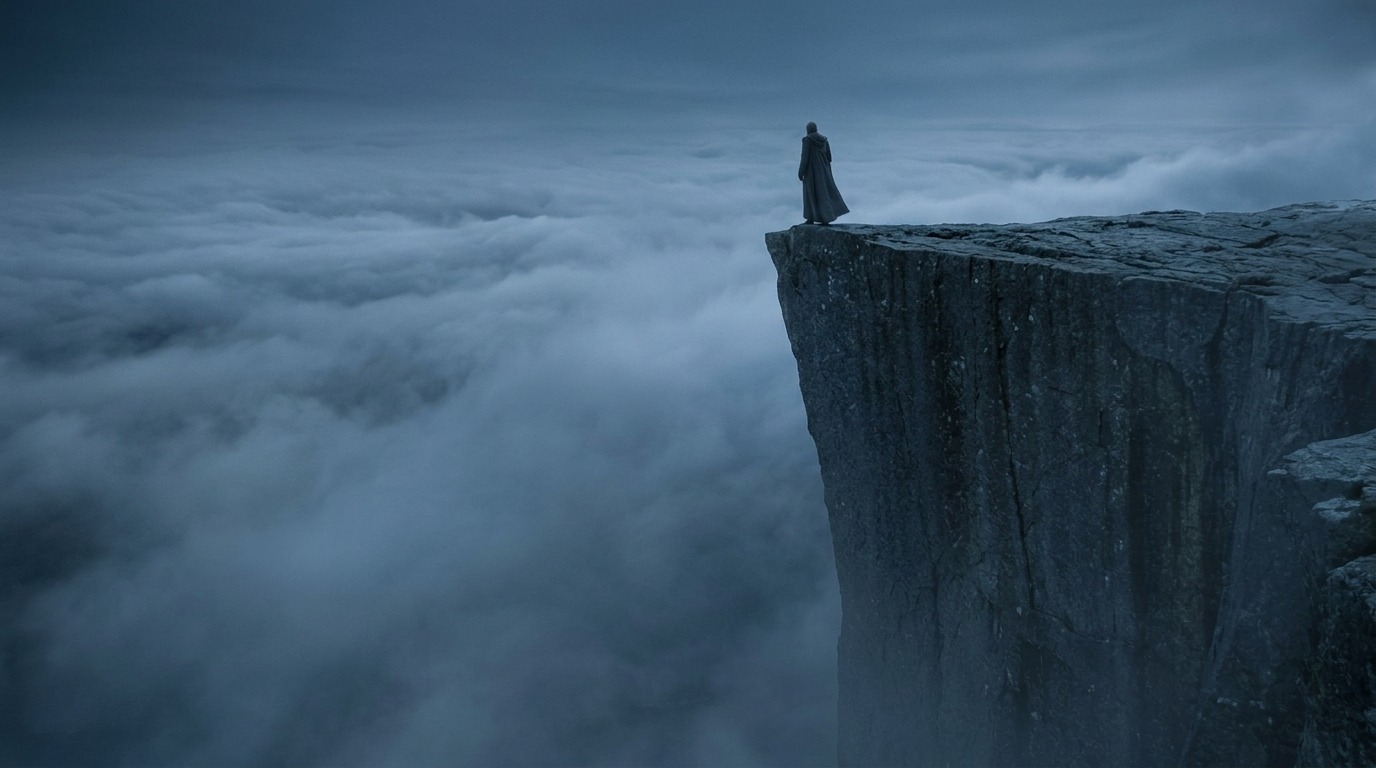
Most falling dreams end the way nightmares are supposed to end: with a jolt, a gasp, a heart hammering against the ribs as you wake before impact. This one doesn’t. You fall — from a rooftop, a cliff, an airplane, a height so great the ground is a rumor — and then the ground arrives like a held breath being let out. Soft. Gentle. Almost kind. You land, and you are fine.
The dream holds two opposite truths at once, and that is precisely its message: the fear was real, and so was the safety. It is a dream about surviving the thing you were certain would destroy you.
Why the Fall Scares You
The terror in the falling portion is honest. Falling is one of the oldest alarms in the mammalian brain — newborns flinch at the sensation, and adults never fully lose the reflex. In dreams, the fall almost always maps to a waking-life feeling of losing altitude: a career wobbling, a relationship tilting, finances sliding, health uncertain. The height of the fall usually matches the height of the stakes. A fall from a curb is a bad week; a fall from the sky is a life.
What makes this dream different from the ordinary falling nightmare is that the fear is allowed to run its full course. The dream does not release you to escape it. You ride it all the way down. That takes a particular kind of psychological readiness — the dream only gives you the full fall when some part of you is prepared to see it through.
Why the Landing Matters More Than the Fall
Here is the part people under-read: the soft landing is not a consolation prize. It is the thesis. Dreams are economical storytellers; they do not add gentle endings by accident. The landing is telling you something the fear cannot:
- Your catastrophe estimates are inflated. The thing you are bracing for — the conversation, the outcome, the failure — is unlikely to land as hard as your dread insists. The dream is your own mind filing a dissenting opinion against your anxiety.
- You have resources you are not counting. The soft ground is often read as inner resilience, support systems, or simply the competence you have built and forgotten to credit. The landing is soft because you are, in ways you don’t acknowledge, prepared.
- The surrender was the point. Some falls in this dream come with a distinct moment — a decision, mid-air, to stop fighting the descent. People who report that moment often describe the landing that follows as the calmest part of the dream. Psychologically, this maps to acceptance: the situations that resolve most gently are often the ones we finally stop wrestling.
Reading Your Particular Landing
The texture of the soft landing customizes the message. Landing in water suggests emotional safety — you will be caught by feeling, by human connection, by the softer parts of life. Landing on grass or earth suggests groundedness — practical resources, stability you have built, the literal ground of your life holding. Landing in someone’s arms, or being caught, points to a specific person or community that will buffer the fall. Landing and bouncing, laughing, or getting up immediately is the most optimistic variant: not just survival but a quick recovery, the resilience of someone who has fallen before and learned the terrain.
When This Dream Visits
Timing is a reliable interpreter. This dream tends to appear in the window before a feared outcome — the week before the results, the night before the difficult talk, the season of waiting for news. It rarely appears after the disaster; by then the mind has other work to do. Its placement in your life is the clue: it is a pre-event dream, and its function is to recalibrate your dread.
It also appears during voluntary leaps: quitting the job, ending the relationship, starting the thing. In these cases the fall is the leap itself, and the soft landing is your deeper self voting in favor. Fear says the jump will kill you; the dream says the ground is closer and kinder than fear claims.
Trust Exercises for the Nervous Mind
If the dream is recurring, your anxiety may need more than one night’s reassurance. A useful practice: write down the specific catastrophe you are bracing for, in the most concrete terms possible. Then write down what a “soft landing” version of that outcome would look like — not the fantasy best case, just the survivable one. Most people find the survivable version is also the likely version; dread had simply edited it out.
Another: notice where in your body the dream’s fear lived, and where the landing’s relief lived. The body often knows the difference between a real threat and a rehearsed one before the mind catches up. The landing felt real too. Give it equal weight.
You fell from a great height and the earth received you gently. That is not a small thing to dream. It is your own mind telling you, in the oldest language it has, that you are going to be all right — and that the fear, however convincing, was only ever the middle of the story, not the end. The strange science of why falling feels the way it does, even in sleep, is explored in research on the sensation of falling, which turns out to be as much about the brain’s alarm systems as about gravity.










