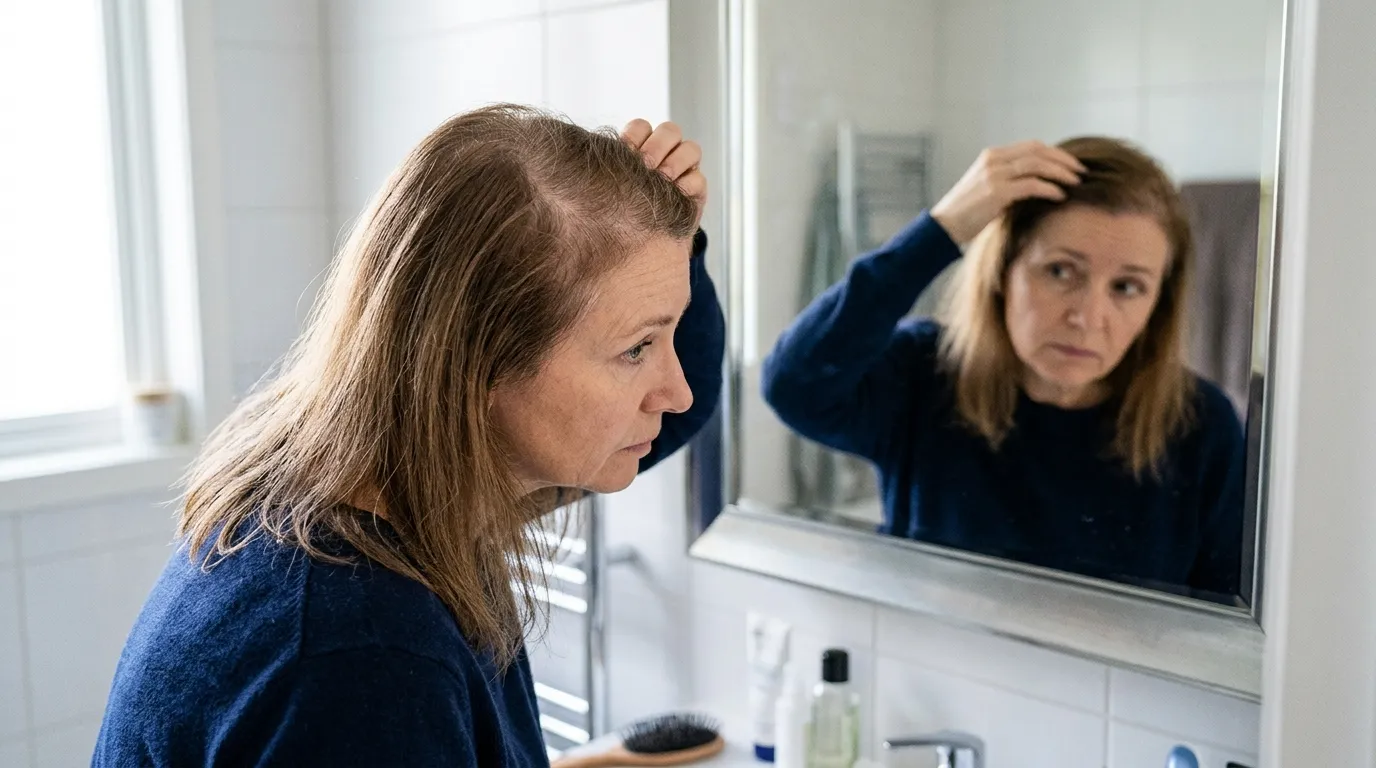
Hair carries more meaning than almost any other part of the body. It is the one part we cut, color, cover, and display — the part we use to say who we are before we speak. So when hair begins to thin or fall, the experience is rarely only physical. It can feel like losing a signature, a season, a version of yourself. A reflection on the spiritual meaning of hair loss begins there: not with a diagnosis, but with the honest weight of what hair means.
What hair has symbolized
Across cultures, hair has stood for strength, beauty, vitality, and identity. Samson’s strength lived in his hair. In many traditions, women kept their hair long as a sign of life force and dignity; cutting it marked mourning, renunciation, or a new beginning. In some spiritual communities, shaving the head is a sacred act — a deliberate release of vanity and a mark of devotion. The symbolism is consistent: hair is bound up with who we are, and changing it means changing something about the self.
That is why hair loss can feel spiritually significant even when its causes are entirely ordinary. The event touches a symbol, and symbols carry feelings. Naming those feelings is not superstition. It is honesty.
The shedding readings
In spiritual reflection, hair loss is often read as a form of shedding — the release of an old version of the self. Trees shed leaves to survive winter; snakes shed skin to grow; people shed old roles, relationships, and beliefs when a season ends. Seen this way, hair loss can accompany, or symbolize, a period of letting go: of an old identity, an old standard of beauty, an old way of being seen.
Another common spiritual reading is release of control. Hair is one of the few things we can style, manage, and command — until it is not. Losing it can confront a person with the limits of control, and with the invitation underneath that confrontation: to find worth that does not depend on appearance, and steadiness that does not depend on managing every outcome.
A third reading is transition and renewal. In several traditions, a change in the body marks a change in the soul’s season: the end of one chapter, the beginning of another. Hair loss can coincide with menopause, with grief, with a major life change — moments when the old chapter is genuinely over. The spiritual question is not “why is this happening to me?” but “who am I becoming, and what does this season ask of me?”
The harder feelings deserve room
Spiritual readings should never be used to dismiss real distress. Hair loss can bring grief, anger, shame, fear, and a sense of betrayal by one’s own body. All of those are legitimate. A spiritual framing that says “just see it as a blessing” is not wisdom; it is avoidance. The honest version makes room for both: this may carry meaning, and it also hurts. Both can be true.
It is also important to say plainly: this article is a spiritual reflection, not medical guidance. Hair loss has many possible physical causes — hormonal shifts, stress, nutrition, illness, medication, genetics, and more — and only a qualified health professional can evaluate what is happening in your body. If you are experiencing sudden, patchy, or heavy hair loss, or hair loss accompanied by other symptoms, please see a doctor or dermatologist rather than relying on spiritual interpretation alone. Attending to the body is not a failure of faith. It is a form of care.
Practices for a shedding season
For those who find spiritual reflection helpful alongside proper care, three practices recur in the traditions that honor this experience. The first is ritual release: writing down what you are letting go of — an old standard, an old role, an old fear — and releasing it deliberately, in prayer, journaling, or quiet reflection. The second is redefinition: asking what beauty and identity mean to you beyond hair, and letting the answer be generous. The third is community: speaking honestly with someone you trust about what the experience feels like, rather than carrying it silently.
Some women also find meaning in the act of choosing: a new cut, a covering worn with intention, or the decision to wear their hair exactly as it is. Choice restores agency where loss has taken it. The spiritual point is not the style. It is the authorship.
Hair loss, spiritually understood, is a shedding — and shedding, in every tradition that honors it, is not an ending. It is the condition for new growth. What grows next may not look like what was lost. It rarely does. But the roots remain, and the seasons turn, and the self that emerges from a shedding season is often sturdier, kinder, and more fully its own than the one that entered it. For background on the physical side of this experience, the Wikipedia article on hair loss covers causes and terminology in plain language.










