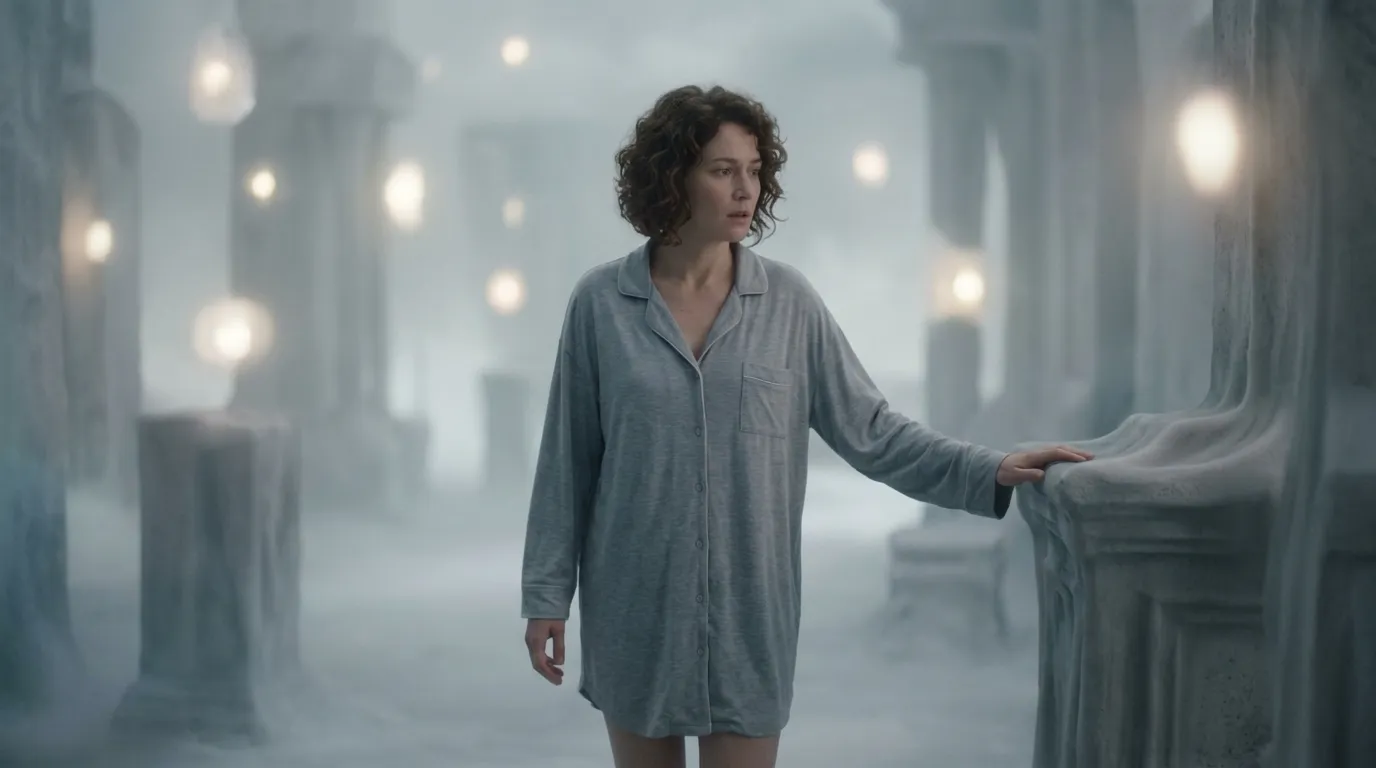
Doors are among the most patient symbols in dreams. They stand in walls, in hallways, in houses you have never seen, waiting to be opened. A door that leads to another dimension is the most extreme version of that symbol: not just another room, but another world. Another set of rules. Another life. The dream places you at a threshold and asks the oldest question a threshold can ask: will you go through?
Threshold dreams tend to appear at thresholds in waking life. A decision pending. A change approaching. A part of your life ending and another not yet begun. The door is the mind’s way of representing a possibility that feels both real and impossible — a life you could live, a person you could become, a truth you could face, if you were willing to step across.
Where is the door?
Location shapes the meaning. A door in your own house suggests that the new possibility is close — inside your existing life, in a place you already know, waiting to be noticed. A door in a strange house or an unfamiliar building suggests a possibility connected to something new: a new environment, a new relationship, a new field of thought.
A door in an unexpected place — a forest, a cliff face, the middle of a street, the bottom of a pool — suggests that the threshold is not where you expected to find it. Change may be arriving from an unlikely direction, or a possibility may be hiding inside an ordinary situation.
A door that appears repeatedly, in dream after dream, deserves special attention. A recurring door is a recurring invitation — or a recurring warning. It may represent a decision you keep postponing, a truth you keep circling, or an opportunity that keeps presenting itself while you keep walking past.
What is on the other side?
The world beyond the door is the dream’s image of the unknown. A bright, beautiful world can represent hope: a future you long for, a version of your life that feels freer or more alive. A dark, frightening world can represent fear: a future you dread, a consequence you anticipate, a part of yourself you do not want to meet.
A world that looks almost identical to your own, with small differences — a different color of sky, a different arrangement of furniture, a version of you living a slightly different life — is one of the most haunting variations. It suggests the road not taken: the life you might have lived if you had made a different choice. The dream lets you glimpse it without requiring you to live it.
A world that is empty, or that dissolves when you look at it, can suggest uncertainty: you sense a possibility, but you cannot yet picture what it would be. The door is real, but the destination is not yet formed. That is not a failure of the dream. It is an honest image of a decision still in progress.
Going through, staying put, or being unable to open it
Your action at the door is the dream’s core. Stepping through with curiosity or courage often reflects readiness: some part of you is prepared to change, to explore, to take a risk. Stepping through with dread often reflects a change that feels forced — something you must do, not something you chose.
Standing before the door without opening it is a common and meaningful version. It reflects hesitation: you can see the possibility, but you are not yet ready to commit. The dream is not judging the hesitation. It is honoring it. Some doors should be considered carefully before they are opened.
Being unable to open the door — it is locked, stuck, or too heavy — can reflect a feeling of being blocked: an opportunity that feels out of reach, a change you want but cannot yet make, a part of yourself you cannot yet access. Finding a key, or having someone open the door for you, can represent help, insight, or a shift that makes the previously impossible suddenly possible.
Closing the door, or running from it, is also meaningful. Not every threshold must be crossed. Sometimes the right choice is to stay where you are, to protect what you have, or to wait until you are ready. A dream of refusing a door can be as wise as a dream of crossing one.
Doors, dimensions, and the lives we do not live
The “other dimension” in this dream is often a metaphor for the unlived life: the career you did not pursue, the place you did not move to, the person you did not become, the belief you did not adopt. Everyone carries unlived lives. The dream gives one of yours a door and lets you stand before it.
That is why the dream can feel both thrilling and mournful. The other dimension is not better or worse than your own. It is simply other — and its otherness reminds you that your life, too, was once a possibility behind a door, and that you chose it, or drifted through it, one decision at a time.
The dream may also reflect curiosity about consciousness itself: a sense that reality is larger, stranger, or more layered than daily life suggests. You do not need to hold any particular belief about other dimensions to take that feeling seriously. The sense of mystery is real, even if the door is symbolic.
What to do with the door after waking
Ask yourself what the door represents, in the most concrete terms you can manage. Is there a decision you are standing before? An opportunity you have not yet explored? A conversation, a move, a risk, a truth? The dream may be urging you to consider it — not necessarily to leap through it, but to look at it honestly.
If you know what the door is, consider what would make you ready to open it: more information, more support, more time, more courage. If you do not know, let the dream sit. Doors that matter tend to reappear, in dreams and in life, until they are answered. The idea of other worlds beyond our own has captivated physicists, writers, and storytellers alike, and parallel universes appear in science and fiction as a way of imagining the lives we might have lived — which is, in the end, what this dream is really about: standing before a version of your life that could have been, and deciding what to do with the one you have.










