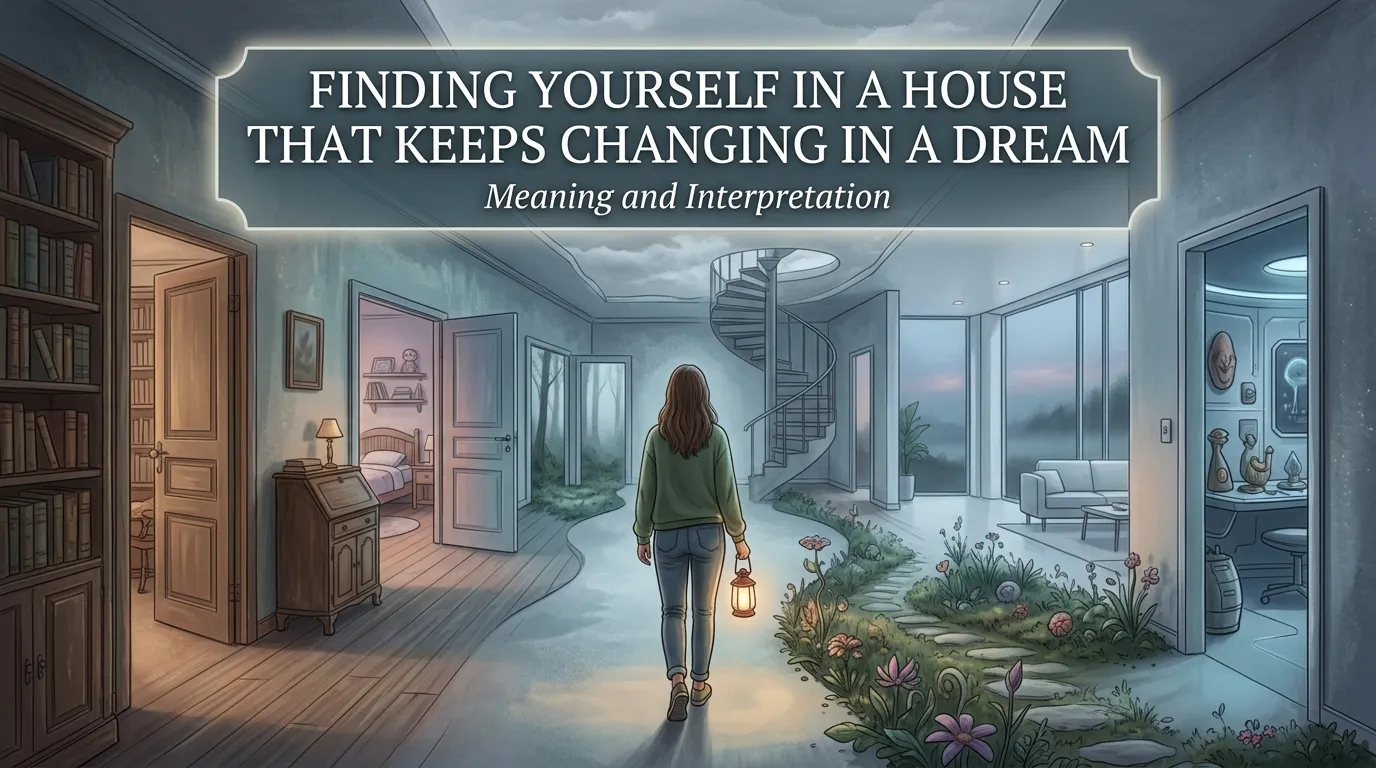
Houses in dreams are often stand-ins for the self: rooms for memories, hallways for transitions, basements for what is buried, attics for what is stored. A house that keeps changing breaks that neat map. Walls move. Rooms appear that were not there a moment ago. A door opens onto a place you do not recognize. The dream leaves you disoriented in the one place that is supposed to be familiar — yourself.
This dream tends to arrive during periods of inner change. Your outer life may look stable, but inside, the floor plan is being redrawn. The changing house is your mind’s way of showing you a self in flux: old rooms closing, new rooms opening, and no final blueprint yet.
What kind of change is happening in the house?
The nature of the change shapes the meaning. A house that grows — new rooms appearing, wings unfolding, staircases leading to floors you never knew existed — often points to discovery. You may be uncovering capacities, interests, or feelings you did not know you had. The dream can feel exciting, overwhelming, or both, because growth is not always tidy.
A house that shrinks — rooms vanishing, ceilings lowering, hallways narrowing — often points to loss or constriction. You may feel that options are closing, that a part of your life is getting smaller, or that you are being pushed into a version of yourself that feels too tight.
A house that rearranges itself — furniture shifting, doors moving, the kitchen where the bedroom should be — often points to confusion or transition. You know the parts of your life, but they are not where you expect them to be. Something is being reorganized, and you have not yet learned the new layout.
A house that decays, floods, or falls into ruin points to neglect or grief: a part of your inner life that has not been tended to, or a structure — a belief, a relationship, a routine — that is no longer holding up.
Rooms you find, rooms you lose
Specific rooms carry their own associations. A new bedroom can suggest a changing relationship with rest, intimacy, or privacy. A new kitchen can suggest nourishment, creativity, or family life in transition. A hidden study or library can suggest knowledge or curiosity seeking room. A basement that keeps changing can suggest feelings or memories that refuse to stay stored. An attic that transforms can suggest old stories about yourself being rewritten.
Losing a room can be just as telling. A childhood bedroom that disappears may mark the end of an old identity. A locked room you cannot open may represent a part of yourself you are not yet ready to explore. A room full of strangers may represent aspects of your life that feel unfamiliar even to you.
You do not need to catalogue every room. Notice the one that stayed with you after waking — the room that felt most important, most frightening, or most beautiful. That room is usually the one carrying the message.
Being lost in your own house
One of the most common feelings in this dream is being lost in a place that should be home. That disorientation is the point. It mirrors the experience of not quite recognizing yourself: after a breakup, a move, a loss, a new role, or a long period of stress, you can feel like a stranger in your own life. You know the address, but the interior has changed.
The dream can also reflect a shifting identity. If you have recently changed your mind about something important — a career, a faith, a relationship, a long-held belief — the house may keep changing because your inner architecture is still settling. The instability is not a failure. It is the sound of renovation.
Sometimes the dream reflects external instability: a family in flux, a home under literal renovation, a move on the horizon, a household where roles keep shifting. The dreaming mind borrows the house because the house is where those changes are felt most directly.
How to work with the dream
Try a simple exercise. Sketch or describe the dream house as best you can, even roughly: which rooms appeared, which ones changed, where you felt comfortable, where you felt afraid. Then ask which part of your waking life feels like each room. People are often surprised by how quickly the map aligns: the endless hallway is the job search, the hidden room is the feeling they have not named, the flooded basement is the grief they postponed.
Then ask a gentler question: what does this house need? A house under renovation needs patience, not panic. It needs you to live in it while the work continues. If the dream house felt frightening, consider what would make it feel safer — a locked door, a light left on, a familiar room restored. Those images can translate into waking choices: a boundary, a routine, a conversation, a return to something grounding.
A house that keeps changing is not a house that is broken. It is a house that is alive. Your inner life is rearranging itself for reasons you may not yet fully understand, and the dream is letting you walk through the construction site. You do not need to finish the renovation in one night. You only need to notice which rooms are opening, which are closing, and which one you are standing in now. The idea of the home as a reflection of the self is ancient — houses have long been understood as more than shelter, carrying meanings of family, identity, and belonging — and a dream that keeps redrawing yours is a sign that your sense of home, inside and out, is being remade.










