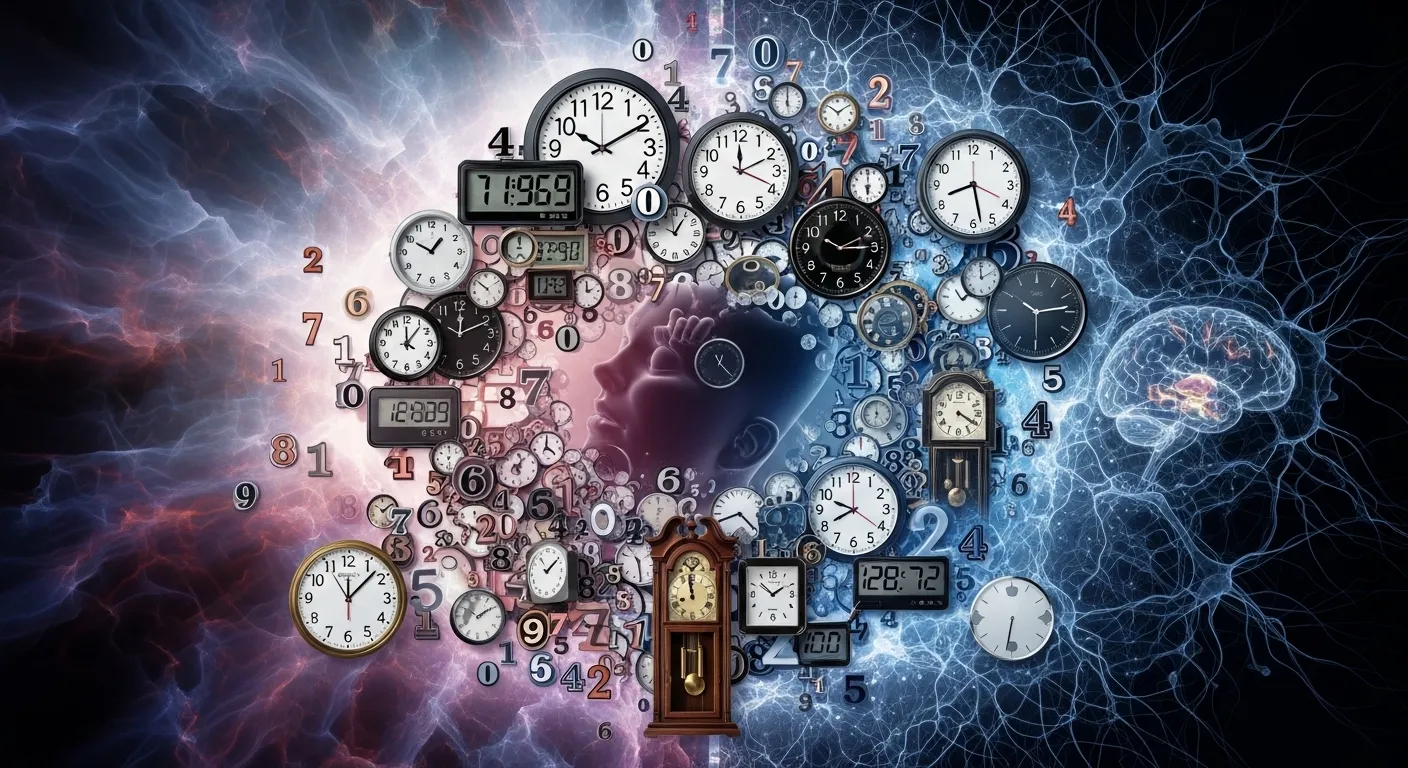
She keeps noticing it: 3:33 glowing on the microwave, 3:33 on the dashboard clock, and then — in the dream — a station clock frozen at 3:33 while everyone around her keeps walking. She wakes up convinced the number is trying to tell her something. Dreams like this are common, and they tend to leave a residue of significance that is hard to shake. But what, if anything, is the dream actually saying?
The short answer is that repeated numbers and clocks in dreams are attention devices. The dreaming mind repeats what it wants you to notice. The longer answer splits into three strands: what various belief traditions make of such patterns, what the clock itself tends to symbolize, and what psychologists observe about who has these dreams and when.
The repeating number: a symbol wearing a spotlight
In a dream, a number that appears once is decoration. A number that appears everywhere is emphasis. Dream researchers who study dream journals note that repetition in dreams generally tracks emotional urgency in waking life — the mind loops the image the way a worried person loops a thought.
What the number is matters less than how it behaves and how it makes you feel. A calm, glowing sequence that fills you with warmth carries a different weight than a number stamped on a deadline you can’t meet. Before assigning any meaning to the digits themselves, notice the emotional weather around them: curiosity, dread, comfort, pressure. That feeling is the most reliable part of the message.
The “angel numbers” lens: a belief, not a fact
It would be dishonest to discuss repeated numbers without mentioning the popular belief in angel numbers — the idea, widespread in contemporary spiritual culture, that sequences like 11:11, 222, or 444 are messages from guides, angels, or the universe. Under this belief system, 11:11 is read as awakening, 222 as balance, 444 as protection, and so on.
Treat this as what it is: a cultural and spiritual framework, meaningful to those who hold it, but not an established fact about dreams or numbers. Belief frameworks can still be psychologically useful — if the idea that “444 means you are protected” calms your anxiety, the calm is real even if the metaphysics is unproven. The honest position is to hold such interpretations lightly: interesting, potentially comforting, and worth neither blind acceptance nor contempt.
What is well documented is the frequency illusion: once a number feels significant, you start noticing it everywhere — on receipts, clocks, license plates. The dreaming mind and the waking mind then reinforce each other, and the pattern starts to feel like a conversation. Recognizing this mechanism doesn’t destroy the meaning; it just relocates it from the universe to your own attention.
Clocks: the dream’s way of talking about time
Clocks deserve their own section, because they rarely symbolize numbers at all — they symbolize time pressure. A clock in a dream is one of the most direct symbols the subconscious uses, and its variations read like a small vocabulary:
- A racing clock usually tracks waking-life hurry: deadlines, aging, the sense that opportunities are expiring. People report these dreams during crunch periods at work or around milestone birthdays.
- A stopped clock tends to appear when something feels suspended — grief that hasn’t moved, a decision postponed, a chapter that won’t close. Time in the dream has done what time in your life feels like it’s doing: nothing.
- A clock you can’t read — blurred hands, missing numbers, a face that keeps changing — often accompanies confusion about timing: Is it too late? Too early? Am I behind everyone else?
- A clock striking an hour loudly can mark a felt threshold, as if some inner part of you is announcing that a phase has ended.
Who tends to have these dreams
Psychologists note that number-and-clock dreams cluster around transitions: graduations, career changes, new relationships, diagnoses, moves. They also appear frequently during periods of rumination — when the waking mind is already looping, the dreaming mind loops too, and hands you a number to loop around.
There is also a quieter pattern worth naming. Some people have these dreams when they feel their life is being measured — by parents, by peers, by their own ambition. The clock becomes the audience. The numbers become the score. If that resonates, the dream may be less about the digits and more about who you feel is watching the clock.
Working with the dream instead of decoding it
Rather than asking “what does 3:33 mean,” try three better questions. First: what was I doing when the number appeared? The surrounding action is usually the actual subject. Second: what did I feel — and when did that feeling last appear in waking life? Third: what decision am I timing right now? Dreams about time almost always rhyme with a waking-life question about timing.
Keep a small log for two weeks: the number or time, the dream scene, the feeling, and one line about your day. Patterns in your own log will teach you more than any universal number dictionary, because your subconscious chose your significant numbers, not someone else’s.
Repeated numbers in dreams sit at a fascinating border — between the mind’s well-studied habit of flagging important material through repetition and humanity’s ancient habit of reading meaning into pattern. The study of number symbolism as a cultural practice has a long history of its own, surveyed in the entry on numerology. Whether you treat the numbers as messages, mirrors, or mental static, the one thing they reliably indicate is this: something in you is asking to be noticed.










