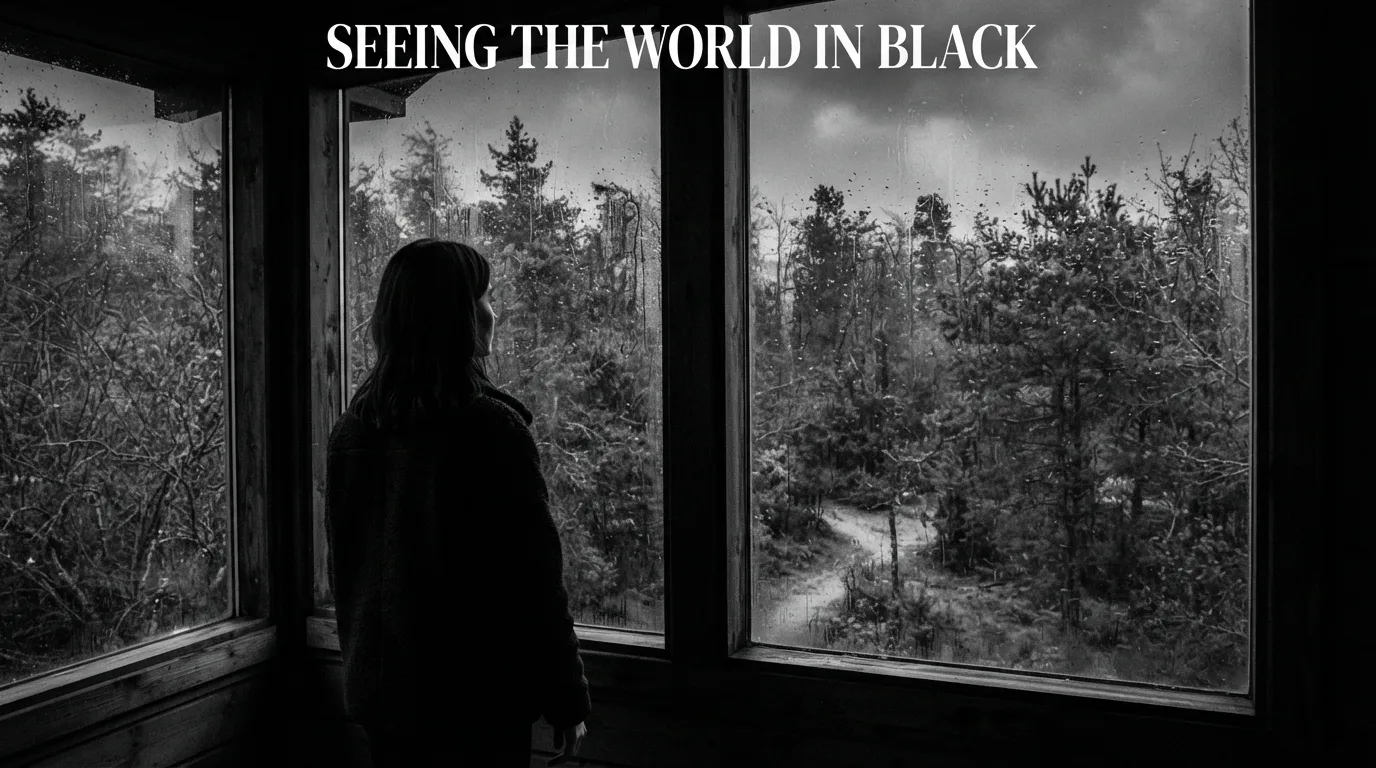
Imagine a city where every color has been switched off. The buildings are still there, the streets are still there, but the world has gone strange and unreadable, as if someone dimmed the whole of life. That is how many people describe dreaming of seeing the world in black: not blindness exactly, but a landscape emptied of color, warmth, and familiarity, leaving a powerful emotional impression long after waking.
Dreams involving darkness or a blackened world may reflect fear, emotional exhaustion, uncertainty, hidden feelings, or a major period of inner change. Sometimes they may symbolize something you are not ready to see clearly in waking life. In other cases, the darkness may simply be the mind’s way of staging an emotion that has no easy name.
Three things the blackness might be doing
First, it may be showing you how your inner world feels. Seeing the world in black can symbolize a period when life feels unclear, emotionally heavy, or difficult to understand. The dream may represent your feelings rather than predicting something that will happen. Blackness often creates a sense of the unknown. When the familiar world suddenly loses its normal colors, your dreaming mind may be expressing uncertainty about a relationship, decision, identity, future, or personal situation. The dream may also point toward emotional withdrawal: if you have been keeping your feelings inside, your mind may create an image of a world that feels empty or colorless.
Second, the blackness may be hiding something, or protecting it. In spiritual symbolism, darkness can also represent rest, mystery, protection, transformation, and the beginning of something new. A peaceful black landscape may represent stillness or mystery. A black world followed by light may symbolize transition. There is no universal spiritual rule stating that dreaming about blackness means something bad will happen. In different symbolic traditions, black can represent mystery, protection, transformation, the unknown, grief, unconscious material, or the beginning of change.
Third, the blackness may be a meeting with the shadow. In spiritual and psychological traditions, the shadow represents parts of yourself that remain outside your conscious awareness: emotions, memories, fears, desires, or traits you have learned to hide or reject. The shadow does not necessarily mean something evil. Someone who always tries to appear strong may suppress sadness. Someone who constantly pleases others may suppress anger. Someone who fears failure may hide ambition. Dream darkness can bring these hidden experiences closer to awareness. The dream does not necessarily mean you are experiencing a serious psychological problem. It may simply suggest that an emotion deserves your attention.
When the darkness chases you
If you are also being chased, the symbolism intensifies. Being chased often reflects something you are trying to avoid, and a black world adds the fear of the unknown: you cannot see where you are going or what pursues you. Spiritually, this may symbolize an encounter with your shadow. The message does not have to be that something bad is coming. It may be that something inside you needs acknowledgment rather than continued avoidance.
Running through a completely black environment may reflect urgency, fear, or avoidance. If something is chasing you but never catches you, the dream may represent a problem that feels persistent but has not completely overwhelmed you. Turning around to face the darkness can represent a major psychological shift: instead of avoiding fear, you become willing to understand it. If the darkness or shadow disappears, the dream may symbolize relief, acceptance, or changing perspective. If the dream ends peacefully, pay attention to that feeling. Sometimes the emotional ending tells you more than the original frightening image.
Slow fade versus sudden dark
How the darkness arrives matters: a slow fade may reflect a situation developing over time, while a sudden darkening may reflect a fast emotional reaction. It is worth asking: did the darkness itself frighten you, or did the meaning you attached to it frighten you? Your emotional response is often more useful than the symbol alone.
What the old frameworks say, briefly
In Freudian terms, blackness might represent feelings pushed away from conscious awareness. These are theories, not proven explanations for individual dreams.
Carl Jung’s concept of the shadow provides a particularly relevant way to understand dreams involving darkness. Jung suggested that people can repress or reject aspects of themselves that do not fit their conscious identity. A black world can therefore symbolize an encounter with the unknown parts of your personality. Jungian dream work emphasizes integration rather than elimination: the goal is not to destroy the shadow but to understand what it represents. Perhaps the anger is telling you that a boundary has been crossed. Perhaps the fear is showing you where you need safety. Perhaps the loneliness is asking you to reconnect.
Some spiritual traditions read dark dream imagery through the idea of emotional energy: blackness may symbolize heaviness, blocked expression, or depleted energy. These are frameworks for reflection, not established facts.
Stress, transitions, and a way to work with it
One of the most common reasons for intense dreams is emotional stress. When your waking life contains unresolved pressure, your brain continues processing emotional information during sleep. Dreams can also become more intense after traumatic or deeply stressful experiences. However, one dream cannot establish that trauma is the cause. If recurring dreams are causing significant distress or disturbing your sleep, talking with a qualified mental health professional can help.
Major life transitions can create dreams involving darkness: starting a new job, ending a relationship, moving, becoming a parent, losing someone, or questioning your identity. The black world can symbolize that unknown space between chapters. Darkness can also appear during periods of spiritual awakening or personal transformation, when old beliefs are being questioned. Symbolically, the darkness represents the space between an old understanding and a new one.
Dreaming occurs across different stages of sleep, with especially vivid dreaming commonly associated with REM sleep. Science does not establish a universal dream dictionary in which black always means one specific thing. Dream content is influenced by personal memories, emotions, experiences, culture, sleep quality, and current circumstances. That is why your personal associations matter.
You do not need to solve the dream immediately. Start by writing down what you remember: the environment, who was present, what frightened you, what made you feel safe, whether you were running or standing still, how the dream ended, and how you felt after waking. Then ask what the image reminds you of personally. For example, blackness might remind one person of fear while another person associates it with peace, privacy, mystery, or rest. Useful questions include: What emotion am I avoiding? What part of myself do I hide from others? Where do I feel powerless? What do I need but struggle to admit? And perhaps most usefully: what in my life currently feels difficult to see clearly?
Conclusion
Seeing the world in black touches on some of life’s deepest experiences: uncertainty, fear, hidden emotions, change, and the search for meaning. The most meaningful interpretation is rarely a fixed definition. Ask what you may be avoiding, what emotion needs attention, and what part of your life currently feels unclear. Wikipedia’s entry on darkness is a good place to continue reading.










