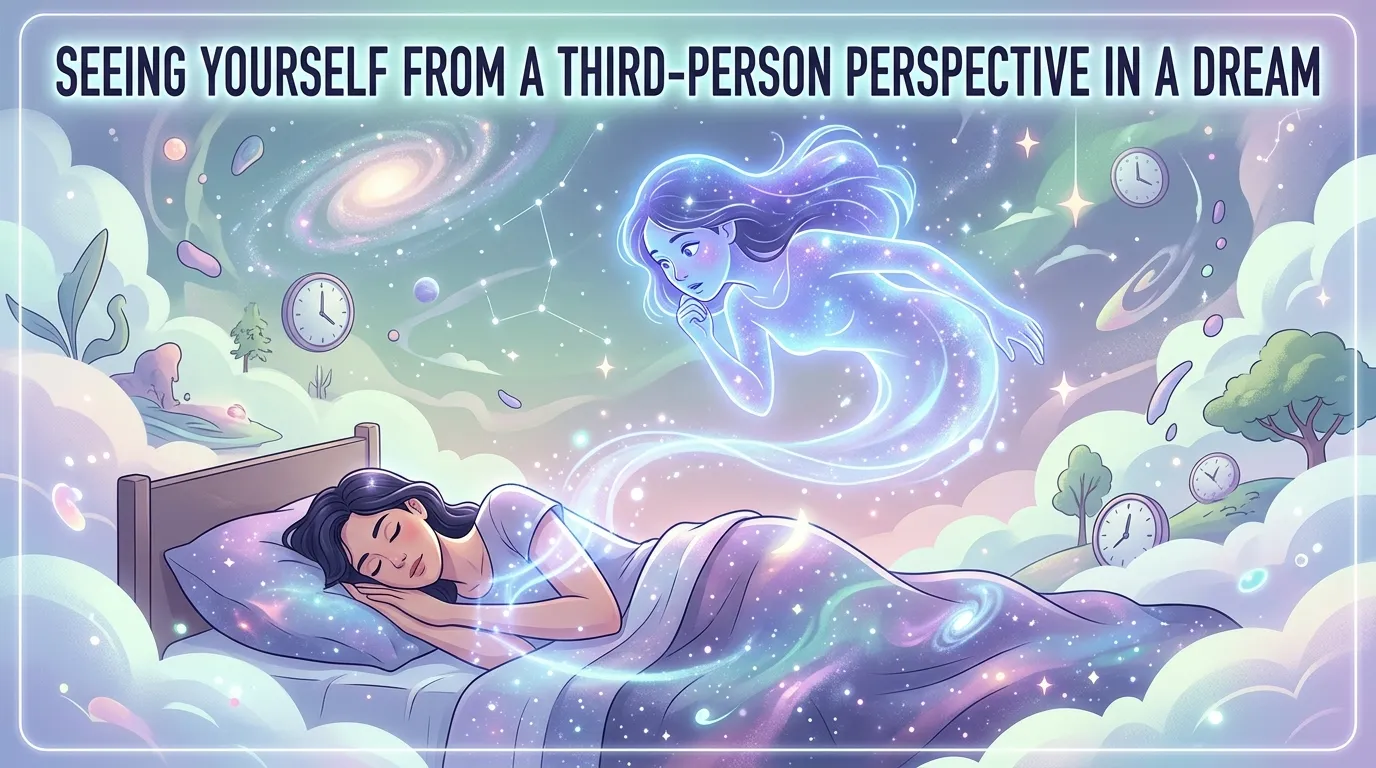
Have you ever had a dream where you suddenly saw yourself from outside your own body — almost like watching yourself in a movie?
These dreams can feel deeply strange, emotional, and unforgettable. One moment you are experiencing the dream normally, and the next, you are observing yourself from a distance. For many people, this creates a powerful feeling of confusion, curiosity, or even fear. Others wake up feeling unusually aware, reflective, or spiritually connected.
Dreams about seeing yourself from a third person perspective often appear during emotionally intense periods of life. They may reflect inner conflict, emotional detachment, self-discovery, spiritual awakening, or psychological stress. In some cases, the dream feels peaceful and insightful. In others, it feels unsettling — especially if you are running, hiding, or being chased.
The meaning usually depends on your emotions during the dream and what is happening in your waking life.
What Does Seeing Yourself From a Third Person Perspective in a Dream Mean?
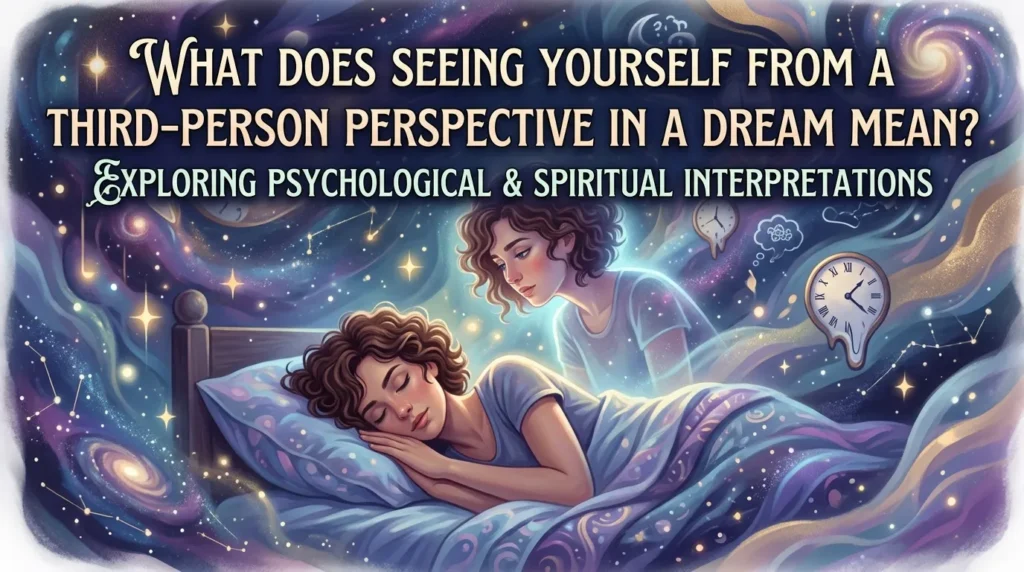
At its core, this type of dream often symbolizes self-awareness.
Instead of experiencing the dream through your own eyes, your mind creates distance between “you” and your actions. This can represent:
- A need to examine your life objectively
- Emotional disconnection or numbness
- Personal transformation
- Deep self-reflection
- Spiritual observation
- Internal conflict between different parts of yourself
Many people experience these dreams during times of:
- Major life transitions
- Stress or anxiety
- Emotional burnout
- Relationship problems
- Identity changes
- Spiritual growth
Your subconscious may be encouraging you to pause and truly look at yourself, your choices, emotions, and hidden fears.
The Spiritual Meaning of Seeing Yourself in a Dream
Spiritually, seeing yourself from outside your body often symbolizes higher awareness.
In many spiritual traditions, dreams are believed to reveal truths hidden beneath everyday consciousness. Watching yourself from a third person perspective may suggest that your soul, higher self, or deeper consciousness is trying to show you something important.
The Hidden Self and the Shadow
One powerful spiritual interpretation involves the concept of the shadow self.
The shadow represents:
- Suppressed emotions
- Hidden fears
- Unacknowledged desires
- Painful memories
- Parts of yourself you avoid
When you observe yourself in a dream, your subconscious may be inviting you to recognize these hidden aspects instead of ignoring them.
This is especially meaningful if the dream feels emotional or intense.
Ego vs Higher Self
Another common spiritual meaning involves the conflict between the ego and the higher self.
- The ego focuses on fear, control, image, and survival.
- The higher self seeks truth, growth, healing, and spiritual alignment.
Seeing yourself from outside your body may symbolize stepping beyond ego-based thinking and becoming more spiritually aware.
Some people describe these dreams as moments of awakening where they suddenly realize:
- “I am not fully living as my true self.”
- “I need to change direction.”
- “I’ve been emotionally disconnected.”
- “I need healing.”
Why Fear or Being Chased Makes the Dream More Intense
If the dream includes being chased while watching yourself from outside your body, the symbolism becomes even stronger.
Being chased in dreams usually represents:
- Avoidance
- Anxiety
- Emotional pressure
- Unresolved trauma
- Fear of confrontation
When combined with a third-person perspective, it can symbolize feeling disconnected from your own emotional struggle.
You may feel like:
- You are watching yourself suffer
- You cannot fully control your emotions
- Part of you wants to escape reality
- You are avoiding an important truth
The “chaser” is often symbolic rather than literal. It may represent:
- A painful memory
- Guilt
- Fear of failure
- Relationship stress
- Emotional wounds
- A hidden aspect of yourself
The more intense the chase feels, the more urgent the emotional message may be.
Freudian Interpretation of Third-Person Dreams
Sigmund Freud believed dreams reveal hidden desires and unresolved emotional tensions.
From a Freudian perspective, seeing yourself from a third person perspective may reflect:
- Emotional repression
- Psychological distancing
- Internal conflict
- Anxiety about identity or control
Freud often connected dreams to unconscious fears and desires that the mind struggles to process directly.
If you are observing yourself rather than fully participating, it may indicate:
- Emotional detachment
- Avoidance of difficult feelings
- A defense mechanism protecting you from stress
Freud might interpret the dream as the mind separating itself from uncomfortable emotions to reduce psychological discomfort.
Jungian Interpretation: Meeting the Shadow Self
Carl Jung offered a more spiritual and symbolic interpretation.
Jung believed dreams help people move toward wholeness and self-integration.
According to Jung, seeing yourself externally may symbolize:
- The process of self-discovery
- Awakening consciousness
- Encountering the shadow self
- Personal transformation
Jung believed every person has hidden aspects they reject or suppress. Dreams often bring these hidden parts into awareness.
In Jungian psychology, third-person dreams can represent:
- The observer within you becoming conscious
- Separation between your true self and social identity
- A call toward emotional honesty
If the dream feels vivid or emotionally powerful, Jung would likely view it as an invitation for growth rather than something negative.
Energy and Spiritual Awakening Interpretations
Many spiritual teachings connect these dreams with changes in emotional or energetic balance.
Emotional Energy Blocks
When emotions remain unprocessed, they can create inner tension.
Dreams of observing yourself may indicate blocked emotional energy connected to:
- Fear
- Grief
- Anger
- Shame
- Emotional exhaustion
Your subconscious may be encouraging emotional release and healing.
Chakra Imbalances
Some spiritual interpretations connect these dreams to chakra activity.
Possible connections include:
Third Eye Chakra
Linked to:
- Intuition
- Awareness
- Spiritual insight
A highly active third eye chakra may create vivid self-observing dreams.
Heart Chakra
Linked to:
- Emotional healing
- Compassion
- Connection
Emotional pain or blocked relationships may appear through detached dream experiences.
Root Chakra
Linked to:
- Safety
- Stability
- Security
Stress, fear, or uncertainty may trigger dreams involving running, watching yourself, or losing control.
Scientific Explanation: Why the Brain Creates These Dreams
There is also a scientific side to these experiences.
During REM sleep, the brain becomes highly active while processing emotions, memories, and stress.
Researchers believe dreams help with:
- Emotional regulation
- Memory organization
- Threat simulation
- Psychological adaptation
Threat Simulation Theory
One theory suggests dreams allow the brain to practice responding to danger.
This explains why many people dream about:
- Running
- Being chased
- Watching themselves struggle
- Feeling unable to escape
The third-person perspective may occur because the brain temporarily shifts how it constructs self-awareness during dreaming.
Stress, anxiety, trauma, or emotional overload can increase the likelihood of vivid and unusual dream perspectives.
Common Dream Scenarios and Their Meanings
Dreaming of Running While Watching Yourself
This often symbolizes avoidance.
You may be trying to escape:
- Emotional pressure
- Responsibility
- Conflict
- Fear of failure
- Painful emotions
The third-person perspective suggests you are becoming aware of this avoidance pattern.
Dreaming You Are Never Caught
If something chases you but never catches you, the dream may symbolize ongoing anxiety.
This often reflects:
- Chronic stress
- Fear of the unknown
- Unresolved emotional tension
Your mind recognizes the fear but has not fully confronted it yet.
Dreaming of Facing the Shadow or Chaser
This is usually a powerful sign of growth.
Facing the pursuer often symbolizes:
- Emotional courage
- Acceptance
- Self-awareness
- Healing
Many people report feeling relief after dreams where they stop running.
Dreaming the Shadow Suddenly Disappears
If the threat vanishes, it may symbolize:
- Emotional release
- Clarity
- Healing progress
- Acceptance of hidden emotions
Sometimes this reflects personal breakthroughs happening in waking life.
Gradual Realization vs Sudden Fear Reactions
Not all third-person dreams feel the same.
Gradual Realization Dreams
These dreams feel calm, reflective, or surreal.
You slowly realize:
- You are watching yourself
- Something feels emotionally important
- You are becoming more aware
These dreams often connect with:
- Spiritual growth
- Reflection
- Emotional maturity
Sudden Fear Reaction Dreams
These dreams feel intense and shocking.
You may suddenly panic after realizing:
- You are outside yourself
- Something is chasing you
- You cannot regain control
These dreams are more commonly linked to:
- Anxiety
- Trauma
- Emotional overwhelm
- Stress responses
Your emotional reaction inside the dream is often the biggest clue to its meaning.
Causes and Triggers of These Dreams
Several real-life situations can trigger third-person dreams.
Stress and Anxiety
Mental overload can create vivid dreams involving detachment, fear, or observation.
Trauma or Emotional Pain
People processing grief, heartbreak, or past trauma may experience dreams that create emotional distance as a coping mechanism.
Major Life Changes
These dreams commonly appear during:
- Career changes
- Relationship transitions
- Identity shifts
- Spiritual awakenings
- Personal crises
Your subconscious may be trying to help you understand your evolving identity.
Emotional Suppression
Ignoring emotions for too long can cause them to surface symbolically in dreams.
The dream may be encouraging emotional honesty and healing.
Personal Growth Lessons Hidden in the Dream
Although these dreams can feel uncomfortable, they often carry important lessons.
They may encourage you to:
- Slow down and reflect
- Face unresolved emotions
- Become more self-aware
- Heal emotional wounds
- Reconnect with your authentic self
- Stop avoiding difficult truths
Many people report positive personal changes after deeply reflecting on these dreams.
Instead of seeing the dream as something frightening, it can help to view it as a message from your subconscious mind.
Reflection and Healing Tips
Keep a Dream Journal
Write down:
- Emotions
- Symbols
- Locations
- People involved
- Repeating patterns
Over time, themes may become clearer.
Practice Mindfulness
Mindfulness helps reconnect you with your emotions and body.
Simple breathing exercises or meditation can reduce emotional overload and improve dream clarity.
Explore Shadow Work
Shadow work involves honestly examining hidden emotions, fears, and patterns.
Questions to ask yourself:
- What emotions am I avoiding?
- What part of myself feels disconnected?
- What fear keeps repeating in my life?
Reduce Stress Before Sleep
Helpful habits include:
- Avoiding overstimulation at night
- Reducing screen time
- Gentle relaxation practices
- Consistent sleep schedules
Seek Support if Needed
If dreams become extremely disturbing or emotionally overwhelming, talking with a therapist or counselor may help uncover deeper emotional causes.
Frequently Asked Questions
Is seeing yourself from a third person perspective in a dream normal?
Yes. Many people experience this type of dream, especially during stressful, emotional, or transformative periods in life.
Does this dream mean spiritual awakening?
Sometimes. Spiritually, these dreams can symbolize increased awareness, self-reflection, or a connection with your higher self.
Why do I feel detached in these dreams?
The dream may reflect emotional distancing, stress, burnout, or the mind processing difficult emotions from a safer perspective.
What does it mean if I am being chased?
Being chased usually symbolizes avoidance, anxiety, unresolved fears, or emotional pressure in waking life.
Is this related to anxiety?
Yes. Stress and anxiety are common triggers for vivid third-person dreams and emotionally intense dream experiences.
What does Jung say about these dreams?
Jung believed they could represent encounters with the shadow self and opportunities for personal growth and self-integration.
Can trauma cause these dreams?
Yes. Trauma, grief, and emotional overwhelm can increase dissociative or observational dream experiences.
Should I worry about these dreams?
Usually not. Most of the time, these dreams reflect emotional processing and self-awareness rather than danger.
Final Thoughts
Dreams about seeing yourself from a third person perspective can feel mysterious, emotional, and deeply personal. Whether viewed through psychology, spirituality, or neuroscience, these dreams often point toward one central theme: self-awareness.
Your subconscious may be asking you to look honestly at your emotions, fears, habits, or hidden struggles. Sometimes the dream reveals stress and emotional overload. Other times, it reflects growth, healing, and spiritual awakening.
Instead of fearing the experience, try listening to what the dream may be showing you.
Often, the version of yourself you observe in the dream is not someone separate from you — it is the part of you asking to finally be seen.