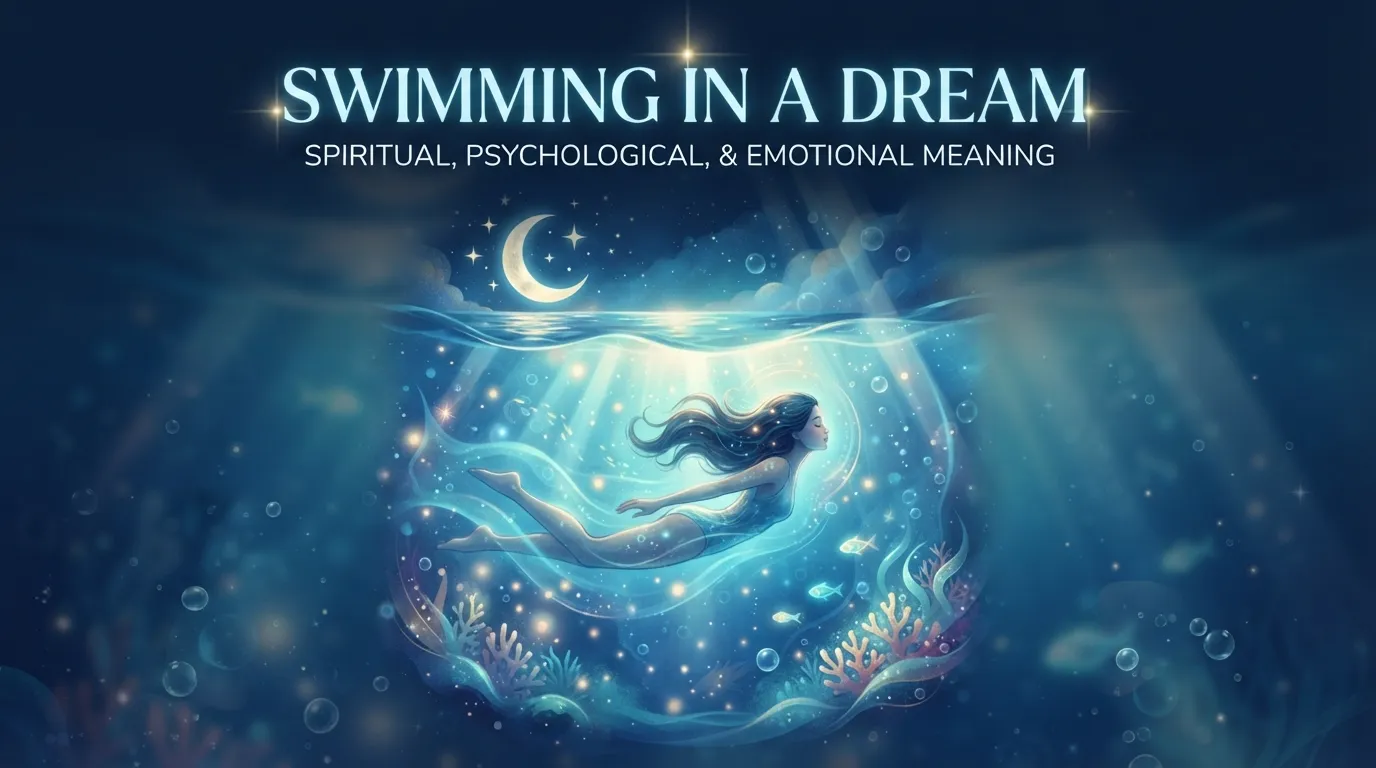
The water closes over you, and for a moment there is nothing but temperature and movement. Swimming in a dream is one of the most physical dreams the mind produces. It has a body to it: the pull of the water, the effort of the stroke, the question of whether you are moving toward something or away from it.
Swimming in a dream can symbolize emotional navigation: how you are moving through your feelings, your relationships, and the changes in your life. The meaning depends on where you were swimming, whether the water was clear or dark, whether it was a pool, lake, river, or ocean, whether you were alone, whether you were afraid, whether you were swimming toward something, whether you were escaping something, whether you saw a shadow, whether the shadow caught you, what happened when you faced it, and how you felt after waking.
Reading the water
The water itself often carries the meaning. Clear water may represent emotional clarity or peaceful awareness. Dirty water may reflect confusion, emotional discomfort, or unresolved feelings. Deep water can symbolize emotions that feel difficult to understand. Calm water may suggest inner peace and emotional stability. Rough water may reflect conflict, stress, or emotional turbulence. Cold water may represent emotional shock, fear, or a sudden realization. Warm water may symbolize comfort, healing, or emotional safety.
The setting refines the reading. A swimming pool may represent emotions within a controlled environment. An ocean may symbolize the vastness of the unconscious or emotions that feel bigger than you. A river may suggest movement, change, or a life that is carrying you somewhere whether you choose it or not. A lake may reflect stillness, depth, or something that has been sitting undisturbed for a long time.
How you swam
Your own movement in the water matters as much as the water itself. Swimming with ease may reflect confidence in handling your emotions. Struggling may reflect feeling overwhelmed. Swimming toward something may symbolize a goal, a hope, or a person you are reaching for. Swimming away may reflect avoidance or escape. Floating may suggest surrender, trust, or exhaustion. Sinking may represent a feeling of being overwhelmed by emotions you can no longer hold back.
Notice whether you were alone. Swimming alone may reflect independence or a private emotional journey. Swimming with others can relate to relationships and shared experiences: who was beside you, whether they helped or hindered, and whether you felt supported or abandoned in the water.
The shadow beneath the surface
Water dreams often include a shadow: a dark figure beneath the surface, something hidden, something following. In Jungian psychology, the shadow represents aspects of ourselves that we do not fully acknowledge, accept, or express. A shadow in the water may represent an emotion or memory that has been submerged, now rising toward the surface.
Being chased while swimming can symbolize feeling pursued by something you cannot outrun in the water: a difficult emotion, a decision, or a truth that keeps gaining on you. Facing the shadow in the water, rather than fleeing from it, may symbolize a willingness to confront what has been submerged. From a Freudian perspective, dreams can express unconscious wishes, fears, and conflicts. Water might dramatize a wish to return to safety, a fear of being overwhelmed, or a conflict between the need to feel and the need to stay in control. These are frameworks for reflection, not proven explanations.
Energy, awakening, and the language of the deep
Some spiritual traditions interpret swimming dreams through the language of energy, awakening, or emotional cleansing, seeing the water as a symbol of renewal or a sign that the dreamer is moving through a period of emotional transformation. These are spiritual frameworks rather than established scientific explanations. Used as metaphors, they can be useful: the dream may be asking what you are moving through, and whether you are swimming with the current or against it.
Stress, transitions, and the sleeping brain
Stress is one of the most common factors associated with vivid and emotionally intense dreams. When waking life contains unresolved pressure, the brain continues processing emotional information during sleep. During REM sleep, the brain becomes highly active while the body experiences reduced muscle movement. Dreaming can involve memories, emotions, images, and fragments of recent experiences. Your brain does not necessarily create a logical story; it can combine emotionally important material into a symbolic narrative.
Swimming dreams can become especially vivid during major transitions, when the emotional waters are genuinely rough. If the dream leaves you deeply distressed, or if it repeats alongside poor sleep and daytime anxiety, speaking with a qualified mental health professional can help.
Working with the dream
Write down the dream soon after waking: where you were swimming, what the water was like, whether you were alone, whether you were afraid, what you were swimming toward or away from, whether a shadow appeared, and how the dream ended. Then ask where in your waking life you currently feel as though you are swimming: what the water is like there, and whether you are moving with the current or fighting it.
The dream may be showing you that you are more capable in deep water than you believed, or that you have been swimming against a current that is not yours to fight. Either way, the water is not the enemy. It is the medium you are moving through, and the dream may be teaching you something about how you move.
Conclusion
Swimming in a dream is a portrait of emotional movement: the water you are in, the way you move through it, and what follows you beneath the surface. Whether the dream points to clarity, overwhelm, healing, or avoidance depends on the water, the stroke, and the feelings it carried. The next time the dream comes, notice not only the water but your own swimming. The way you move through deep water in a dream may be telling you something true about how you move through deep feelings in waking life. For background on the activity itself, from technique to its history as sport and survival skill, Wikipedia’s article on swimming is a good place to dive in.










