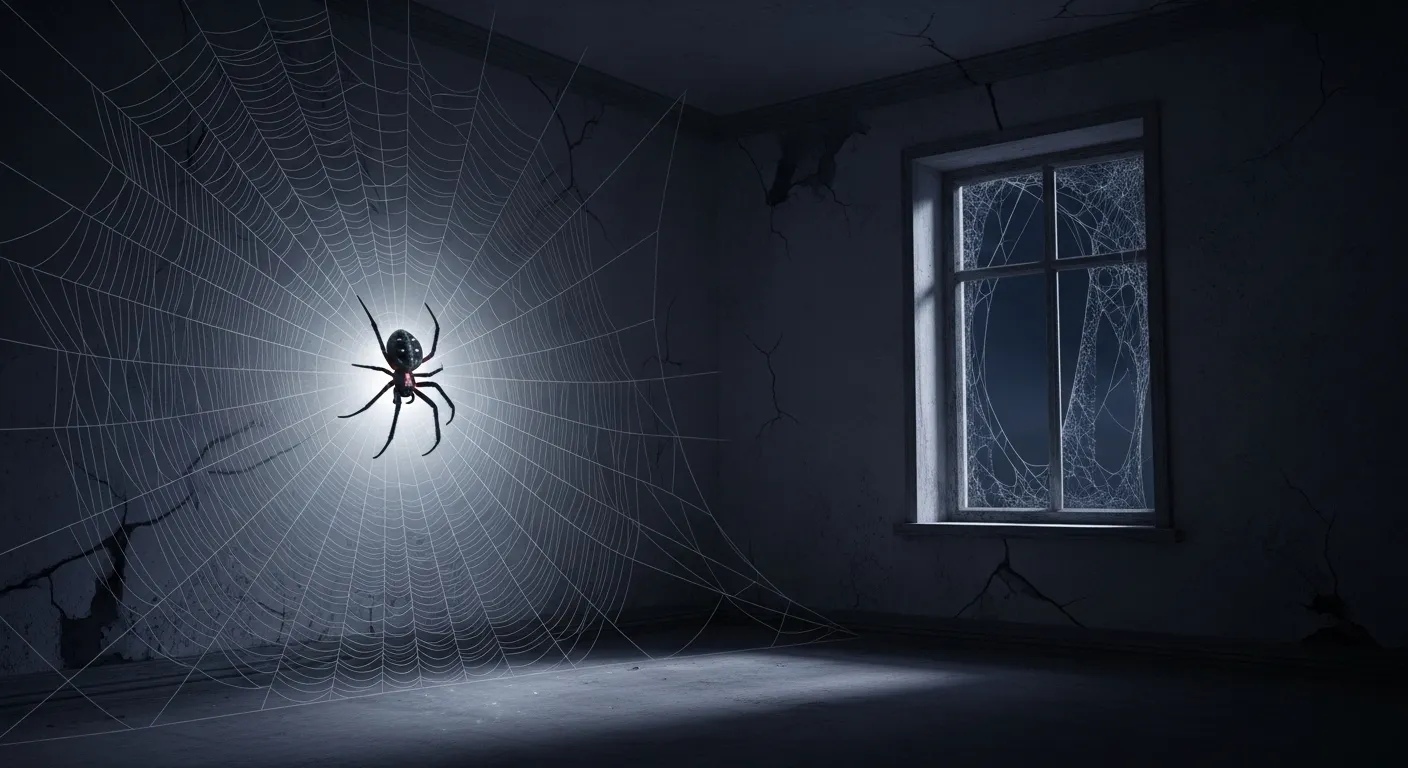
A spider does not knock. It appears quietly, in the corner of a dream, and by the time you notice it, it has already been there a while. That quiet arrival is worth paying attention to, because in biblical symbolism the spider is less about the creature itself and more about what is being woven around you while you are not looking.
What Scripture Actually Says About Spiders
The Bible mentions the spider’s web in one of the most striking images in the Book of Job. There, the hope of the godless is compared to a spider’s web — something that looks like shelter and turns out to be fragile (Job 8:14). It is a picture of false security: a foundation that cannot hold weight. Elsewhere, Proverbs notes that the spider takes hold with its hands and lives even in kings’ palaces (Proverbs 30:28) — a small, persistent creature that ends up in high places through quiet diligence.
Together, these two images hold the whole tension of the spider dream. The web can mean deception or fragile foundations. The spider itself can mean patience, craft, and persistence. Which one your dream is pointing to depends on the feeling inside it.
The Web: Fragile Security
When the web is the center of the dream — sticky strands across a doorway, a room full of webs, a spider hanging above you — the biblical reading leans toward warning. A web looks like a home, but it is built to trap. Spiritually, this often points to something in your life that looks stable but isn’t: a relationship that drains you, a habit you defend but know is unhealthy, or trust placed in the wrong hands. The question the dream quietly asks is, what am I building my safety on?
This is also where the themes of manipulation and hidden influence enter. A spider works unseen. If someone in your life operates that way — kind in public, corrosive in private — the dream may be your intuition saying what your conscious mind has been reluctant to admit.
The Weaver: Patience and Craft
Not every spider dream is a warning. The weaver is one of nature’s most patient builders, repairing its web strand by strand every night. Some dreamers see a spider calmly spinning and feel fascination rather than fear. Biblically, that aligns with the virtues Scripture honors: diligence, careful planning, and wisdom that builds slowly.
In this light, the spider may represent your own creative work — a project, a relationship, a spiritual life — that is being woven thread by thread. The dream then becomes encouragement: keep going, even if no one notices the work yet.
Four Scenarios Worth Noticing
Being chased by a spider usually points to avoidance. The thing pursuing you in the dream is the thing you have been postponing in waking life — a hard conversation, an admission, a change. The chase grows louder the longer you run.
A web blocking your path suggests an entanglement: obligations, guilt, or other people’s expectations stretched across the way you want to walk.
Killing the spider often marks a turning point — breaking free of a manipulative dynamic, overcoming a fear, or finally setting a boundary you had avoided.
The spider disappearing tends to signal release: anxiety lifting, clarity returning, a spiritual pressure easing because you have finally faced it.
What Your Fear Is Pointing At
The intensity of the fear matters more than the size of the spider. Psychologists sometimes describe the “shadow self” — the parts of us we suppress, like anger, shame, or unhealed wounds. A spider, quiet and hidden, is a natural symbol for those buried parts surfacing. If the dream left you rattled, treat the feeling as information, not as a verdict. Fear in a dream is often just honesty wearing a costume.
Before Sleep Tonight
You don’t need to solve the dream in one sitting. Try writing down three things: what the spider was doing, where it was, and how you felt. Then ask one question: is there something fragile I keep calling strong? Sit with whatever answers, in prayer or quiet reflection. Dreams like this rarely demand action; they usually ask for attention. And attention, given honestly, is where healing starts.
The Weaver in Your Own Life
It is worth asking, concretely, what you are weaving right now. Webs are built one strand at a time, and so are lives — through repeated thoughts, repeated choices, repeated reactions. A spider dream invites an inventory: which strands are you laying down daily, and what are they catching? Some strands are worth strengthening — disciplines of prayer, honesty, rest, kindness. Others are worth sweeping away — the late-night scrolling that feeds anxiety, the relationship you keep returning to out of habit, the story you tell yourself about why change is impossible.
The spider doesn’t judge the web; it just keeps building. That is both the warning and the encouragement. You are always weaving something. The dream simply asks you to look at the pattern with clear eyes — and to remember that webs, unlike stone walls, can be rebuilt. A fragile foundation can be replaced with a firm one, one strand at a time.
The Bible’s take on spiders holds two truths at once: beware the fragile web, and respect the patient weaver. If the natural history behind the symbol interests you, the Wikipedia article on spiders is a solid place to continue reading.










