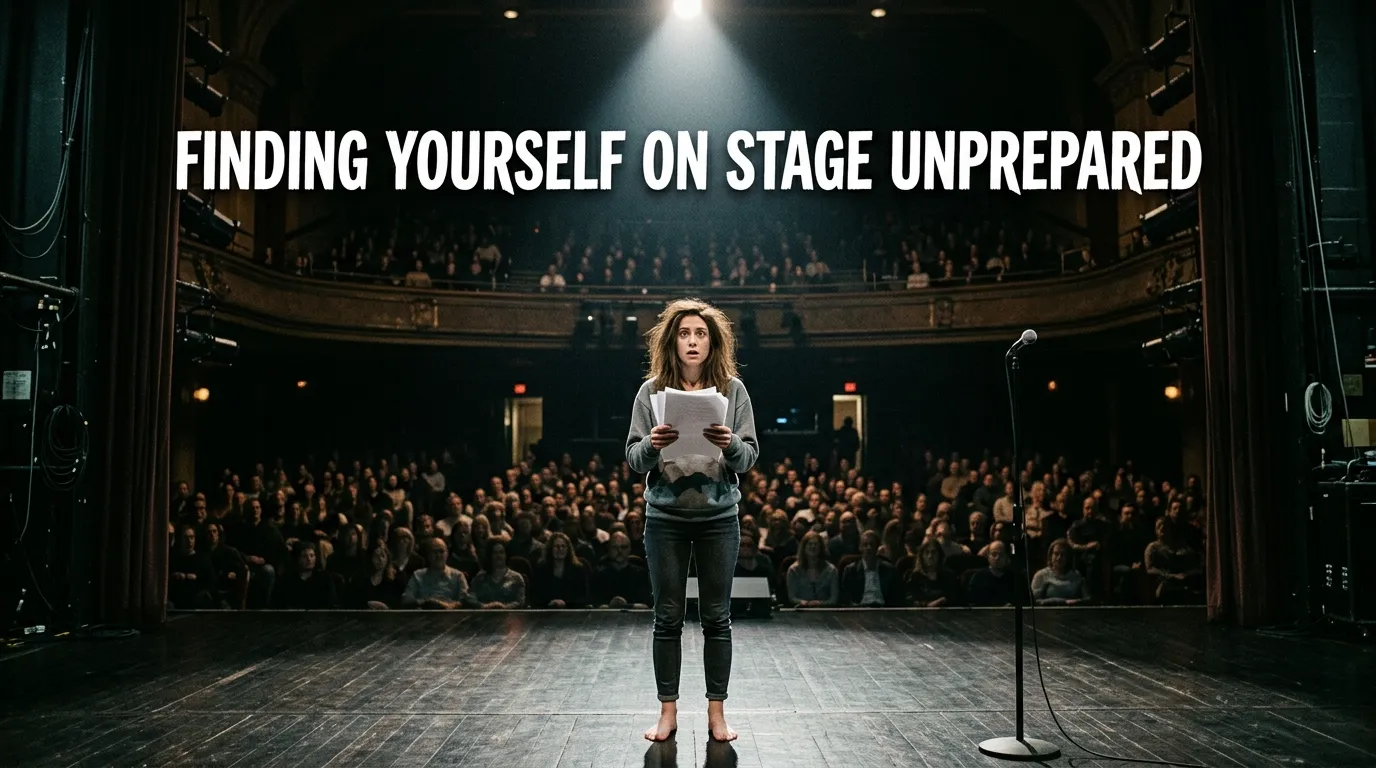
Have you ever woken up from a dream where you were suddenly on stage with no idea what to say, no script, no preparation, and all eyes on you? It can feel intensely real—your heart races, your stomach tightens, and a wave of panic follows you even after you wake up.
Dreams like this are surprisingly common, and they often leave a deep emotional mark. At first glance, the dream may seem like nothing more than stress or performance anxiety. But on a deeper level, dreaming of being on stage unprepared can carry powerful spiritual, psychological, and emotional symbolism. It may reflect a fear of being judged, an inner struggle with confidence, hidden pressure, or a moment in life where you feel exposed and uncertain.
Spiritually, this dream can point to a conflict between your outer identity and your inner truth. Psychologically, it may reveal anxiety, perfectionism, or the feeling that life is asking something of you before you feel ready. From a neuroscience perspective, it can also be part of the brain’s way of processing emotional stress during sleep.
What Does It Mean to Dream About Being on Stage Unprepared?

At its core, a dream about being on stage unprepared often symbolizes exposure, vulnerability, pressure, and fear of judgment. A stage is a place where you are seen. It represents performance, public identity, expectations, and how you believe others perceive you. When you are unprepared in that setting, the dream usually reflects an area of waking life where you feel not ready, not in control, or afraid of failing publicly.
This dream may show up when:
- You’re under pressure at work, school, or in relationships
- You’re entering a new life phase and feel uncertain
- You’re afraid people will “find out” you don’t have everything figured out
- You’re struggling with self-confidence or perfectionism
- You feel emotionally exposed or unsupported
The stage is not always literal. It can symbolize any situation where you feel visible—a meeting, a leadership role, a relationship, a social setting, or even a spiritual calling.
The Core Spiritual Meaning of Being Unprepared on Stage in a Dream
Spiritually, dreaming of being on stage unprepared often reflects an imbalance between your public self and your inner self. You may be showing the world one version of yourself while another part of you feels insecure, overwhelmed, or unheard.
This dream can symbolize:
- Fear of stepping into your purpose before you feel ready
- A spiritual lesson about surrender and authenticity
- Inner conflict between ego and higher self
- A call to stop performing and start living more truthfully
- The discomfort of growth before transformation
In many spiritual traditions, a stage represents life’s calling, soul expression, or divine visibility. Being unprepared on that stage may not mean you are failing. It may mean your spirit is pushing you to confront the parts of yourself that still doubt your worth, voice, or readiness.
Sometimes the dream is less about failure and more about trust. It asks: Can you still stand in your truth even when you don’t feel fully prepared? Can you be seen without hiding behind perfection?
The Symbolism of the Stage in Dreams

To understand this dream, it helps to break down the symbol of the stage itself.
1. The Stage as Public Identity
A stage represents how you present yourself to the world. It is connected to reputation, image, responsibility, and performance. If you are on stage in a dream, your subconscious may be highlighting the pressure of being seen, evaluated, or expected to deliver something important.
2. The Audience as Judgment or Social Pressure
The people watching you in the dream often symbolize society, family expectations, coworkers, authority figures, or your own inner critic. Even if the audience is silent, their presence can reflect a fear of disappointing others or not measuring up.
3. Being Unprepared as Inner Insecurity
Forgetting lines, not knowing what to say, wearing the wrong clothes, or realizing you have no plan can symbolize feeling emotionally, mentally, or spiritually unready in waking life. It may also reflect a fear of being “found out” or exposed.
4. Performance as Life Pressure
The dream may mirror the feeling that life is demanding a performance from you—at work, in family roles, in social situations, or in your spiritual path. You may feel like you have to keep going even when internally you’re anxious or exhausted.
The Hidden Shadow Meaning Behind This Dream
Although this dream is about a stage rather than a dark figure, it still strongly connects to the idea of the shadow self. In spiritual and psychological terms, the shadow is the part of you that contains hidden emotions, suppressed fears, insecurities, shame, unmet needs, and traits you may not fully accept.
Dreaming of being unprepared in public can be a shadow dream because it exposes what you’ve been trying to hide—from others or from yourself.
The Shadow in This Dream May Represent:
- Fear of not being good enough
- Imposter syndrome
- Suppressed shame from past failures
- The need to appear strong even when you feel lost
- A hidden belief that you must earn love through performance
- Unspoken emotions about being judged or rejected
The dream becomes powerful because the stage forces the shadow into the light. What you’ve been avoiding internally suddenly becomes visible. That’s why the dream can feel so intense: it’s not just about forgetting your lines. It’s about confronting the fear behind the forgetting.
Hidden Self, Suppressed Emotions, and Ego vs Higher Self
Hidden Self
Your hidden self includes the parts of you that don’t always make it into your public image. Maybe you act confident but secretly feel insecure. Maybe you seem capable, but inside you’re tired, afraid, or unsure. The dream can reveal the emotional gap between how you appear and how you truly feel.
Suppressed Emotions
If you’ve been holding back stress, fear, grief, anger, or self-doubt, the dream may bring those emotions to the surface in symbolic form. Being unprepared on stage can be the subconscious saying, “You can’t keep performing while ignoring what’s happening inside.”
Ego vs Higher Self
The ego wants approval, control, and certainty. It fears embarrassment and wants to avoid mistakes. The higher self, however, is more concerned with truth, growth, and alignment. A dream like this may emerge when the ego is trying hard to maintain an image, while the higher self is calling you to be more honest, grounded, and authentic.
In that sense, the dream is not punishment. It can be an invitation to stop performing and start integrating.
Why the Dream Feels So Intense: The “Chased” Energy of Exposure
Some dream guides talk about being chased by a shadow as a symbol of unresolved fear. While your dream is about a stage, it can carry a similar emotional intensity. Why? Because public exposure can feel like a form of emotional pursuit. You are not literally being chased, but the pressure, the audience, the urgency, and the fear of failing can create the same nervous-system response as a chase dream.
Being on stage unprepared may feel like:
- You can’t escape judgment
- Something is “coming for you” emotionally
- You must perform before you are ready
- You are cornered by expectations
- Your inner fears are catching up with you
This is why such dreams can feel panicked, sweaty, urgent, and overwhelming. The mind interprets social exposure as a threat, especially if you’re already stressed or self-critical.
Freudian Interpretation of Being on Stage Unprepared in a Dream
From a Freudian perspective, dreams often express repressed desires, anxieties, unresolved childhood tensions, and hidden emotional conflicts. In this framework, a dream about being unprepared on stage may symbolize fear related to authority, shame, sexual vulnerability, or social embarrassment.
Freud might interpret this dream as connected to:
- Fear of humiliation
- Repressed anxiety about failure or disapproval
- A desire for recognition mixed with fear of exposure
- Childhood experiences of criticism or pressure
- Conflict between what you want and what you think you “should” be
If you grew up in an environment where you had to perform well to receive praise, attention, or approval, the stage dream may reflect that conditioning. The unprepared feeling becomes symbolic of fear that you won’t be loved or accepted unless you succeed.
Freud also viewed dreams as wish-fulfillment disguised by anxiety. In this case, the dream may reveal a hidden wish to be seen, heard, or recognized—paired with a deep fear that visibility will lead to judgment rather than connection.
Jungian Interpretation: Persona, Shadow, and Individuation
Carl Jung offers one of the most meaningful ways to understand this dream. Jung believed dreams are messages from the unconscious designed to support wholeness, healing, and individuation—the process of becoming your true self.
The Persona
Jung used the word persona to describe the social mask we wear. It’s the version of ourselves we present to others to function in society. The stage is a perfect symbol of the persona because it involves performance, visibility, and social identity.
If you dream of being on stage unprepared, Jung might say your persona is under stress. You may be trying to uphold an image that no longer fits who you truly are.
The Shadow
At the same time, the dream may reveal the shadow—the parts of yourself you’ve rejected or hidden. Fear, vulnerability, insecurity, and uncertainty may all be asking to be acknowledged rather than denied.
Individuation
From a Jungian perspective, this dream can be deeply transformative. It may signal that you are being asked to move away from false performance and toward a more integrated, authentic self. The embarrassment in the dream is uncomfortable, but it may be the doorway to deeper truth.
Energy-Based and Spiritual Interpretations
Dreams about being on stage unprepared can also be understood through energy, chakras, and spiritual growth.
1. Throat Chakra Imbalance
The throat chakra is connected to communication, truth, self-expression, and the ability to speak clearly. If you dream of being on stage but unable to speak, forgetting your words, or feeling frozen, it may reflect a blockage in this energy center.
Signs this may be relevant:
- You struggle to say what you really feel
- You fear speaking up
- You worry about being misunderstood
- You often silence yourself to avoid conflict
2. Solar Plexus Chakra Wounds
The solar plexus chakra relates to confidence, identity, self-worth, and personal power. A dream of public unpreparedness may point to fear around competence, visibility, and self-belief.
This may be especially true if the dream includes:
- Panic
- Shame
- Feeling “small”
- Fear of being laughed at or rejected
3. Heart Chakra Protection
If the dream leaves you feeling emotionally raw, it may involve the heart chakra as well. You may fear that being seen as imperfect will lead to rejection, disappointment, or emotional pain.
4. Spiritual Awakening Through Exposure
Sometimes the dream appears during periods of spiritual awakening or life transition. As you grow, old identities begin to fall away. You may feel “unprepared” because the version of you that used to perform for approval no longer works. The dream can be a sign that your soul is asking for a more honest way of living.
Emotional Blocks This Dream May Reveal
This dream often appears when there are unresolved emotional blocks beneath the surface. These may include:
- Fear of failure
- Fear of judgment
- Perfectionism
- Imposter syndrome
- Shame around mistakes
- Difficulty trusting yourself
- Unprocessed stress or grief
- People-pleasing tendencies
- Pressure to meet unrealistic expectations
The more often the dream repeats, the more likely it is that your mind or spirit is trying to get your attention.
Common Dream Scenarios and Their Meanings

The details of the dream matter. Here are some of the most common versions of this dream and what they may symbolize.
Dreaming You’re on Stage and Forget All Your Lines
This often points to self-doubt, mental overload, or fear of disappointing others. You may feel like life is asking too much of you at once. It can also suggest a fear that your identity or role is unstable.
Dreaming You’re Called on Stage Unexpectedly
This may reflect a sudden responsibility or life situation you didn’t feel prepared for. It can symbolize pressure, surprise, and loss of control.
Dreaming You’re Half-Dressed or Wearing the Wrong Outfit on Stage
This usually symbolizes vulnerability, shame, exposure, or fear of being seen as flawed. It can also reflect insecurity about how others perceive you.
Dreaming You’re on Stage and the Audience Is Waiting in Silence
Silence in the audience can amplify the fear of judgment. This version of the dream may reflect social anxiety, self-consciousness, or a feeling that people expect something from you that you don’t know how to give.
Dreaming You’re Running Around Backstage Trying to Get Ready
This version often symbolizes stress, disorganization, overwhelm, or a fear that you are falling behind in life. Backstage represents the inner self, while the stage represents the outer world. The dream may reveal a disconnect between the two.
Dreaming You’re on Stage but Never Actually Perform
If the dream keeps building tension but the performance never happens, it may reflect anticipatory anxiety—fear of what might happen, rather than what is happening. This can occur when you’re overthinking a future event or decision.
Dreaming You Somehow Make It Through the Performance Anyway
This can be a reassuring sign. It may mean that even though you feel unprepared in waking life, you are more capable than you think. The dream may be showing you that resilience is already present.
Comparing Similar Dream Patterns: Running, Never Caught, Facing the Fear, and the Fear Disappearing
Although your dream centers on a stage, it can overlap with the emotional pattern of fear-based dreams. Here’s how those patterns compare.
1. Running or Scrambling to Prepare
If you spend the dream rushing around, searching for notes, changing clothes, or trying to find the right room, it reflects active stress and inner chaos. You know something is expected of you, and you’re trying to catch up emotionally or mentally.
2. Never Actually Getting “Caught”
Sometimes you remain unprepared, but the worst never happens. You don’t get laughed at, punished, or exposed. This can symbolize anticipatory fear—your mind is bracing for a disaster that may never occur in real life.
3. Facing the Situation Anyway
If you eventually step onto the stage and speak, even awkwardly, the dream may represent courage, growth, and emotional readiness emerging through discomfort. You may be learning to tolerate imperfection.
4. The Fear Suddenly Disappears
In some dreams, the panic fades, the audience vanishes, or you realize it doesn’t matter. This can symbolize healing, surrender, spiritual trust, or a shift away from ego-based fear.
Gradual Realization vs Sudden Fear in the Dream
The way the dream unfolds also changes the meaning.
Gradual Realization
In some dreams, you slowly become aware that you are unprepared. At first everything seems normal, and then a sinking feeling appears. This often reflects slow-building stress in waking life—the kind that accumulates over time until you realize you’ve been carrying too much.
It may suggest:
- Burnout
- Avoidance
- Emotional suppression
- Long-term pressure you haven’t fully acknowledged
Sudden Fear Reaction
In other dreams, you are instantly thrown into panic the moment you realize you’re on stage. This may point to acute stress, recent life changes, sudden insecurity, or a strong trigger. The nervous system is reacting quickly, almost like an alarm.
It may suggest:
- Recent conflict
- A looming deadline
- Fear of public failure
- A fresh emotional wound
What in Waking Life Might Trigger This Dream?
Dreams like this usually don’t happen randomly. They are often connected to emotional pressure or transition.
1. Stress and Anxiety
This is one of the biggest triggers. If your mind is overloaded, your dreams may dramatize that pressure by putting you in a visible, high-stakes situation with no preparation.
2. Performance Pressure
You may be worried about a real presentation, interview, exam, meeting, speech, or social event. Even if the dream stage doesn’t look like the real situation, the emotional theme can be the same.
3. Perfectionism
If you hold yourself to very high standards, your subconscious may create dreams where you feel unprepared as a way of expressing fear of not meeting your own expectations.
4. Trauma or Past Embarrassment
If you’ve ever been humiliated, criticized publicly, shamed, or pressured to perform in the past, the dream may be revisiting those feelings. The stage becomes a symbol of vulnerability.
5. Major Life Changes
New jobs, new relationships, parenthood, moving, spiritual awakening, leadership roles, or identity shifts can all trigger this dream. Change often creates uncertainty, even when the change is positive.
6. Feeling Seen in New Ways
Sometimes the dream appears when you are becoming more visible—online, professionally, socially, or spiritually. Visibility can bring excitement, but it can also awaken fear.
A Simple Scientific Explanation: Why the Brain Creates This Dream
From a neuroscience perspective, dreams often help the brain process emotions, rehearse threats, and integrate memories. Dreams about being unprepared on stage fit well with a few well-known sleep theories.
REM Sleep and Emotional Processing
Most vivid dreams happen during REM sleep, a phase associated with intense brain activity, emotional processing, and memory integration. During REM, the brain may revisit emotionally charged themes—especially fear, embarrassment, or unresolved stress.
Threat Simulation Theory
Some researchers believe dreams allow the brain to simulate threatening situations in a safe environment. A stage dream can function like a social threat simulation. Instead of running from a predator, you are navigating another ancient human fear: public judgment and exclusion.
Emotional Memory Activation
If you’ve recently felt stressed, exposed, pressured, or uncertain, your brain may weave those feelings into a dramatic scenario during sleep. The dream doesn’t always reflect literal danger. It reflects how emotionally important the situation feels to your nervous system.
What This Dream May Be Trying to Teach You
As uncomfortable as it is, this dream can hold important growth lessons.
1. You May Be Too Hard on Yourself
The dream may reveal how much pressure you’re carrying. It asks whether your expectations are realistic—or whether you’re demanding perfection from yourself.
2. You’re Being Invited Into Authenticity
If you constantly feel like you have to perform, impress, or prove yourself, the dream may be asking you to live more honestly. You do not need to be flawless to be worthy.
3. It’s Time to Acknowledge Hidden Fear
The dream may be highlighting fear you’ve been avoiding: fear of failure, judgment, rejection, or being seen as inadequate. Naming the fear can reduce its power.
4. Growth Often Feels Like Exposure
Sometimes you dream of being unprepared because you are stepping into a bigger version of yourself. New levels of responsibility, visibility, and self-expression can feel vulnerable at first.
5. Your Inner Self Needs Support, Not More Pressure
The solution to this dream is rarely “work harder.” More often, it’s about slowing down, listening inward, and building emotional safety.
How to Reflect on This Dream in a Healing Way
You don’t need to interpret every dream dramatically, but it can be helpful to sit with the emotions it brings up.
Journaling Prompts
Write down the dream and ask yourself:
- Where in my life do I feel unprepared right now?
- What am I afraid people will see in me?
- Do I feel pressure to perform or prove myself?
- What part of me feels unseen, unsupported, or exhausted?
- When have I felt this same emotion before?
Practice Mindfulness After the Dream
If you wake up anxious, pause before rushing into the day. Take a few slow breaths and remind yourself that the dream is information, not a verdict. Notice the body sensations the dream left behind. Anxiety often softens when it is acknowledged rather than resisted.
Try Gentle Shadow Work
Shadow work doesn’t have to be extreme. Start by noticing the traits or feelings you judge in yourself—fear, confusion, insecurity, neediness, anger, embarrassment. Ask what those feelings are trying to protect. Often the “shadow” simply wants compassion and honesty.
Support the Throat and Solar Plexus Chakras
If the dream feels connected to self-expression or confidence, you might try:
- Speaking honestly in low-stakes situations
- Singing, humming, or breathwork
- Writing unsent letters
- Standing with grounded posture and slow breathing
- Repeating calming affirmations like, “I do not need to be perfect to be safe and seen.”
Reduce Overload in Waking Life
If the dream is frequent, check your stress levels. Lack of rest, too many responsibilities, unresolved conflict, and constant self-pressure can all feed this dream pattern.
Is This Dream a Bad Sign?
Not usually. Even if the dream is upsetting, it is not automatically a bad omen. More often, it is a message from your subconscious or inner self that something needs attention.
It may be a sign that:
- You’re overwhelmed
- You’re entering a new chapter
- You’re afraid of being judged
- You’re carrying hidden insecurity
- You’re being called toward authenticity
Rather than predicting failure, the dream often highlights where healing, support, and self-trust are needed.
FAQ
1. What does it mean spiritually to dream of being on stage unprepared?
Spiritually, this dream often points to fear of visibility, inner insecurity, and a gap between your public self and your true self. It can also symbolize a call to step into authenticity and trust yourself more deeply.
2. Is dreaming about being unprepared on stage a sign of anxiety?
Yes, very often. This dream commonly reflects stress, social anxiety, perfectionism, or fear of failure. It may show up when you feel under pressure in waking life.
3. Why do I keep having dreams that I’m on stage and don’t know what to do?
Recurring versions of this dream can mean your mind is repeatedly trying to process an unresolved emotional issue—such as fear of judgment, burnout, self-doubt, or feeling unready for a major life change.
4. Can this dream be related to imposter syndrome?
Absolutely. Being on stage unprepared can mirror the emotional experience of imposter syndrome—feeling exposed, afraid of being “found out,” or worried that you’re not as capable as others believe.
5. What does the audience symbolize in this dream?
The audience often represents other people’s expectations, social pressure, authority figures, family voices, or your own inner critic. Sometimes it symbolizes the part of you that is always watching and evaluating yourself.
6. Is this dream connected to the throat chakra?
It can be. If the dream includes forgetting words, being unable to speak, or feeling frozen while everyone watches, it may reflect throat chakra imbalance, especially around self-expression and speaking your truth.
7. Does this dream mean something bad will happen in real life?
No. This dream is usually symbolic, not predictive. It’s more about emotional processing than forecasting an event. It may be pointing to stress, insecurity, or the need for self-reflection.
8. What should I do after having this dream?
Try writing down the dream, noticing the emotions it brought up, and asking where in life you currently feel pressured, exposed, or unprepared. Journaling, mindfulness, rest, and honest self-reflection can help you understand the message behind it.
Final Thoughts
Dreaming of finding yourself on stage unprepared can be unsettling, but it often carries a meaningful message rather than a negative one. This dream tends to appear when you feel visible, vulnerable, pressured, or emotionally stretched. It may reflect anxiety, perfectionism, fear of judgment, or the sense that life is asking something from you before you feel ready.
Spiritually, the dream can point to a deeper invitation: to stop performing for approval and start listening to what your inner self truly needs. It may be asking you to heal old shame, face hidden fears, and trust that your worth does not depend on flawless performance.