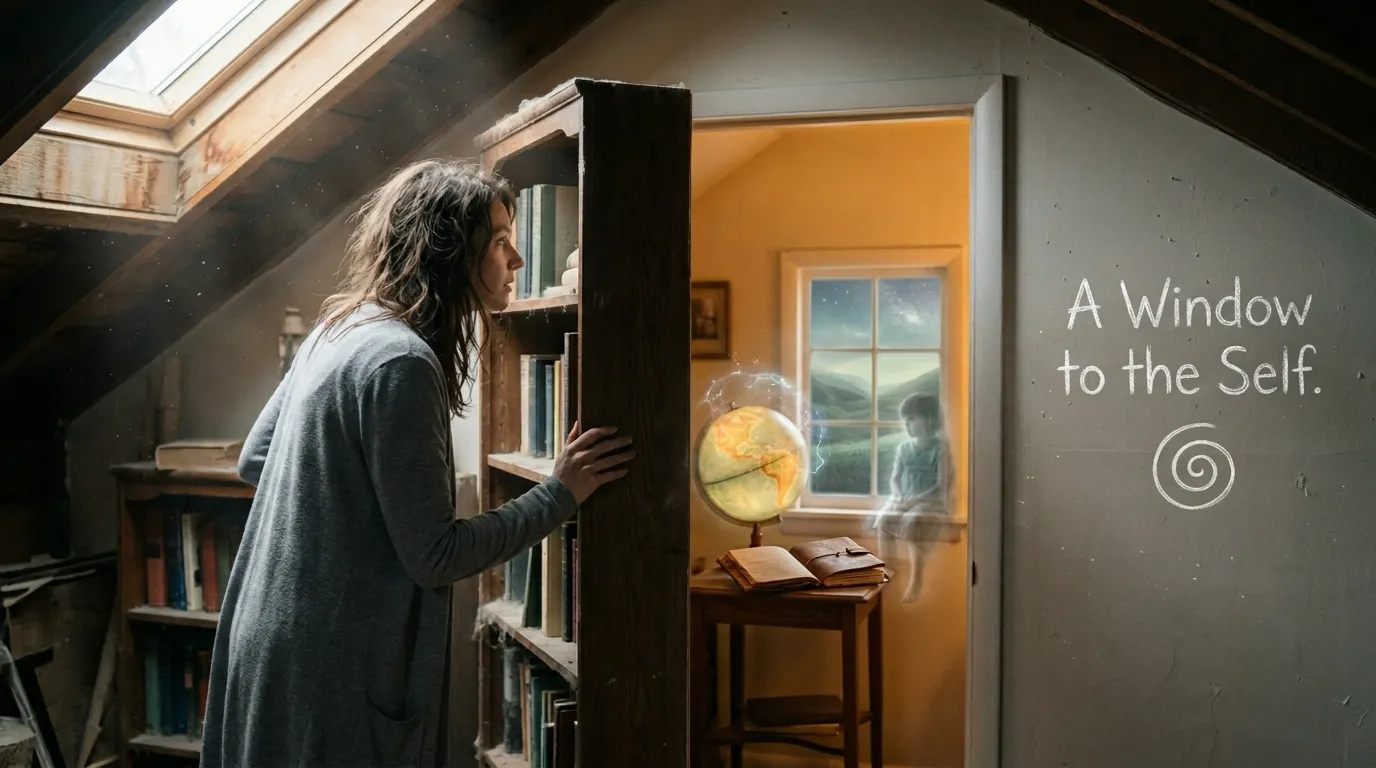
You have lived in this house for years. You know every creaking stair, every stubborn drawer. And then one night, in a dream, you push on a wall that was never a wall — or notice a door in a hallway you have walked a thousand times — and beyond it is a room. Furnished. Waiting. Yours. The shock of the dream is not that the room is strange; it is that it was always there, and you never knew.
This is the dream of undiscovered capacity. Where the secret passage is about transition — a corridor carrying you from one phase of life to the next — the hidden room is about space: rooms of the self that exist right now, fully formed, that you have simply never entered. The dream is not showing you a journey. It is showing you square footage.
You Live Somewhere Bigger Than You Think
The house in dreams is the self, and every dreamer underestimates its size. We walk the same three rooms — our routines, our roles, our rehearsed opinions — while entire wings sit in the dark. The hidden room is the mind’s inventory correction: you are more than the portion of yourself you currently occupy.
What lives in those rooms varies by dreamer, but the categories repeat: creative abilities shelved after childhood, emotional depths avoided for convenience, intellectual curiosities starved of time, spiritual longings filed under “later,” strengths that other people’s expectations never required you to develop. The room is furnished because the capacity is real — not potential in the abstract, but actual, waiting, already-built parts of you.
The Room’s Condition Is the Message
The dream almost always shows you the room’s state, and the state is the diagnosis:
- Beautiful and sunlit — A strength you are ready to claim. These dreams arrive just before people surprise themselves: the reluctant leader, the late-blooming artist, the person who discovers they are good at the thing they always assumed belonged to others.
- Dusty but intact — Neglected, not lost. An old talent, a shelved dream, a part of you that went quiet during the busy years. Dust is the easiest condition to fix, and the dream knows it.
- Dark or frightening — The avoided wing: grief unprocessed, anger unexpressed, truths unexamined. The fear is not a warning to stay out; it is the measure of how long you have stayed out. The room is scary because it is unexplored, not the other way around.
- Full of other people or objects — Sometimes the room contains figures from your past or clutter from old chapters. The undiscovered capacity here is integration itself: the ability to hold your whole history in one house without flinching.
Rooms You Refuse to Enter
Some hidden-room dreams include a door you find but will not open. You stand before it in the dream with a dread that feels ancient, and you wake up annoyed at your own dream-self’s cowardice. Do not be. The refusal is information, not failure — it measures exactly how much charge the unexplored capacity carries.
The unopened door usually guards one of two things: a capacity whose exercise would change your identity (the talent that would require you to become a different person to use it), or a truth whose admission would rearrange your life (the feeling about your marriage, your work, your faith that you have been managing by not examining). The dream is honest about the cost of entry: opening that door means the house — the self — gets rearranged. Your hesitation is your mind doing the math correctly.
The way forward with an unopened door is not force but approach. Visit it again — in imagination, in journaling, in conversation with someone you trust. Describe what you imagine is behind it. Most people discover the imagined contents are less terrifying than the door itself, which was guarding not a monster but a decision. Doors in dreams, like doors in life, are mostly about permission. The room was always yours. The only lock was the belief that you were not the kind of person who goes in there.
Moving In: What the Dream Asks of You
Discovery dreams demand occupancy. It is not enough to have found the room; the dream’s logic completes only when you start using it. That means one concrete act of entering the neglected capacity in waking life: the instrument picked up again, the course enrolled in, the conversation finally had, the journal started, the boundary drawn.
Start small — the dream did not ask you to renovate the whole wing overnight. It asked you to open the door. People who act on hidden-room dreams often describe the same sequence: a tentative first step, then a rush of recognition, then the bewildered question the dream planted in the first place — how did I not know this was here? You knew. Some part of you always knew. That is why it dreamed in architecture instead of words.
Psychologists call this process self-discovery, and it has a literature of its own; the Wikipedia overview of self-discovery is a good map of the territory your dream just showed you from the inside.










