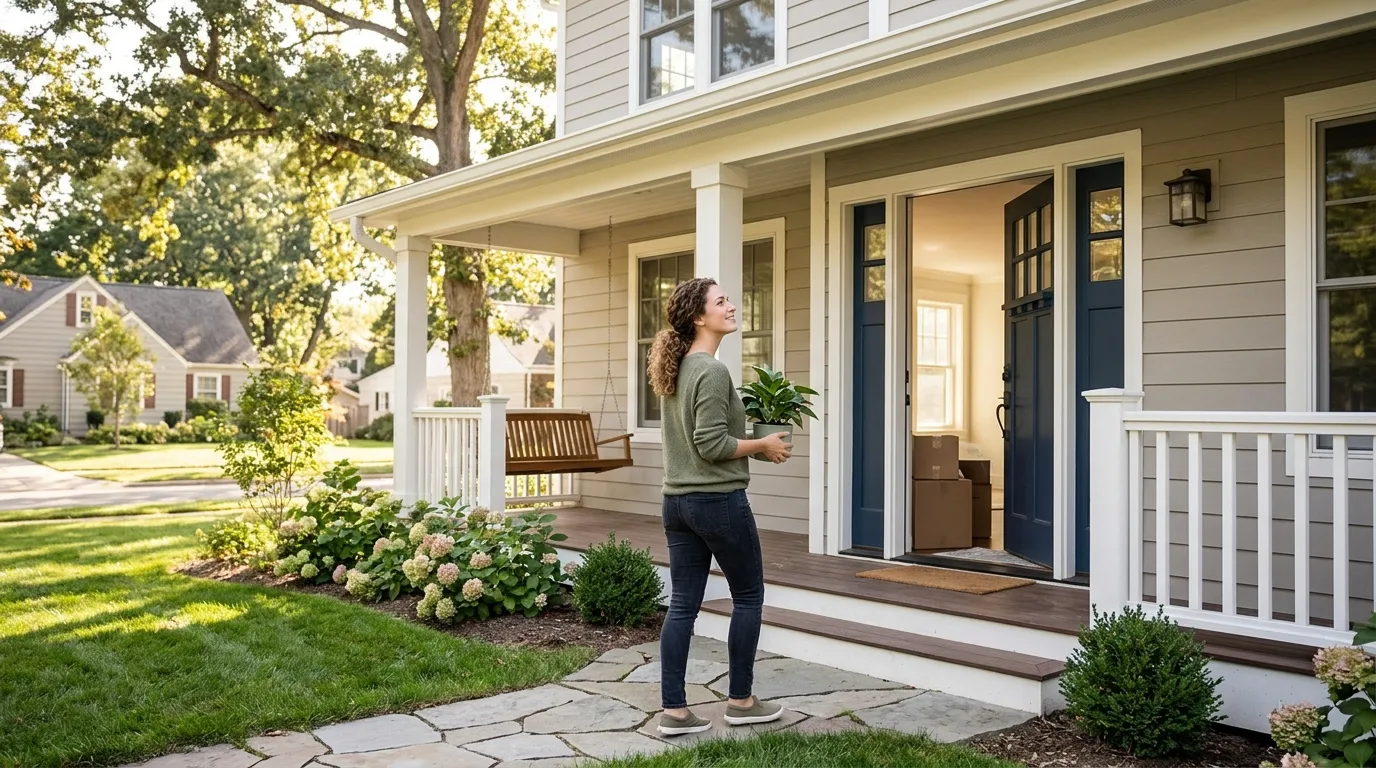
Walk through the house in your dream slowly, because you already know it. You have lived there all your life, even if you have never seen it before. The kitchen is your daily self. The bedroom is your private self. The attic is your memory. The basement is whatever you have stored away. A dream about a new house is a dream about a self that has just added a wing — and the tour is the point.
Why houses mean selves
Of all dream symbols, the house is the one interpreters argue about least. A house is a structure with rooms, boundaries, doors, and hidden spaces — exactly like a person. Dreaming of a house is the mind’s most natural way of drawing a self-portrait. A new house, then, is a portrait of a self in transition: someone becoming, renovating, moving in, or outgrowing the old floor plan.
These dreams arrive on schedule. They show up when people start new jobs, new relationships, new cities, new faiths, new phases of health. The new house is the inner life catching up with the outer one — the mind building rooms for experiences that did not have a place yet.
Take the tour: the rooms and what they hold
The most useful way to read a new-house dream is room by room. The details you remember are rarely random.
Discovering an extra room is the classic variant, and the most hopeful. A room you did not know existed — behind a bookcase, up a hidden stair — usually represents a capacity you had not recognized: a talent, a feeling, a part of your story. The dream is showing you square footage you already own.
A bright, welcoming house usually reflects a phase of growth that feels right. The new chapter fits. The rooms are in proportion. You belong there.
A house that is beautiful but empty often belongs to a transition that looks good from outside but feels hollow inside: a promotion that has not yet become meaningful, a relationship that has not yet become intimate, a new identity you have not yet furnished with real experience.
A house that is large but run-down often represents a self with history. The structure is sound, but parts need repair — old grief, old habits, old rooms you have been avoiding. The dream is not condemning the house. It is proposing a renovation.
A house you could not find your way around usually mirrors confusion about your own next phase. You know you have changed, but you do not yet know the layout of the new you. That is normal. New houses take time to learn.
The condition of the house is the condition of the transition
Notice the state of the place. A house under construction means the change is underway but unfinished — be patient with the scaffolding. A house you were decorating means you are actively shaping the new phase, choosing what belongs. A house you were cleaning means you are clearing out what the old phase left behind. A house with someone else’s furniture in it suggests the new chapter still has someone else’s imprint on it — an old relationship, a family expectation, a role you inherited rather than chose.
Also notice who was with you. Moving in alone points to independence. Moving in with someone points to a shared new chapter. Finding strangers in the house often means the new phase involves people you do not know yet — or parts of yourself you have not yet met.
The question the house asks
Every new-house dream ends with the same quiet question: what will you do with the new space? A house, after all, is not a destination. It is a container. Its value is whatever life gets lived inside it. The dream has done its part — it built the rooms. Furnishing them is waking work.
A practical step: sketch the house from memory, even badly. Label the rooms you remember. Beside each, write one sentence about the part of your life it might represent. People who do this often find one room they keep avoiding on paper — and that room is usually where the real message lives.
And if the dream felt sad rather than exciting, let that be part of the reading. A new house can also mean a house you did not choose: a life rearranged by loss, illness, or someone else’s decision. The dream may be grieving the old house as much as introducing the new one. Both feelings can be true. You are allowed to miss the old rooms and still move in.
Houses in dreams are selves under construction. Yours has just added a wing. The work now is to walk through it honestly, claim the new rooms, and decide what belongs in them. On houses as structures — how humans have built and thought about them across history — the Wikipedia article on the house offers useful context.










