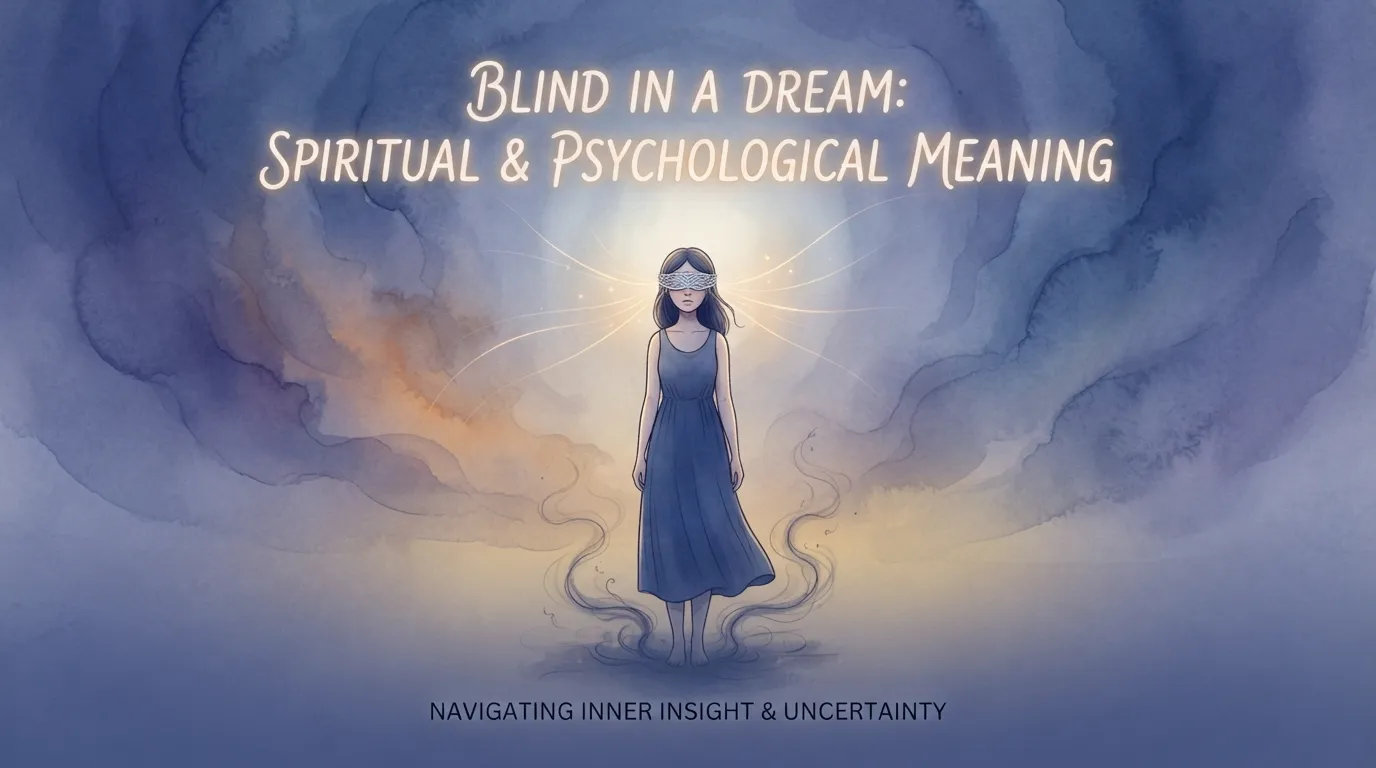
Picture yourself standing in your own home, in a room you know perfectly, and realizing you cannot see the doorway. Your eyes are open. The world is simply gone. Dreams of being blind are unsettling precisely because they remove the sense we rely on most, and replace it with guesswork, memory, and touch.
The spiritual and psychological meaning of being blind in a dream can relate to uncertainty, hidden emotions, fear of the unknown, inner conflict, or a situation you are not ready to face. It does not necessarily mean something bad will happen. Dreams often use powerful symbols to express feelings that are difficult to notice during waking life.
Blindness as not-seeing
Dreaming about being blind can symbolize a feeling of not knowing, not understanding, or not seeing something clearly in your waking life. You might be facing a decision and feel unsure about which direction to take. You may also sense that someone is hiding something from you, or that you are hiding an uncomfortable truth from yourself.
The emotional experience matters greatly. If the dream felt peaceful, blindness might represent trust, surrender, intuition, or spiritual growth. If it felt frightening, it may point toward anxiety, helplessness, or fear of losing control. Common meanings include uncertainty about your future, feeling emotionally confused, avoiding an uncomfortable truth, fear of losing control, difficulty trusting your intuition, feeling disconnected from yourself, and hidden emotions coming to the surface.
An inventory of the feelings that travel with it
Blindness dreams rarely arrive alone. They often carry a specific emotional weather: fear, anger, grief, jealousy, shame, loneliness, frustration, sadness, insecurity, or emotional exhaustion. Naming the feeling can matter more than decoding the blindness itself.
From a spiritual perspective, blindness may represent a period when you are being encouraged to look inward rather than depend only on what you can physically see. It can suggest a period of spiritual searching, or the need to pay attention to your inner world. Psychologically, it may reflect confusion, avoidance, anxiety, or a feeling that you lack control. Understanding the dream depends on what happened, how you felt, and what is happening in your life: where you were, who was present, what you could hear, whether you felt afraid, whether you felt calm, what happened immediately before becoming blind, what happened after becoming blind, whether someone helped you, and whether the blindness disappeared.
When the lights come back
The turning points of a blindness dream are often its most revealing moments. If someone guides you, the dream may be about the help you need but have not asked for. If the blindness lifts on its own, it may reflect a moment of clarity arriving after a period of confusion.
Some blindness dreams include a shadow or a pursuer. In Jungian psychology, the shadow represents aspects of ourselves that we do not fully acknowledge, accept, or express. If a shadow appears while you cannot see, the dream may be staging a double vulnerability: you cannot see the threat, and you cannot name it either. A shadow that simply appears is different from a shadow that chases you. Psychologically, pursuit dreams are often associated with something the dreamer feels unable or unwilling to confront. The chasing figure may represent a difficult emotion, an unresolved memory, or a part of yourself you do not want to acknowledge.
The older maps: Freud, Jung, and inner sight
From a Freudian perspective, dreams can reflect unconscious wishes, fears, conflicts, and emotional material. Blindness in a dream might represent something you do not want to see, or a conflict between what you know and what you are willing to admit. This is one interpretive framework, not a proven explanation.
Jungian psychology offers a more direct connection to the idea of inner sight. Jung described the shadow as aspects of the personality that remain outside conscious awareness or are difficult for the conscious personality to accept. Being blind in a dream may symbolize that some part of your inner life has not yet come into view. The work is not to force sight but to become honest about what is happening internally. Shadow work can involve asking: What am I refusing to recognize? What emotion feels unacceptable? What conflict am I avoiding? Is there something I fear discovering? What memories continue to affect me?
Some spiritual traditions read blindness dreams through the language of energy or awakening. These are frameworks for reflection, not established explanations.
Stress, transitions, and the brain’s night shift
Stress is one of the most common factors associated with vivid and emotionally intense dreams: work pressure, relationship tension, financial concerns, family conflict, major decisions, uncertainty about the future, and emotional exhaustion can all feed symbolic stories. During REM sleep, the brain becomes highly active while the body rests, and dreaming can combine memories, emotions, and fragments of recent experiences into symbolic stories.
Dreams involving blindness can also occur during transitions: starting a new job, ending a relationship, moving, entering a new stage of life, changing your identity or priorities, or facing an uncertain future. Transitions force us to reconsider who we are, and that can bring both spiritual reflection and emotional uncertainty. People who have experienced frightening or overwhelming events may have dreams involving pursuit, danger, helplessness, or repeated attempts to escape. If your dream leaves you extremely distressed, speaking with a qualified mental health professional can help. A dream should not be treated as proof of hidden trauma.
Gentle questions for the morning after
You do not need to solve the dream immediately. A few quiet minutes of honest reflection can be more useful than a dictionary definition. Useful prompts include: What emotion do I find hardest to accept? What part of myself do I hide from others? What am I afraid people will discover about me? What truth have I been avoiding? What do I need to forgive myself for? What part of myself needs compassion?
The dream may be inviting you to accept uncertainty, listen to your emotions, and give yourself time to understand change.
Frequently asked questions
Does dreaming of blindness mean I will lose my sight? No. Dream blindness is a symbol, not a medical prediction.
What if the blindness felt peaceful? A calm experience of blindness may represent trust, surrender, intuition, or spiritual growth: a willingness to navigate without needing to see everything in advance.
What if I was being chased while blind? That combination can symbolize feeling doubly vulnerable: unable to see clearly and unable to escape something that demands attention.
Conclusion
Being blind in a dream is less a warning than a portrait of how it feels to move through life without a clear view: uncertain, exposed, and oddly alert to everything else. Whether the dream points to avoidance, grief, intuition, or a season of inner searching depends on the feelings it carried and the life it landed in. Give yourself time, notice what you may have been unwilling to see, and remember that insight often arrives gradually, like sight adjusting to a dark room. For factual background on vision loss in waking life, which is a very different matter from dream symbolism, you can read Wikipedia’s overview of blindness.










