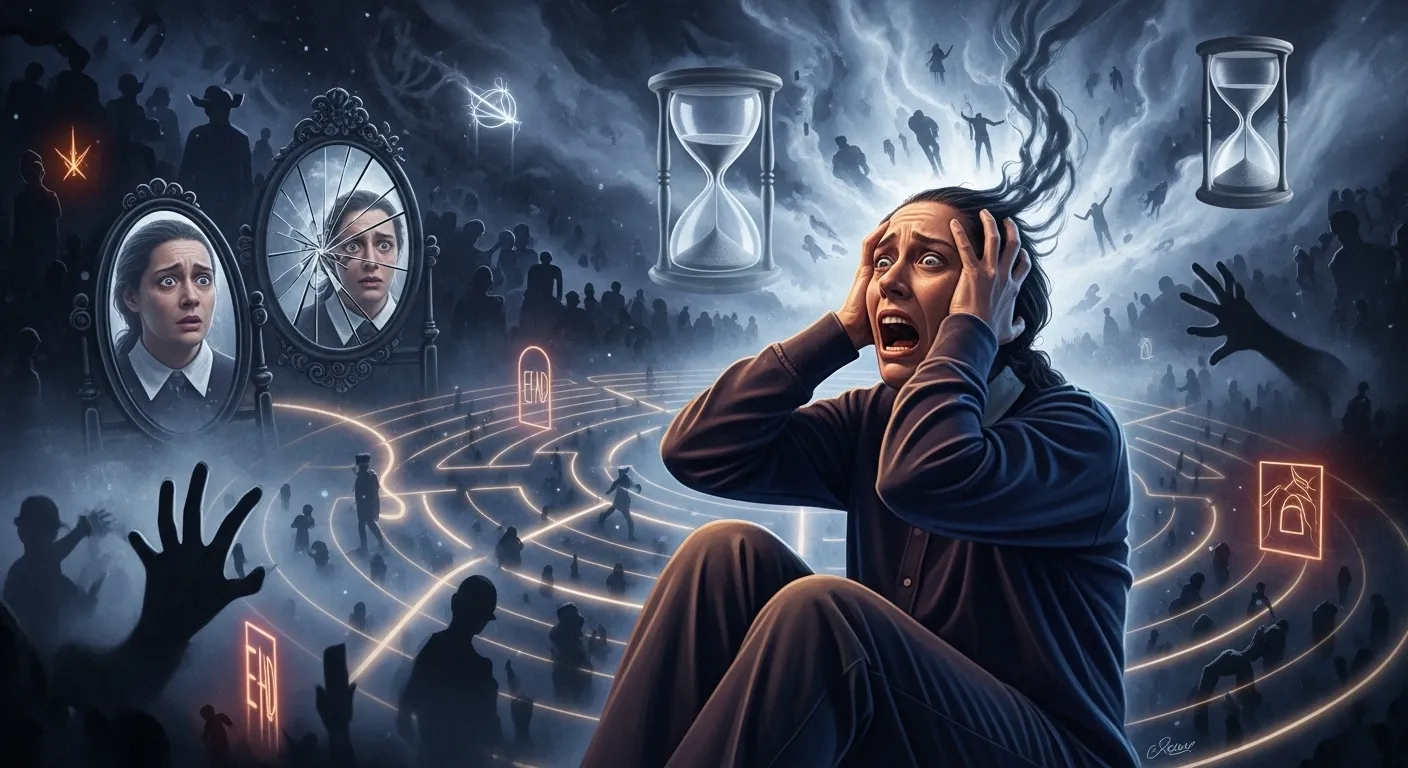
Have you ever woken up from a dream with your heart racing, your chest tight, and a lingering sense of fear you could not explain? Dreams that leave us feeling scared can feel deeply personal and emotionally intense. Even after waking, the fear sometimes stays with us for hours, making us question what our mind — or spirit — is trying to say.
The experience of feeling scared in a dream is more common than many people realize. These dreams often appear during periods of emotional stress, inner conflict, major life changes, or spiritual transformation. Sometimes the fear is obvious, like being chased or trapped. Other times, the dream carries a strange emotional heaviness without a clear reason.
From a spiritual perspective, fearful dreams can symbolize hidden emotions, unresolved wounds, or a confrontation with the “shadow self.” In psychology and neuroscience, these dreams may reflect the brain’s way of processing stress, memories, anxiety, and emotional threats.
Understanding these dreams can help you gain emotional clarity, self-awareness, and even personal healing.
What Does Feeling Scared in a Dream Mean?
At its core, fear in dreams usually represents something unresolved within the mind or spirit. The dream may not predict danger in real life. Instead, it often mirrors internal emotions you may be avoiding while awake.
Common meanings include:
- Suppressed emotions
- Fear of change
- Anxiety about the future
- Inner insecurity
- Loss of control
- Emotional overwhelm
- Spiritual awakening or transformation
Dream fear is often symbolic rather than literal. The frightening situation in the dream may reflect emotional tension, relationship struggles, guilt, uncertainty, or personal growth challenges.
In many cases, the dream acts like an emotional mirror.
The Spiritual Symbolism of Fear and the Shadow Self
In spiritual traditions and depth psychology, fear-filled dreams are often connected to the shadow self.
The shadow represents the hidden parts of your personality that you reject, suppress, or ignore. These can include:
- Unexpressed anger
- Shame
- Past trauma
- Fear of rejection
- Hidden desires
- Emotional pain
- Ego-based fears
When these hidden emotions remain unresolved, they may appear symbolically in dreams as darkness, monsters, unknown figures, or threatening situations.
Hidden Self and Suppressed Emotions
A scary dream may signal that your subconscious wants you to face emotions you have buried deep inside.
For example:
- Avoiding grief may create dreams of being trapped.
- Ignoring anxiety may appear as being chased.
- Suppressing anger may emerge through violent dream imagery.
The dream is not necessarily punishing you. Instead, it may be inviting you toward emotional honesty and healing.
Ego vs Higher Self
Spiritually, fearful dreams can also symbolize tension between the ego and the higher self.
The ego seeks comfort, certainty, and control. The higher self pushes toward growth, truth, and transformation.
When life changes force emotional evolution, the ego may resist. This internal struggle can create dreams filled with fear, confusion, or panic.
In this sense, fear becomes a sign of transition rather than danger.
Why Being Chased in a Dream Intensifies the Meaning
One of the most common fear dreams involves being chased.
Being chased often symbolizes avoidance. The person, creature, or force pursuing you may represent:
- A difficult emotion
- Responsibility
- Trauma
- Truth
- Fear of failure
- An unresolved relationship
- A part of yourself you do not want to face
The more desperately you run, the stronger the emotional message may become.
Spiritually, chase dreams often suggest that healing cannot happen through avoidance alone. The dream may be encouraging you to stop running from emotional truth.
Interestingly, many people report that once they turn around and face the pursuer in the dream, the fear weakens or disappears entirely.
Freudian Interpretation of Fear in Dreams
According to Sigmund Freud, dreams reflect hidden desires, repressed emotions, and unconscious conflicts.
Freud believed scary dreams often emerge from:
- Repressed fears
- Childhood memories
- Anxiety about forbidden thoughts
- Internal psychological conflict
In Freudian theory, the dream disguises emotional truths in symbolic form because the conscious mind cannot easily accept them.
For example:
- Falling may symbolize insecurity.
- Being attacked may reflect emotional vulnerability.
- Darkness may represent hidden fears or uncertainty.
Freud viewed dreams as a pathway into the unconscious mind.
Jungian Interpretation and the Shadow Archetype
Carl Jung approached dream fear differently.
Jung believed dreams help guide individuals toward psychological wholeness. He introduced the concept of the shadow archetype, which includes the hidden or denied aspects of personality.
According to Jung:
- Fearful dream figures often represent parts of ourselves.
- The dream invites integration rather than escape.
- Emotional healing happens when we acknowledge the shadow.
A frightening dream may therefore symbolize growth in progress.
Jung believed that facing the shadow with awareness leads to transformation, wisdom, and deeper self-understanding.
Energy-Based and Spiritual Meanings
Many spiritual traditions believe fearful dreams are connected to blocked emotional energy.
Emotional Energy Blocks
When emotions remain unresolved, they may become energetically “stuck” within the body and mind.
This emotional pressure can surface during dreams because sleep lowers conscious defenses.
Fearful dreams may point toward:
- Emotional exhaustion
- Inner imbalance
- Fear-based thinking
- Unhealed trauma
- Spiritual confusion
Chakra Imbalances
Some spiritual interpretations connect scary dreams with chakra imbalances.
Examples include:
- Root Chakra: Fear, insecurity, survival anxiety
- Solar Plexus Chakra: Loss of confidence or personal power
- Heart Chakra: Emotional pain or grief
- Third Eye Chakra: Spiritual confusion or heightened sensitivity
Repeated fear dreams may suggest emotional energy needs attention and balance.
Spiritual Awakening
Sometimes fearful dreams appear during periods of spiritual awakening.
As awareness expands, buried emotions and unconscious patterns may rise to the surface. This process can feel emotionally intense before clarity arrives.
In this context, fear may symbolize:
- The death of old patterns
- Identity transformation
- Emotional release
- Awakening intuition
- Increased spiritual sensitivity
Scientific Explanation: Why the Brain Creates Fearful Dreams
Science offers another important perspective on dream fear.
During REM sleep (Rapid Eye Movement sleep), the brain becomes highly active. This stage is strongly linked to emotional processing, memory integration, and vivid dreaming.
The brain may replay emotional situations during REM sleep to help process experiences and prepare for future threats.
This is sometimes called the threat simulation theory.
The brain practices survival responses in dreams by simulating:
- Danger
- Conflict
- Escape
- Emotional stress
Fearful dreams may therefore help the brain process emotions and improve emotional adaptation.
Stress hormones, anxiety levels, trauma exposure, and emotional overload can all increase the intensity of fear dreams.
Common Causes and Triggers of Scary Dreams
Fearful dreams are often triggered by emotional or psychological stressors.
Stress and Anxiety
Daily stress can strongly influence dream content.
Work pressure, financial worries, relationship tension, or uncertainty may appear symbolically through fear dreams.
Trauma and Emotional Pain
Past traumatic experiences may reappear during dreams, especially if emotions remain unresolved.
Nightmares are common in people experiencing:
- PTSD
- Grief
- Emotional shock
- Abuse recovery
Major Life Changes
Fear dreams often increase during transitions such as:
- Moving
- Divorce
- Career changes
- Parenthood
- Loss
- Spiritual transformation
The subconscious mind reacts strongly to uncertainty.
Sleep and Lifestyle Factors
Other contributors include:
- Sleep deprivation
- Certain medications
- Alcohol or substance use
- Irregular sleep patterns
- Emotional overstimulation
Common Fear Dream Scenarios and Their Meanings
Running Away in a Dream
Running often symbolizes avoidance.
You may be trying to escape:
- Emotional truth
- Responsibility
- Fear of confrontation
- Inner insecurity
The faster you run, the more urgent the unresolved issue may feel internally.
Never Getting Caught
This scenario often reflects prolonged anxiety.
You may feel emotionally exhausted by constant stress, yet unable to fully confront the source.
It can symbolize chronic emotional tension.
Facing the Shadow
Turning around and confronting the frightening figure often represents emotional courage and self-awareness.
This dream may indicate:
- Healing
- Personal growth
- Emotional acceptance
- Spiritual maturity
The Shadow Disappearing
When the threatening figure suddenly disappears, it often symbolizes resolution or awakening.
The subconscious may be signaling that fear loses power once acknowledged consciously.
Gradual Realization vs Sudden Fear Reactions in Dreams
Fear in dreams can appear in two main ways.
Gradual Realization
Some dreams slowly become frightening over time.
This may symbolize:
- Hidden emotional tension
- Slowly building anxiety
- Unrecognized stress
- Internal emotional conflict
The fear develops gradually because the underlying issue may also be growing slowly in waking life.
Sudden Fear or Panic
Other dreams begin with immediate terror.
This may reflect:
- Acute stress
- Trauma responses
- Sudden life changes
- Emotional overwhelm
- Fight-or-flight activation
The nervous system reacts intensely, even during sleep.
Personal Growth Lessons Hidden in Fearful Dreams
Although scary dreams feel uncomfortable, they often carry meaningful lessons.
Fear dreams may encourage you to:
- Acknowledge emotions honestly
- Heal unresolved wounds
- Release limiting beliefs
- Face personal truth
- Develop emotional resilience
- Trust your intuition
- Embrace transformation
Sometimes the dream is not trying to frighten you — it is trying to wake you emotionally.
Reflection and Healing Tips After a Fearful Dream
Keep a Dream Journal
Write down your dreams immediately after waking.
Focus on:
- Emotions
- Symbols
- Repeated themes
- People involved
- Physical sensations
Patterns often emerge over time.
Practice Mindfulness
Mindfulness helps calm the nervous system and reduce anxiety-driven dreams.
Helpful practices include:
- Deep breathing
- Meditation
- Gentle grounding exercises
- Body awareness
Explore Shadow Work
Shadow work involves examining hidden emotions and unconscious patterns with honesty and compassion.
Questions to reflect on:
- What am I avoiding emotionally?
- What fear keeps repeating in my life?
- What part of myself feels rejected or hidden?
Improve Sleep Habits
Healthy sleep routines support emotional balance.
Try to:
- Reduce screen time before bed
- Maintain a regular sleep schedule
- Limit emotional overstimulation late at night
- Create a calming bedtime routine
Seek Support if Needed
If nightmares become overwhelming or trauma-related, professional support from a therapist or counselor can be deeply helpful.
Frequently Asked Questions
Is feeling scared in a dream a bad sign?
Not necessarily. Fearful dreams often reflect emotional stress, unresolved feelings, or personal transformation rather than literal danger.
Why do I keep having the same scary dream?
Recurring dreams usually point to unresolved emotional issues or repeating stress patterns that the subconscious continues trying to process.
Are scary dreams connected to anxiety?
Yes. Anxiety is one of the most common causes of fearful dreams and nightmares.
What does it mean if I am being chased in a dream?
Being chased often symbolizes avoidance, fear, emotional pressure, or unresolved issues in waking life.
Can scary dreams have spiritual meaning?
Many spiritual traditions believe fearful dreams reflect shadow work, emotional awakening, energetic imbalance, or inner transformation.
Why do scary dreams feel so real?
During REM sleep, emotional centers of the brain become highly active, making dream experiences feel vivid and emotionally intense.
What should I do after a nightmare?
Calm your nervous system, write down the dream, reflect on emotional themes, and practice grounding or mindfulness techniques.
Can facing fear in dreams help personal growth?
Yes. Many people experience emotional healing and greater self-awareness after confronting fear symbolically in dreams.
Conclusion
Feeling scared in a dream can be unsettling, but these experiences often carry important emotional, psychological, and spiritual messages. Fearful dreams may reveal hidden stress, unresolved emotions, inner conflict, or the deeper process of transformation unfolding within you.
Rather than viewing these dreams as punishment or prophecy, it can be more helpful to see them as invitations toward awareness and healing. The subconscious mind often speaks through symbols, emotions, and intense imagery when something inside needs attention.
Sometimes the fear is not the enemy. Sometimes it is the doorway to understanding yourself more deeply.
By reflecting on your dreams with compassion instead of panic, you may discover greater emotional clarity, spiritual growth, and inner peace.