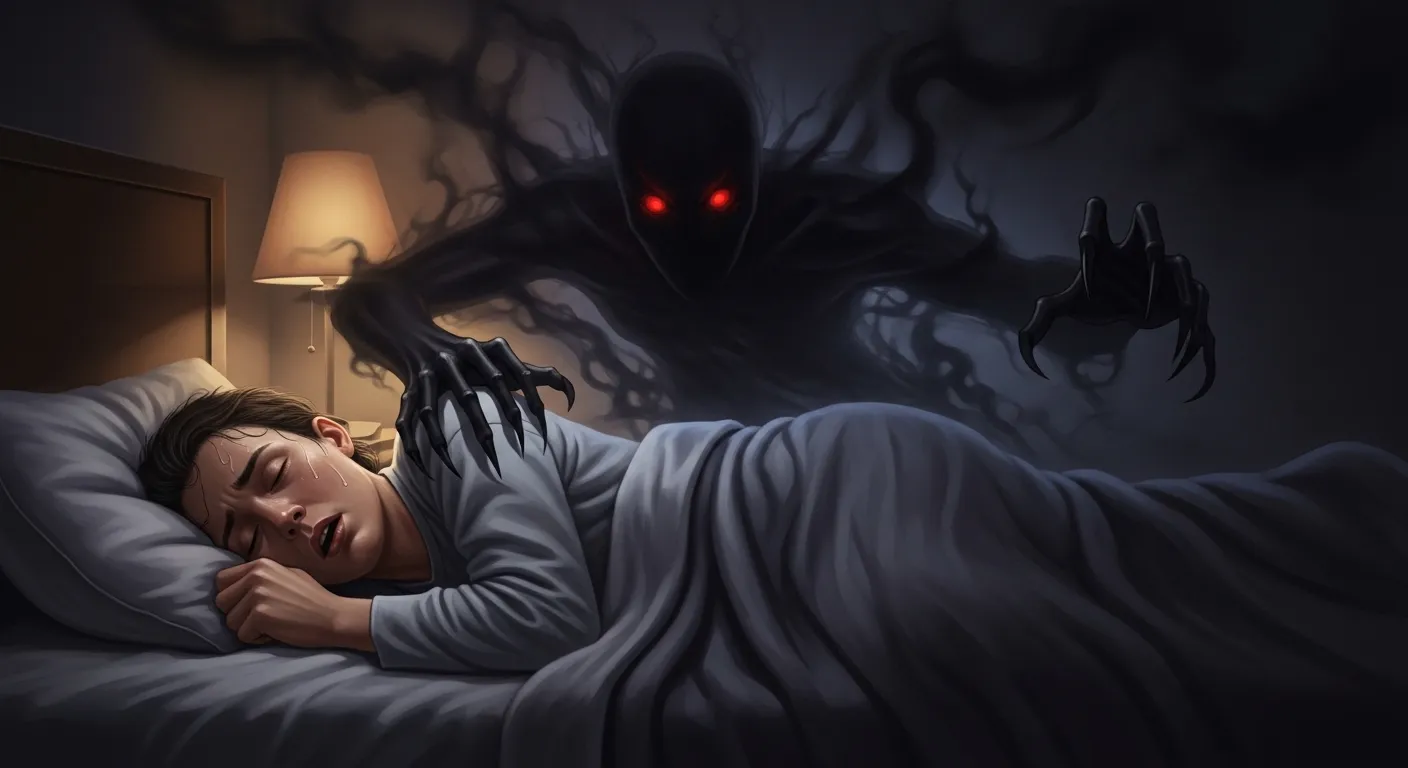
Dreams can feel strange, emotional, and deeply personal. But few dreams are as unsettling as sensing evil in a dream. Sometimes the feeling is vague — a dark presence in the room, a shadow watching you, or an overwhelming sense of danger. Other times, the dream becomes intense, with chasing, fear, paralysis, or the feeling that something unseen is near.
These dreams often stay with people long after waking up. Your heart races, your body feels tense, and you may even question whether the dream carried a deeper message.
In many spiritual and psychological traditions, dreams about evil are not always literal warnings. Instead, they can symbolize inner conflict, emotional stress, suppressed fears, spiritual awakening, or unresolved trauma. The mind uses symbols and emotions to process experiences that are difficult to face during waking life.
Understanding the meaning behind these dreams can help transform fear into self-awareness, healing, and personal growth.
What Does Sensing Evil in a Dream Mean?
At its core, sensing evil in a dream usually reflects a feeling of emotional or spiritual discomfort. The “evil” may represent:
- Hidden fears
- Unresolved emotional pain
- Inner guilt or shame
- Stress and anxiety
- A fear of losing control
- Negative influences in life
- Spiritual imbalance or awakening
Dreams speak in symbols rather than direct language. A dark figure, threatening atmosphere, or evil presence often represents something within your emotional world that needs attention.
For some people, the dream may appear during periods of:
- Major life transitions
- Relationship struggles
- Burnout or exhaustion
- Emotional suppression
- Spiritual questioning
- Deep personal transformation
The stronger the emotional reaction in the dream, the more important the underlying message may feel to the subconscious mind.
The Spiritual Symbolism of the Shadow
One of the most powerful interpretations of sensing evil in a dream involves the concept of the shadow self.
The shadow represents the hidden parts of ourselves that we ignore, reject, or suppress. These can include:
- Anger
- Fear
- Jealousy
- Shame
- Unhealed emotional wounds
- Hidden desires
- Painful memories
Spiritually, the shadow is not necessarily “evil.” Instead, it is the part of the self that has not yet been fully understood or healed.
Hidden Self and Suppressed Emotions
When a dream creates the feeling of darkness or evil, it may symbolize emotions you have pushed deep inside. Your subconscious mind may be trying to bring those feelings into awareness.
For example:
- A person hiding sadness may dream of a dark figure nearby.
- Someone avoiding confrontation may sense a threatening presence.
- A person struggling with guilt may feel watched or judged in a dream.
The dream becomes a mirror reflecting emotional truths that the conscious mind avoids.
Ego vs Higher Self
Spiritually, these dreams can also symbolize tension between the ego and the higher self.
- The ego seeks control, comfort, and protection.
- The higher self pushes toward truth, growth, and transformation.
When these two forces clash, dreams may create frightening scenarios to force emotional awareness. The “evil” feeling may actually represent resistance to change or fear of personal transformation.
Why Being Chased Intensifies the Meaning
Many people who sense evil in dreams also experience being chased.
This intensifies the dream because running symbolizes avoidance.
The subconscious often uses chasing dreams to communicate:
- Emotional avoidance
- Fear of confrontation
- Escaping responsibilities
- Running from painful truths
- Suppressed trauma
The faster or more terrifying the chase feels, the more emotionally urgent the unresolved issue may seem internally.
Interestingly, people are often never fully caught in these dreams. This suggests the fear itself may be more powerful than the actual threat.
Freudian Interpretation of Evil Dreams
According to Sigmund Freud, dreams reveal unconscious desires, fears, and conflicts.
Freud believed disturbing dreams often emerge from:
- Repressed emotions
- Hidden anxieties
- Childhood experiences
- Unresolved internal tension
From a Freudian perspective, sensing evil in a dream may represent forbidden thoughts or fears the conscious mind struggles to accept.
The dream acts as a disguised emotional release. The frightening imagery helps the subconscious express feelings that are otherwise buried.
Freud also connected fear-based dreams to anxiety and emotional overload. When stress builds internally, dreams may become darker and more emotionally intense.
Jungian Interpretation: Meeting the Shadow
Carl Jung viewed these dreams differently.
Jung believed the shadow is an essential part of psychological growth. He argued that healing occurs when we acknowledge hidden aspects of ourselves rather than fear them.
In Jungian psychology, sensing evil in a dream may symbolize:
- Encountering the shadow self
- Emotional awakening
- Internal transformation
- The beginning of self-discovery
The dream becomes meaningful because it forces the dreamer to confront something emotionally unfinished.
Jung believed that ignoring the shadow strengthens fear, while facing it leads to emotional integration and maturity.
Energy-Based and Spiritual Interpretations
Many spiritual traditions interpret these dreams as energetic experiences connected to emotional imbalance or spiritual sensitivity.
Emotional Blocks and Stored Energy
Some spiritual perspectives suggest negative emotions can become energetically “stuck” in the body.
These emotional blocks may involve:
- Fear
- Resentment
- Grief
- Shame
- Anger
Dreams become a symbolic release process, allowing emotional energy to surface through imagery and sensation.
Chakra Imbalances
In energy-based traditions, frightening dreams may be linked to imbalances in certain chakras.
Root Chakra Imbalance
Connected to:
- Fear
- Survival anxiety
- Financial insecurity
- Feeling unsafe
Heart Chakra Imbalance
Connected to:
- Emotional pain
- Betrayal
- Difficulty trusting others
Third Eye Chakra Activation
Connected to:
- Heightened intuition
- Spiritual awareness
- Vivid dreams
- Increased sensitivity
Some people report sensing evil during periods of spiritual awakening because emotional awareness becomes stronger and hidden fears rise to the surface.
Scientific Explanation: Why These Dreams Feel So Real
Even though spiritual interpretations can feel meaningful, neuroscience also offers important explanations.
During REM sleep, the brain becomes highly active. This is the stage most associated with vivid dreaming.
In REM sleep:
- Emotional centers of the brain become highly stimulated.
- Logical reasoning areas become less active.
- The brain processes stress, memory, and emotional experiences.
This combination can create powerful emotional dreams that feel extremely real.
Threat Simulation Theory
Some researchers believe frightening dreams are part of the brain’s survival system.
This idea, called threat simulation theory, suggests dreams allow the brain to rehearse danger and emotional responses in a safe environment.
In this sense, sensing evil in a dream may reflect the brain practicing responses to fear, uncertainty, or emotional threat.
Common Dream Scenarios and Their Meanings
Running From Evil
This often symbolizes avoidance.
You may be:
- Escaping difficult emotions
- Avoiding confrontation
- Ignoring stress or trauma
- Resisting personal change
The dream suggests something emotionally important needs attention.
Never Being Caught
This can symbolize lingering anxiety rather than actual danger.
The fear remains present, but unresolved. Often, the dream reflects chronic stress, worry, or emotional tension that follows you into sleep.
Facing the Shadow
If you stop running and face the dark presence, the dream may represent emotional growth.
This often signals:
- Increased self-awareness
- Acceptance of hidden emotions
- Inner healing
- Spiritual maturity
Many people report feeling calmer after these dreams.
The Shadow Disappearing
When the evil presence fades or disappears, it often symbolizes resolution.
This may reflect:
- Emotional release
- Reduced anxiety
- Healing from trauma
- Gaining clarity
- Spiritual peace
The disappearance suggests the subconscious no longer sees the fear as overwhelming.
Gradual Realization vs Sudden Fear Reactions
Not all evil dreams unfold the same way.
Gradual Realization
Some dreams slowly become darker over time.
This may symbolize:
- Growing emotional awareness
- Slowly recognizing unhealthy patterns
- Realizing hidden truths
These dreams often reflect long-term emotional tension rather than immediate fear.
Sudden Fear Reactions
Other dreams begin instantly with terror or panic.
These are more commonly linked to:
- Acute stress
- Trauma responses
- Anxiety disorders
- Emotional overload
- Sudden life changes
The body and nervous system may already be highly activated before sleep begins.
Causes and Triggers of Evil Dreams
Several emotional and environmental factors can increase frightening dreams.
Stress and Anxiety
One of the most common causes.
High stress levels increase emotional activity in the brain during sleep, making nightmares more likely.
Trauma and PTSD
Past traumatic experiences can strongly influence dream content.
The brain may replay fear through symbolic imagery, including dark figures, evil presences, or threatening environments.
Major Life Changes
Dreams often intensify during:
- Breakups
- Career changes
- Relocation
- Loss
- Identity shifts
- Spiritual transitions
Periods of uncertainty frequently trigger symbolic fear-based dreams.
Sleep Deprivation
Poor sleep can increase vivid dreaming and emotional instability during REM sleep.
Emotional Suppression
Avoiding emotions during waking life often causes those feelings to emerge symbolically in dreams.
Personal Growth Lessons Hidden in the Dream
Although frightening, these dreams can carry powerful lessons.
They may encourage you to:
- Face fears honestly
- Acknowledge emotional pain
- Stop avoiding difficult truths
- Develop emotional resilience
- Deepen spiritual awareness
- Strengthen intuition
- Heal unresolved wounds
Sometimes the dream is less about danger and more about transformation.
The “evil” may symbolize the emotional discomfort that appears before growth and healing.
Reflection and Healing Tips
Keep a Dream Journal
Write down:
- Symbols
- Emotions
- Colors
- Locations
- People
- Physical sensations
Patterns often become clearer over time.
Practice Mindfulness
Mindfulness helps calm the nervous system and reduce fear-based thinking.
Simple breathing exercises before sleep can improve emotional regulation.
Explore Shadow Work
Shadow work involves gently examining hidden emotions and unconscious patterns.
Questions to reflect on:
- What emotions am I avoiding?
- What fear keeps repeating in my life?
- What part of myself do I reject?
This process can reduce recurring fear dreams.
Reduce Stress Before Sleep
Helpful habits include:
- Limiting screen time
- Meditation
- Prayer
- Relaxing music
- Gentle stretching
- Consistent sleep routines
Seek Emotional Support
If nightmares become overwhelming or trauma-related, speaking with a therapist or spiritual counselor can help provide clarity and healing.
Frequently Asked Questions
Is sensing evil in a dream a bad omen?
Not necessarily. Most interpretations connect these dreams to emotional stress, inner conflict, or spiritual growth rather than literal danger.
Why do evil dreams feel so real?
During REM sleep, emotional areas of the brain become highly active, making dreams feel vivid and emotionally intense.
Can anxiety cause dreams about evil?
Yes. Anxiety is one of the most common causes of fear-based dreams and nightmares.
What does it mean if I keep having the same evil dream?
Recurring dreams usually point to unresolved emotions, stress, trauma, or repeating life patterns that need attention.
Is sensing evil in a dream connected to spiritual awakening?
Some spiritual traditions believe heightened awareness and emotional sensitivity during awakening can trigger intense symbolic dreams.
What does it mean if I stop running in the dream?
Facing the fear often symbolizes emotional healing, courage, and greater self-awareness.
Can trauma trigger these dreams?
Yes. Trauma and PTSD can strongly influence nightmares involving danger, fear, or threatening presences.
How can I stop having frightening dreams?
Improving sleep habits, reducing stress, practicing mindfulness, and processing unresolved emotions can help reduce recurring nightmares.
Final Thoughts
Sensing evil in a dream can feel deeply disturbing, but these dreams are often symbolic rather than literal. They may reflect hidden fears, emotional stress, unresolved pain, or spiritual transformation happening beneath the surface of daily life.
Rather than seeing the dream as something purely negative, it may help to view it as an invitation toward deeper self-awareness.
Fear in dreams sometimes points toward the exact places within us that need healing, compassion, and understanding. When approached with curiosity instead of panic, even the darkest dream can become a doorway to emotional clarity and personal growth.