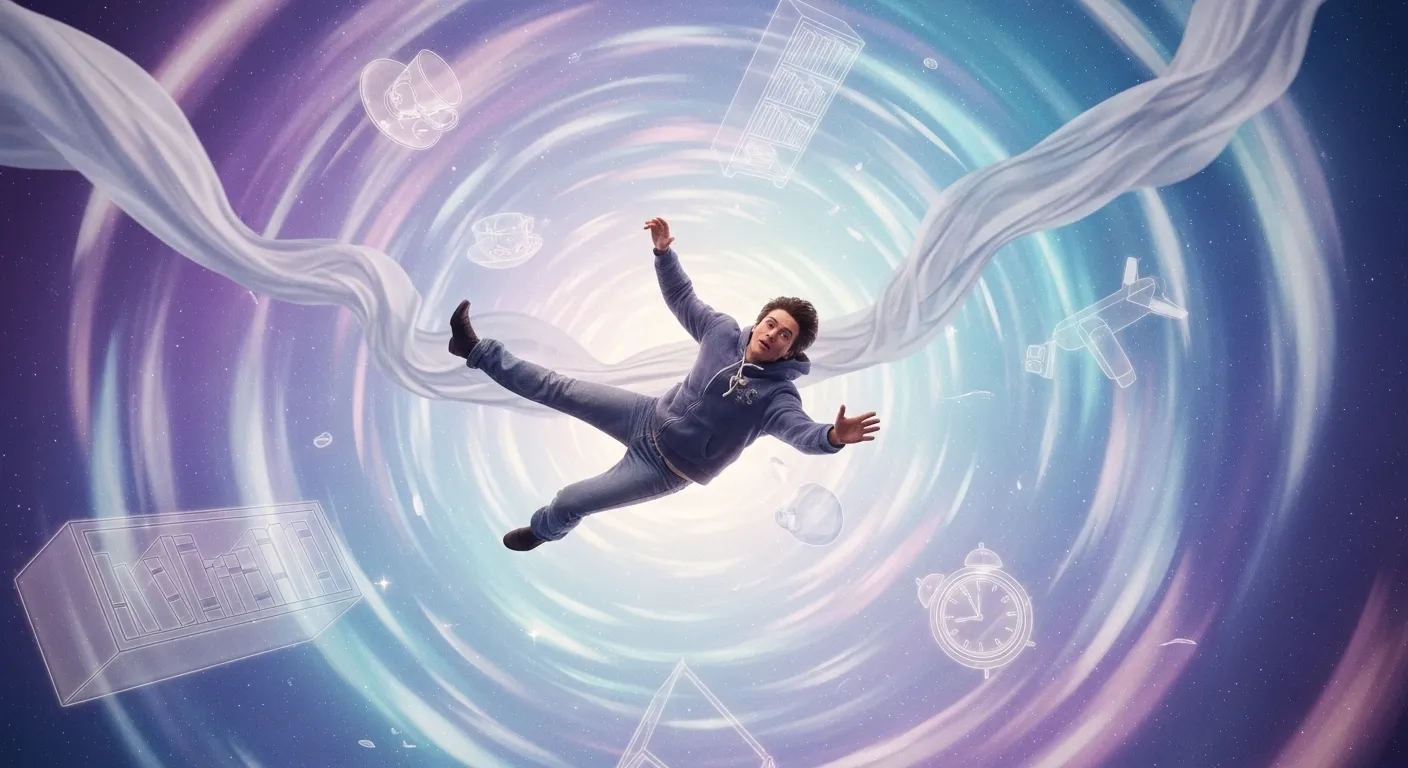
Everyone knows the sensation, which is strange, because almost no one has actually experienced it. The stomach drops. The air rushes. The ground is coming and there is nothing to hold. Then the jolt: you wake clutching the mattress, heart hammering, from a fall that never happened. Falling is the most universal dream in human experience, and it is universal because it is not really about falling at all.
Your Body Got There First
Before any symbolism, there is physiology, and it’s fascinating. The classic falling dream often begins with a hypnic jerk: that sudden full-body twitch as you’re drifting off. As your muscles relax into sleep, your brain occasionally misreads the relaxation as the sensation of falling and fires an emergency correction. You dream the fall because your body twitched; or you twitch because you dreamed the fall. The causation runs both ways, which is part of what makes these dreams feel so convincingly real.
The vestibular system, your inner ear’s balance apparatus, is also implicated. During the sleep transition, its signals get noisy, and the dreaming brain interprets noisy balance signals the only way it knows how: as falling. None of this makes the dream meaningless. It makes it embodied. Falling dreams are your animal self speaking, and the animal self is always worth hearing.
Falling Is a Question About Ground
Symbolically, every fall is a question about support. What are you standing on? What happens if it gives way? The ground in a falling dream is rarely literal ground. It’s the job, the relationship, the savings, the reputation, the belief system, the sense of who you are. The fall is the mind’s way of asking what remains if any of those were withdrawn.
This is why falling dreams cluster around instability: career changes, relationship wobbles, moves, diagnoses, any season where the floor of life feels less solid than advertised. The dream isn’t predicting collapse. It’s processing the feeling of possible collapse, which is a different and much more manageable thing.
There’s a control dimension too. People who describe themselves as needing to be in control report falling dreams at higher rates. The dream is the one place the controller can’t control, and the psyche uses it as a pressure valve: here, finally, you get to experience the surrender you’ve been refusing.
Varieties of the Fall
Falling From a Height
The classic: a cliff, a building, a staircase that isn’t there. The height usually corresponds to the stakes you feel in waking life. Higher falls, higher stakes. The specific place you fall from can hint at the domain: a workplace building, a home, a familiar landscape.
Endless Falling
Falling with no ground in sight suggests a situation with no visible resolution: grief with no timeline, a problem with no clear fix, a transition with no arrival date. The dream’s message is about endurance rather than solution. You are still falling, which means you are still in it, which means it isn’t over.
Waking Before Impact
Almost nobody hits the ground. The brain wakes you first, which dream researchers read as a mercy and a metaphor: the feared consequence almost never arrives in the form you imagine. The dread is the experience; the impact is usually a fiction.
Floating or Slowing Mid-Fall
The hopeful variant. If your fall gentles into floating, the dream is showing you your own resilience: the capacity to convert a plunge into a glide. These dreams often arrive right as a waking crisis begins to resolve, the psyche’s way of announcing that the worst of the drop is over.
Landing the Dream
Falling dreams respond well to a simple morning practice. Write down three things: what you fell from, how the fall felt, and what in your waking life currently feels unsupported. Then, crucially, write down what is actually holding you up right now: the people, the resources, the inner strengths. The dream shows you the fall. You supply the ground.
Some people also benefit from rehearsing a different ending. In the relaxed state before sleep, imagine the falling dream beginning, and then imagine yourself slowing, spreading your arms, and landing softly, or transforming the fall into flight. This kind of dream rehearsal has decent evidence behind it, and at minimum it teaches your nervous system that the fall is survivable.
Asked About Falling
Is falling in a dream a bad sign?
No. It’s a common sign of feeling unsupported or out of control in some area of life. Uncomfortable, yes. Ominous, no.
Why do I wake up right before hitting the ground?
The arousal of the dream typically triggers waking before the imagined impact. Symbolically, it’s a reminder that feared consequences rarely land the way we picture them.
Do falling dreams mean I’m losing control?
They mean you feel control slipping somewhere. That’s an important distinction. The dream reports the feeling, which is real, not the fact, which usually isn’t as dire as it seems.
What does it mean if I’m calm while falling?
Calm falling is a beautiful variant. It suggests surrender, trust, or acceptance: you’ve stopped fighting the descent and discovered it isn’t destroying you. Many contemplative traditions would call that progress.
Can I stop falling dreams?
They usually fade when the underlying instability resolves or when you address the control question directly. Better sleep habits help too, since the hypnic-jerk variant is partly physiological.
The Ground Was There All Along
Here’s the secret the falling dream keeps trying to tell you: you always wake up. Every fall ends in your own bed, in your own body, unharmed. The dream is terrifying and the dreamer is safe, and that gap is the whole teaching. Whatever you’re afraid of losing, whatever ground feels uncertain, you have survived every previous fall, including all the ones that happened while you were asleep. For the physiology behind that midnight plunge, Wikipedia’s article on the hypnic jerk explains what your muscles and your dreaming brain are doing in that strange second between waking and sleep.










