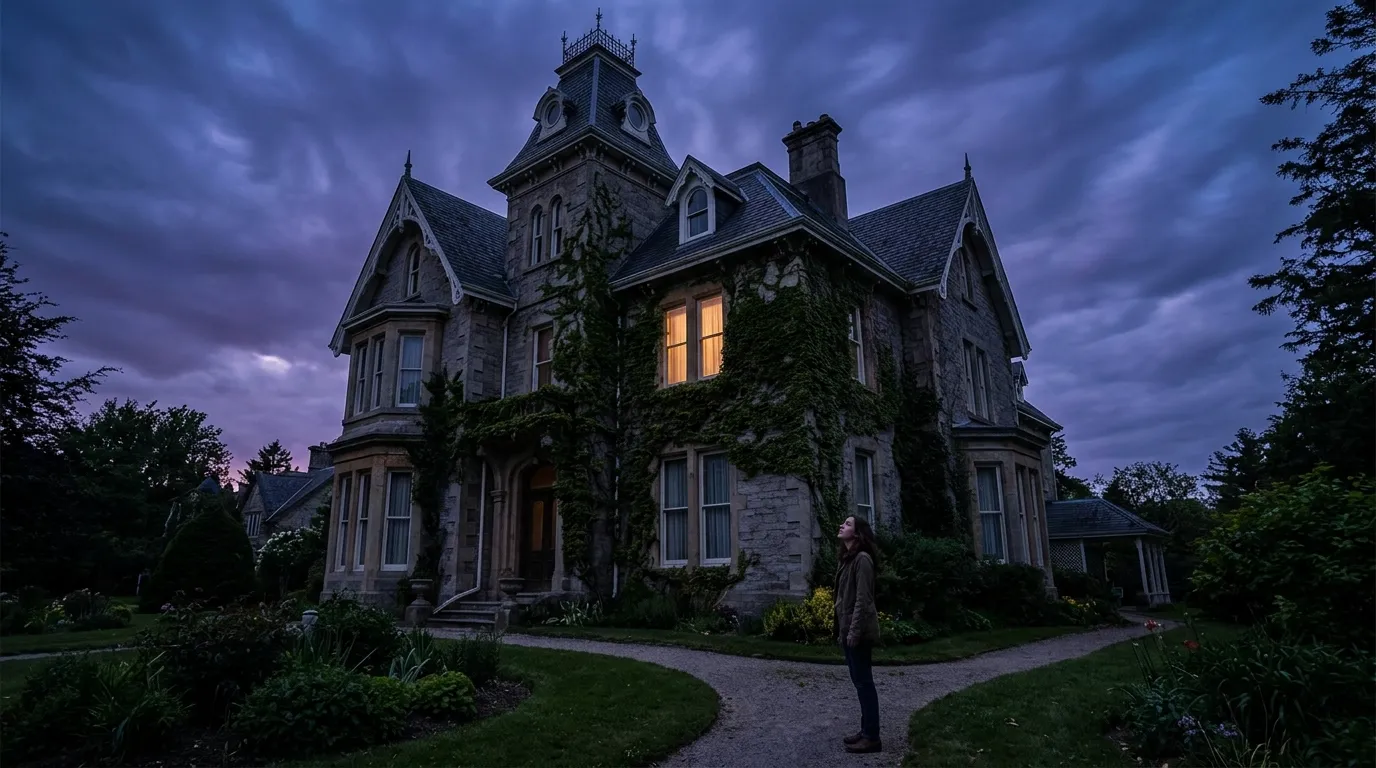
Architects have a saying: a building is a frozen argument about how people should live. Your dreaming mind seems to agree. When it wants to talk about your inner life, it does not send you a memo — it builds you a house, hands you the floor plan in the dark, and lets you wander.
Dream houses are rarely about real estate. They are self-portraits rendered in floor plans: every room an aspect of who you are, every hallway a connection between parts of your life, every locked door a topic you have not finished. Learning to read the house is learning to read yourself at a moment when your guard is down.
Reading Your Dream House Like a Floor Plan
Start with the structure rather than the story. In dream symbolism, the recurring associations are remarkably consistent across cultures:
- Foundation — your core beliefs and stability. Cracks in the foundation suggest values under pressure.
- Rooms — distinct areas of your personality and life. Bedrooms hold intimacy and rest; kitchens hold nourishment and family dynamics; bathrooms concern private release and cleansing.
- Basement — the lower, older storage of the psyche: fears, buried memories, things you keep out of sight. A flooded basement is emotional material rising past containment.
- Attic — higher storage: long-term memory, spiritual insight, inherited wisdom. Dusty but intact usually means neglected gifts, not lost ones.
- Doors and windows — doors are transitions and choices; windows are perspective. A house with no windows is a life you are living without letting anyone see in — possibly including yourself.
- Roof — protection and mental boundaries. A leaking roof is a boundary that is no longer holding.
The condition of the house is the headline. A well-kept house suggests inner steadiness; a crumbling or haunted one signals emotional strain, unresolved pain, or spiritual confusion. But condition is a snapshot, not a verdict — houses in dreams can be renovated, and often are.
Three Houses That Keep Showing Up
The childhood home
This is the most common dream house, and the most misunderstood. Returning to a childhood home rarely means you are stuck in the past. It usually means your mind is consulting the original blueprint — the family patterns, early wounds, and first lessons that shaped how you handle the present problem. Nostalgia in the dream suggests you are drawing strength from roots; distress suggests an old script is running your current choices.
A house you have never seen
An unfamiliar mansion or apartment is the self you are growing into. Exploring it room by room is the mind rehearsing expansion — new roles, new capacities, a bigger life. The rooms you have not entered yet are abilities you have not tried. These dreams often arrive during promotions, parenthood, or any transition that requires a larger version of you.
A house falling apart
Collapsing walls, broken stairs, rooms filling with water — these are alarm dreams, but the alarm is useful. They tend to appear when someone is ignoring what their body and relationships have been signaling for months. The dream stages the inner state as architecture so it can no longer be abstract. Ask what maintenance you have been postponing: sleep, honesty, boundaries, grief.
Why the Basement Matters More Than the Attic
People love the attic — it flatters the dreamer with hidden wisdom. But dream interpretation lives in the basement. It is the least visited, least renovated, most avoided part of the dream house, which is exactly why the mind stages its important scenes there. If your dream keeps sending you downstairs, something stored below needs daylight: an old hurt, a denied fear, a truth you have been managing by not looking at it.
Renovation Dreams: The House Under Repair
Some of the most encouraging house dreams are the construction ones: you are painting walls, fixing stairs, adding a wing, clearing out a hoarded garage. These are not anxiety dreams; they are progress reports. The dreaming mind stages inner work as literal renovation, and the specific project usually maps to real waking effort with surprising precision.
Painting a room often coincides with identity refreshment — a new role, a changed appearance, a deliberate reinvention. Repairing stairs or floors suggests foundational work: therapy, habit change, rebuilding trust. Adding a new wing is expansion, the architectural twin of the hidden-room dream, except here you are building the new capacity rather than discovering it. And cleaning out a basement or attic is the unglamorous, essential work of processing old material — grief sorted, resentments discarded, memories finally filed where they belong.
The emotional tone of the renovation matters. If the work feels satisfying, your waking efforts are integrating well. If it feels endless — paint that never dries, repairs that undo themselves — the dream may be flagging a pattern of starting inner work without finishing it: the journal abandoned in February, the boundary set and then quietly removed. The house is asking for follow-through, not more blueprints.
None of this requires a therapist’s couch to begin with, though persistent distressing dreams deserve professional attention. A simple practice works: sketch the dream house from memory, however badly. Mark which rooms you entered and which you avoided. The avoided rooms are your homework — not because something terrible is there, but because avoidance is the only thing that makes them powerful.
Carl Jung treated the house as one of the mind’s favorite images of the whole psyche, and a century of dreamers have confirmed the intuition: you live somewhere, inwardly, and the building has opinions about you. If you want the literal side of the metaphor, the Wikipedia overview of the house as a human dwelling shows how deeply the idea of shelter is wired into every culture’s imagination.










